Sign up to get Today’s Best Articles in your inbox
Join 350,000+ subscribers and keep yourself informed with a selection of
The Week’s most interesting, enlightening and entertaining stories - plus daily puzzles.
You are now subscribed
Your newsletter sign-up was successful
Want to add more newsletters?
An account already exists for this email address, please log in.
Syria’s Islamic State problem
Fragile security in prison camps leads to escape of IS fighters
Members of Islamic State have escaped from Syrian prison camps, renewing fears that the country’s fledgling government is struggling to contain thousands of militant prisoners and their relatives, including British-born Shamima Begum.
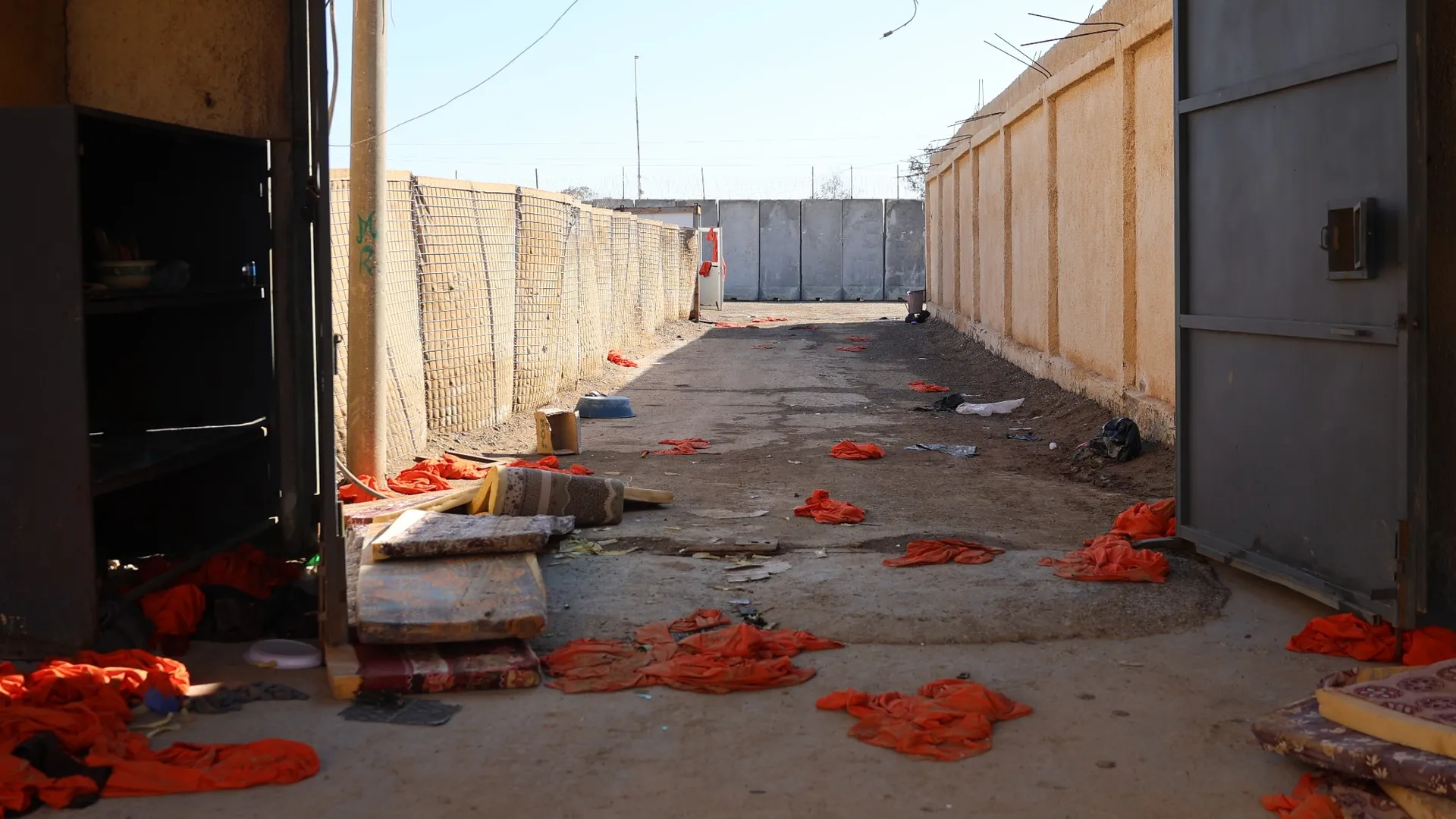
The Syrian Democratic Forces (SDF), a Kurdish-dominated militia that runs many prison camps in northeast Syria, said they had to abandon the notoriously volatile al-Hol camp earlier this week. Syrian government forces moved in to secure the camp a day later but, in the meantime, fences had been pulled down and dozens of prisoners had escaped. The SDF also lost control of the al-Shaddadi camp, from where about 120 prisoners escaped.
The US said it was moving to relocate detained IS fighters to a “secure location” in neighbouring Iraq “but the fate of the tens of thousands of Islamic State family members” in the camps “remained unclear”, said NPR.
‘Unresolved security dilemma’
Islamic State members and their families have been held in more than two dozen camps and detention facilities since 2019, when a US-backed coalition of mostly SDF-led forces seized back the last of the territory the group had captured in Syria.
The Week
Escape your echo chamber. Get the facts behind the news, plus analysis from multiple perspectives.
Join more than 350,000 subscribers and keep yourself informed with a selection of The Week’s most interesting, enlightening and entertaining stories - plus daily puzzles.
Join more than 350,000 subscribers and keep yourself informed with a selection of The Week’s most interesting, enlightening and entertaining stories - plus daily puzzles.
These sites are “home to the largest population of Islamic State prisoners in the world”, said The Wall Street Journal. But US military commanders and security analysts have increasingly “warned that the detainee population is an unresolved security dilemma” that threatens the stability of a “new and uncertain” post-Assad Syria.
Islamic State has deliberately targeted the camps with “propaganda and messages to stir unrest”, and it has active “sleeper cells” inside the walls and fences. Routine searches carried out by Kurdish and US forces have found weapons. And yet the SDF guards have often been “pulled away” from their duties “to deal with instability elsewhere” in the region.
In 2022, IS militants detonated a truck carrying explosives at the gate of the al-Sina’a prison, leading to a “week-long battle” against US and Kurdish forces. More than 500 died and, during the “chaos”, hundreds escaped. Since then, little has been done to increase security at any of the detention sites.
Prison control dispute
What has now exacerbated this already fragile security situation is a dispute between the SDF and the Syrian government. After “weeks of deadly clashes” between the two sides, the SDF agreed to merge fully into the Syrian national military and “hand over of control of security infrastructure”, including the prison camps, to the government, said The New York Times.
The ensuing chaos around the al-Hol and al-Shaddadi camps merely “underscored the fragility of that deal”. There is currently a war of words between the two sides, with the government accusing the SDF of releasing Islamic State detainees and “exploiting the security threat” for “political gains”.
Meanwhile, tens of thousands of people, including foreign nationals, remain held in the detention camps. Although some are undoubtedly loyal to IS, others are not. Most were detained without charge or trial, and have no access to legal representation. Some foreign-born detainees have been stripped of their citizenship, rendering them stateless and stuck in the camps without legal recourse.
Sign up to get Today’s Best Articles in your inbox
A free daily email with the day’s biggest news and analysis – and the best features from TheWeek.com
Chas Newkey-Burden has been part of The Week Digital team for more than a decade and a journalist for 25 years, starting out on the irreverent football weekly 90 Minutes, before moving to lifestyle magazines Loaded and Attitude. He was a columnist for The Big Issue and landed a world exclusive with David Beckham that became the weekly magazine’s bestselling issue. He now writes regularly for The Guardian, The Telegraph, The Independent, Metro, FourFourTwo and the i news site. He is also the author of a number of non-fiction books.