Former IS sex slaves form all-female army brigade
Yazidi women who escaped Islamic State in Iraq vow to help bring other captives home
A free daily email with the biggest news stories of the day – and the best features from TheWeek.com
You are now subscribed
Your newsletter sign-up was successful
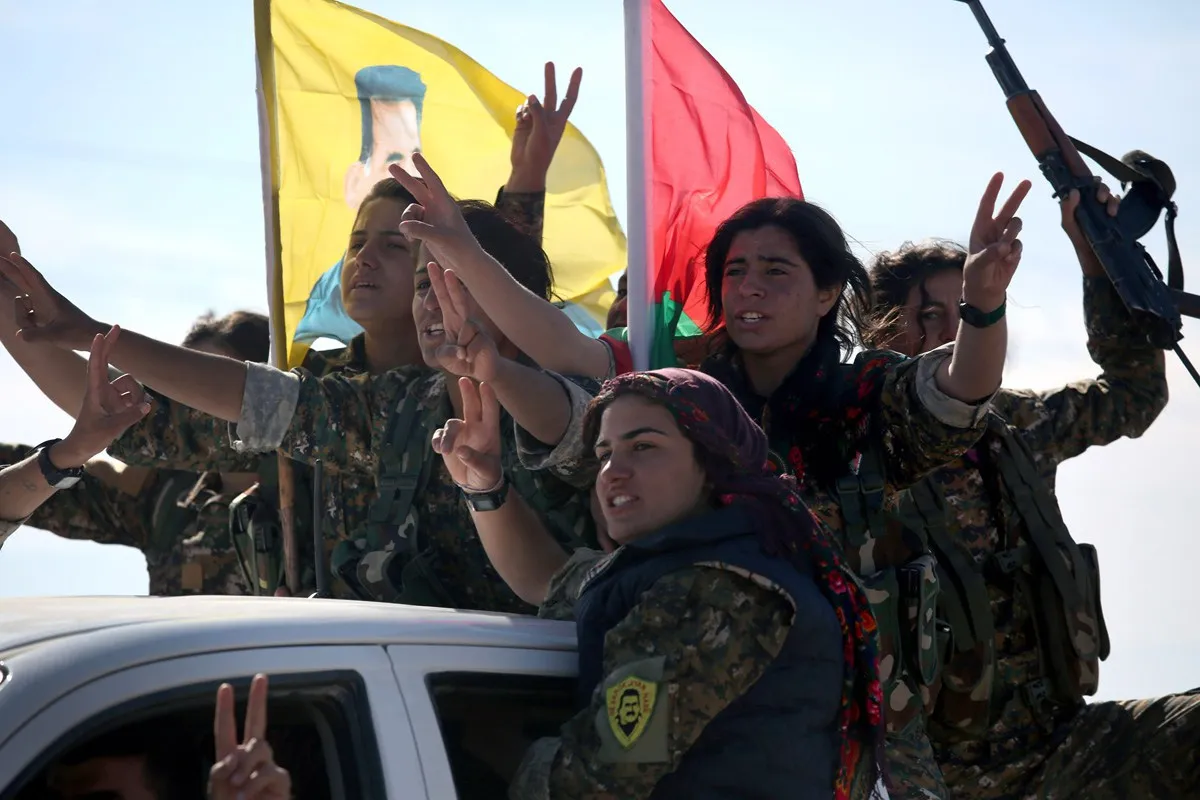
Former Islamic State sex slaves are taking up arms to rescue other women held captive by the terror group.
Around 500 Yazidis have joined an all-female brigade of the Kurdish Peshmerga in Iraq. Known as the Force of the Sun Ladies, they hope to participate in the imminent assault on IS-held Mosul and liberate the estimated 3,500 women held there.
An additional 123 Yazidi women have already completed their training, brigade leader Captain Khatoon Khider told Fox News. Some of these participated in a successful Peshmerga counter-offensive to re-take Kurdish towns under IS occupation last November.
The Week
Escape your echo chamber. Get the facts behind the news, plus analysis from multiple perspectives.
Sign up for The Week's Free Newsletters
From our morning news briefing to a weekly Good News Newsletter, get the best of The Week delivered directly to your inbox.
At least 7,500 Yazidi women are estimated to have been sold into slavery by IS as they captured vast swathes of northern Iraq, where the majority of the world's 650,000 Yazidis live.
Yazidis have been subjected to especial persecution at the hands of IS militants, who believe the ancient religion is a form of devil-worship. Thousands of men and women have been executed, many for refusing to convert to Islam, and the campaign of terror has been referred to as genocidal.
Khider was one of the 40,000 Yazidis who fled into the Sinjar mountains to escape the IS advance in August 2014. After suffering hunger and dehydration, they were finally able to leave their stronghold when Peshmerga troops and paramilitaries from the Kurdistan Workers' Party drove back IS forces.
Despite having no military experience, Khider approached Peshmerga commanders with the idea of a special taskforce of Yazidi women.
A free daily email with the biggest news stories of the day – and the best features from TheWeek.com
"Whenever a war wages, our women end up as the victims," she said. "After all that has happened to us Yazidis, we are no longer afraid."
She added: "We have a lot of our women in Mosul being held as slaves. Their families are waiting for them. We are waiting for them. The liberation might help bring them home."
-
Film reviews: ‘Send Help’ and ‘Private Life’Feature An office doormat is stranded alone with her awful boss and a frazzled therapist turns amateur murder investigator
-
Movies to watch in Februarythe week recommends Time travelers, multiverse hoppers and an Iraqi parable highlight this month’s offerings during the depths of winter
-
ICE’s facial scanning is the tip of the surveillance icebergIN THE SPOTLIGHT Federal troops are increasingly turning to high-tech tracking tools that push the boundaries of personal privacy
-
Israel retrieves final hostage’s body from GazaSpeed Read The 24-year-old police officer was killed during the initial Hamas attack
-
China’s Xi targets top general in growing purgeSpeed Read Zhang Youxia is being investigated over ‘grave violations’ of the law
-
Panama and Canada are negotiating over a crucial copper mineIn the Spotlight Panama is set to make a final decision on the mine this summer
-
Why Greenland’s natural resources are nearly impossible to mineThe Explainer The country’s natural landscape makes the task extremely difficult
-
Iran cuts internet as protests escalateSpeed Reada Government buildings across the country have been set on fire
-
US nabs ‘shadow’ tanker claimed by RussiaSpeed Read The ship was one of two vessels seized by the US military
-
How Bulgaria’s government fell amid mass protestsThe Explainer The country’s prime minister resigned as part of the fallout
-
Normalising relations with the Taliban in AfghanistanThe Explainer The regime is coming in from the diplomatic cold, as countries lose hope of armed opposition and seek cooperation on counterterrorism, counter-narcotics and deportation of immigrants