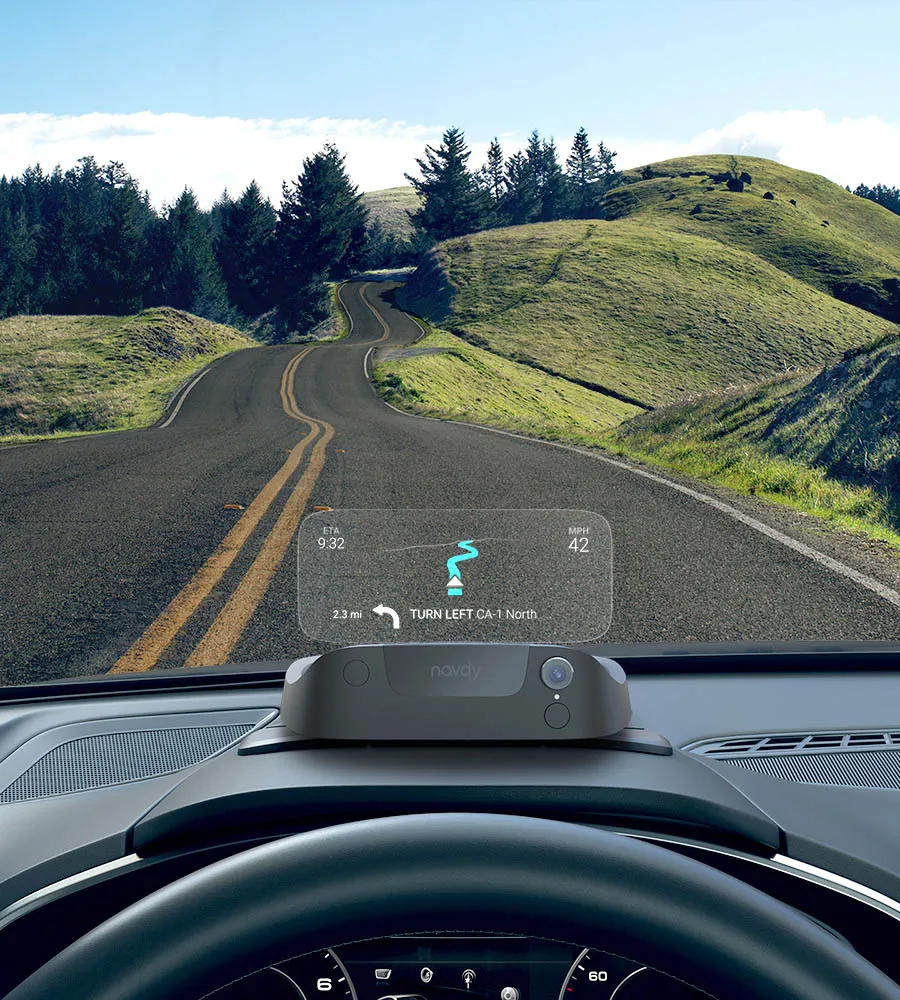
This futuristic screen lets drivers get directions without taking their eyes off the road
It's called Navdy
A free daily email with the biggest news stories of the day – and the best features from TheWeek.com
You are now subscribed
Your newsletter sign-up was successful
Your smartphone screen could soon be part of your car's windshield, said Signe Brewster at TechnologyReview.com. Navdy is a futuristic, heads-up display that allows drivers to get directions and notifications without taking their eyes off the road. The device, which connects to your smartphone, is affixed just above the steering wheel and projects a transparent display onto the windshield.
Navdy can display maps and navigation; incoming calls and texts; and music, all of which drivers can scroll through using a small click wheel that attaches to the steering wheel. Notifications can be accepted or dismissed with a wave of the hand. Eventually, "the dream for heads-up displays is a device that can seem to place directions directly on the road in front of the driver." Similar heads-up displays are already "trickling into luxury cars," but the $799 Navdy can be attached to any vehicle dashboard built after 1996.
A free daily email with the biggest news stories of the day – and the best features from TheWeek.com
The Week
Escape your echo chamber. Get the facts behind the news, plus analysis from multiple perspectives.
Sign up for The Week's Free Newsletters
From our morning news briefing to a weekly Good News Newsletter, get the best of The Week delivered directly to your inbox.
-
Political cartoons for February 16Cartoons Monday’s political cartoons include President's Day, a valentine from the Epstein files, and more
-
Regent Hong Kong: a tranquil haven with a prime waterfront spotThe Week Recommends The trendy hotel recently underwent an extensive two-year revamp
-
The problem with diagnosing profound autismThe Explainer Experts are reconsidering the idea of autism as a spectrum, which could impact diagnoses and policy making for the condition