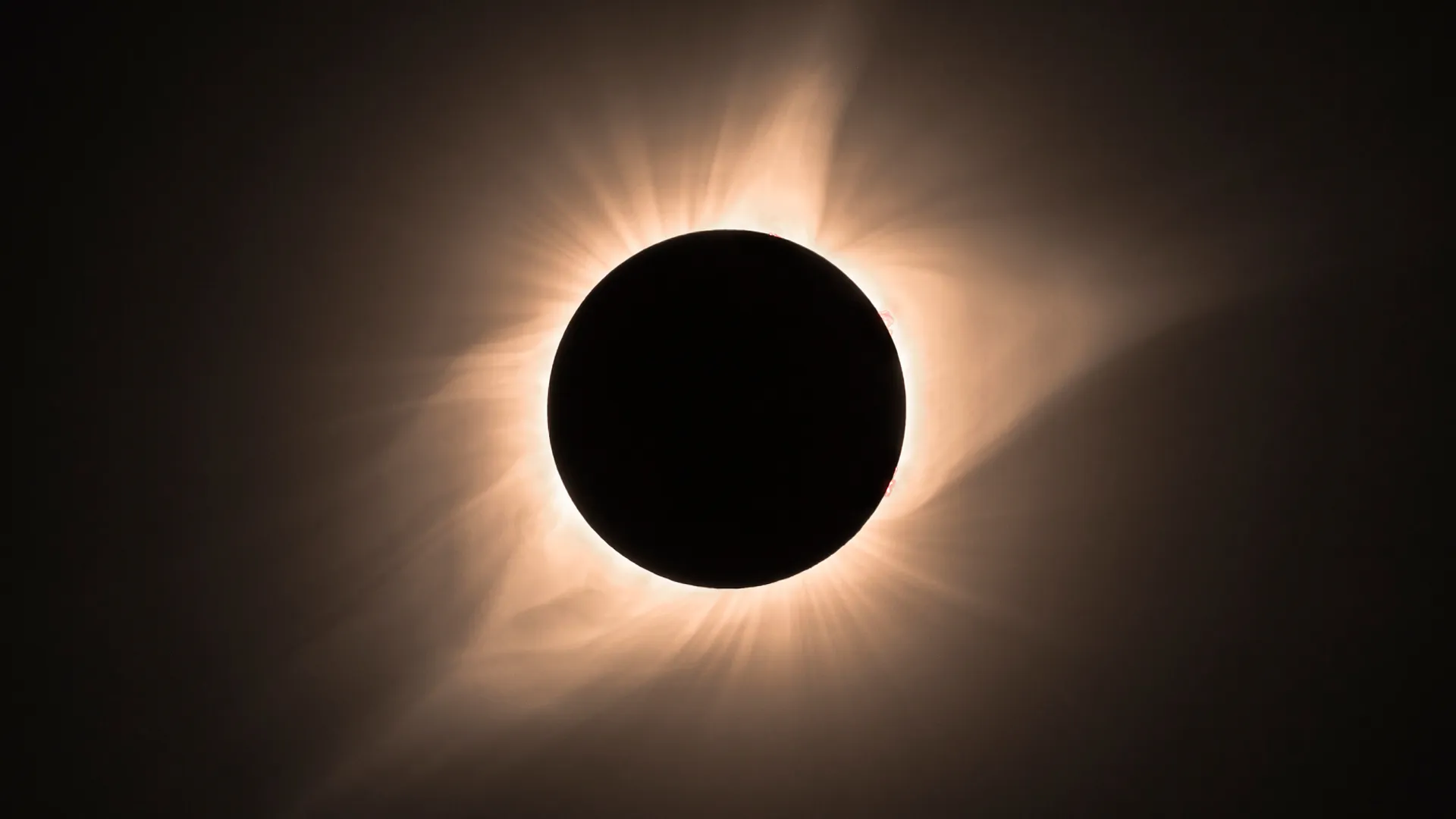
On 12 August, there will be a total solar eclipse over parts of Europe for the first time in almost 30 years. For a few moments, parts of Greenland, Iceland, Spain, Russia and Portugal will experience total darkness in daylight hours.
What is a total solar eclipse?
It happens when the Moon passes directly between the Sun and the Earth, completely blocking the Sun’s brightness and plunging “daylight momentarily into darkness”, said National Geographic. It’s a “rare” moment “when Nature switches off the Sun just enough for us to see what’s otherwise invisible”, European Space Agency astronomer Pedro García Lario told the publication.
The most recent total solar eclipse was in April 2024, covering parts of North America; the last time Europe saw one was in August 1999. This time, the “stripe of darkness” will fall on Greenland, Iceland, northern Russia, Spain, and a small area of Portugal, said The Independent. The UK and Ireland will experience a partial solar eclipse, losing sight of about 90% of the Sun.
The Week
Escape your echo chamber. Get the facts behind the news, plus analysis from multiple perspectives.
SUBSCRIBE & SAVE
Sign up for The Week's Free Newsletters
Join more than 350,000 subscribers and keep yourself informed with a selection of The Week’s most interesting, enlightening and entertaining stories - plus daily puzzles.
Join more than 350,000 subscribers and keep yourself informed with a selection of The Week’s most interesting, enlightening and entertaining stories - plus daily puzzles.
Latest Videos FromThe Week US
How to watch the eclipse safely
Staring at the sun during a partial or solar eclipse may seem “enticing” but it can cause “irreversible damage to the retina” without the right eye protection, Lario told National Geographic. Regular sunglasses just “don’t cut it”; you need proper “eclipse glasses”, which are thousands of times darker than regular sunglasses. You can find them at specialty shops, opticians, science museums, and universities; be careful to look for the ISO 12312-2 certification as there are often counterfeit pairs around when an eclipse is due. If you’re observing the eclipse through binoculars, a camera or a telescope, make sure to fix solar filters.
Where and when to see the eclipse
The partial eclipse over the UK should be visible in Edinburgh and Glasgow at 6.08pm, in Manchester and Liverpool at 6.13pm, and in London, Cardiff, Bristol and Cornwall at about 6.15pm.
Valencia, Spain is on the path of totality. And, in the months leading up to the eclipse, the city has been putting together celestial experiences, lectures, and workshops at museums and cultural centres. Cruise lines travelling between mainland Spain and Mallorca, including Celebrity, Fred Olsen and Princess, are also offering “eclipse specials” and will “ensure their vessels are on the path of totality”, said The Independent.
If you’re lucky enough to be in Valencia, seek out an open location with a clear western horizon and minimal light pollution in the late evening, shortly before sunset. Some of the “best vantage points” will be rooftops, said National Geographic: places like the Grand Hotel Centenari and Luna de Valencia in Hotel Puerta Serranos are staging rooftop viewings, with cocktails and music to “complete the experience”.
Other Spanish towns in the path of totality include Oviedo, Leon, Burgos and Valladolid. Northern Russia will experience total darkness at midday, before it moves to Iceland and Greenland in the afternoon and evening.