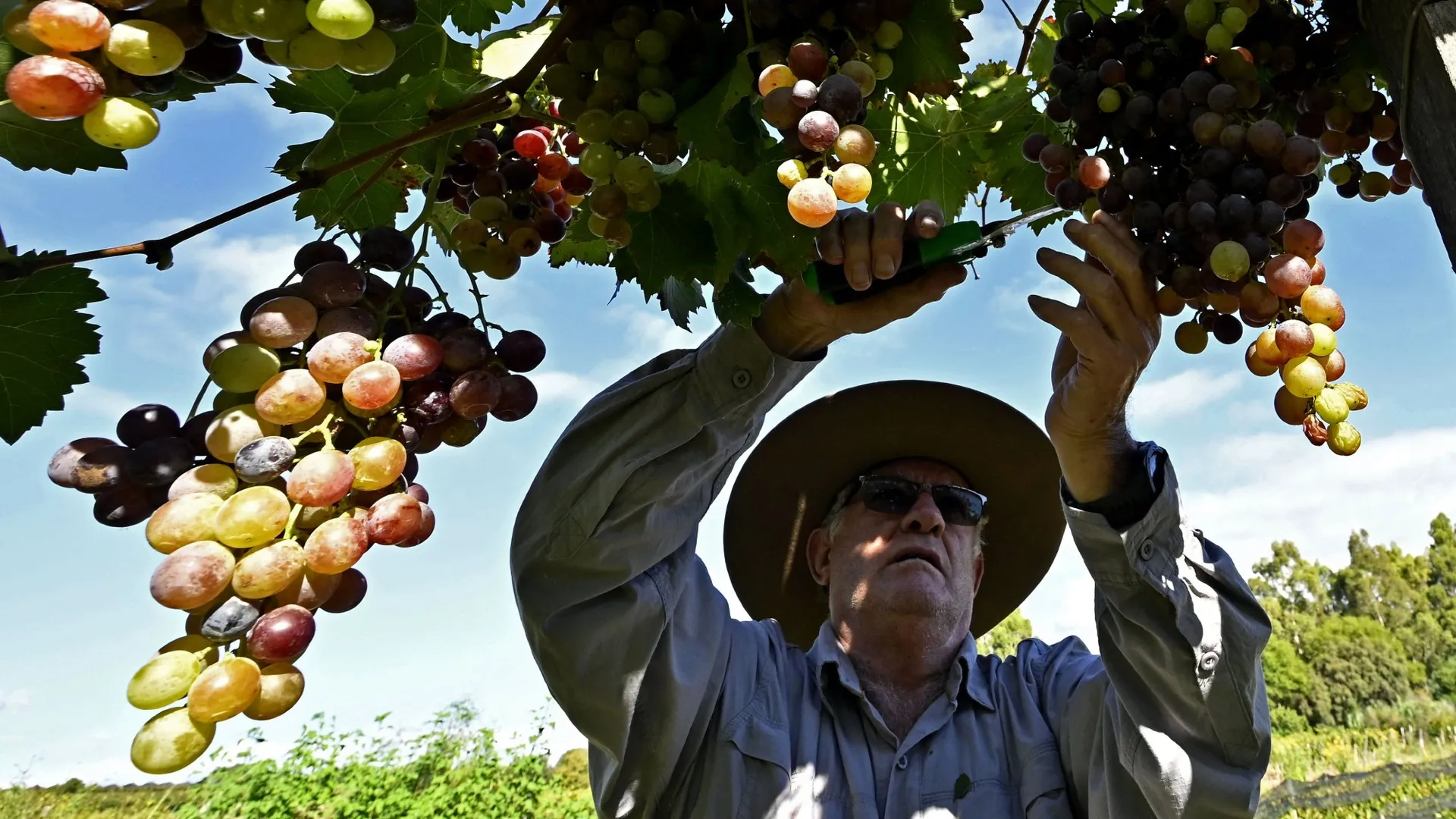
There is no need to cram yourself into a tasting room in Napa or Burgundy like a wine-thirsty sardine. The globe is increasingly loaded with notable wine-making regions and traditions that offer boundless surprises: bottlings made from unique indigenous grapes, topographies you could never imagine that squeeze out wine, and calm, personalized vineyard tours. So put down the beefy cab sauv and start exploring.
Bolivia
Perhaps nowhere is as surprising a wine destination as this landlocked South American country. It has “grapes that shouldn’t grow” and a “rocky, punishing terrain,” said The New York Times. There are both 500-year-old forest vineyards in the Cinti Valley and Tarija’s “mountainous vines,” which are “among the highest elevation vineyards in all of the Americas” and produce 90% of the country’s wine, said Wine Enthusiast. Many of the grapes grown here, like negra criolla and tannat, have a European legacy, understandable being that Spain colonized the area.
The country’s wine-making boom has coincided, intentionally, with a tourism push, one that birthed the Ruta del Vino Bolivia. It is a “relatively under-the-radar” wine trail, said Wine Enthusiast. Travelers can expect “authentic, uncrowded experiences” that include half-day winery tours and a multiday tour that takes you to six wineries and a variety of local attractions. It’s all to experience a region that’s “both closer to the heavens and deeply connected to its roots,” said the Times.
The Week
Escape your echo chamber. Get the facts behind the news, plus analysis from multiple perspectives.
SUBSCRIBE & SAVE
Sign up for The Week's Free Newsletters
Join more than 350,000 subscribers and keep yourself informed with a selection of The Week’s most interesting, enlightening and entertaining stories - plus daily puzzles.
Join more than 350,000 subscribers and keep yourself informed with a selection of The Week’s most interesting, enlightening and entertaining stories - plus daily puzzles.
Latest Videos FromThe Week US
China
There are many Chinas, with the country being 3.7 million square miles. Likewise, China’s wine boom comprises many styles across a “dozen distinct wine regions,” said Wine Enthusiast, including north-central “Ningxia, where vines are buried in the winter to stave off the extreme cold, to more temperate coastal and southern regions, such as Shandong and Yunnan.” Ningxia, by volume, is the winemaking hub: In less than 30 years, the region went from 200 hectares of vines to almost 39,000 hectares, an “area comparable to the entire vineyard surface of New Zealand,” said the drinks publication SevenFifty Daily.
Ningxia is known as the Bordeaux of China, so it tracks that some of the notable grape varieties grown in the area are famous grapes of Bordeaux, like cabernet sauvignon and merlot. Still, Ningxia is carving a wine space of its own, too, with grapes like aging-friendly marselan (a cross between cabernet sauvignon and grenache) and soft-edged cabernet gernischt. Treat a visit to Ningxia like you would a trip to Napa or, yes, Bordeaux: Make winery visits the centerpiece of the experience. They tend to be grand encounters in the wine-making heart of China.
Essex, England
At the International Wine Challenge in May, English wines won 25 awards, 15 more than the country won in 2025. One of the areas on the rise is Essex’s Crouch Valley, a region that was “identified by researchers as a location that could soon bear even sweeter fruit for wine producers” courtesy of a warming planet, said The Guardian.
England was once known only for its capabilities with sparkling wine. Essex has shown its particular suitability for “ripening Burgundy’s hallmark grapes chardonnay and pinot noir,” said Elite Traveler. So much so that winemakers from Burgundy are “scoping out plans to buy land in the valley,” said The Guardian.
While you’re in the area, explore how “gold-green fields roll to stone churches with lopsided Norman towers” and the coast is “fretworked with cockle-shell beaches, salt marshes and mudflats that trill with migratory birds,” said The Telegraph. Quaint villages, sublime restaurants, hidden fossils — Essex is primed for all kinds of jaunts.
Morocco
The most popular areas of this North African country, like Marrakesh and Casablanca, can be overrun with tourists. Not so with Morocco’s wine-making regions, like Meknes and Essaouira. A wine-centric trip can be a respite from big-city medina mayhem.
Native grapes, like the “crisp and floral Faranah,” said Wine Enthusiast, are inching their way back into production. There is also the local favorite vin gris, a “pale rosé made from minimal skin contact.” But the bulk of the country’s wine is currently made from European grapes. “The Syrah grape variety is, I think, very well adapted to our terroir, our climate and our way of doing things,” said winemaker Stephane Marriot to Grape Collective.
In the city of Meknes itself, you can marvel at the splendid Bab El Mansour gate and tune into the history of “diverse” Moroccan music at the National Museum of Music, said Lonely Planet. Or head to Essaouira for a sharp 180-degree flip. The coastal city is a liberal town with a surfer mentality, a city that “doesn’t take itself too seriously,” said Afar.
North Carolina
A lot can happen in two decades. In about 20 years, the Tar Heel State went from having a few dozen wineries to now boasting more than 200. The state’s first American Viticultural Area (AVA), the Yadkin Valley, was created in 2003. These days, the AVA “includes more than 45 wineries within 45 minutes of Winston-Salem,” said Food & Wine.
The state’s varied topography has birthed three growing regions: the Blue Ridge Mountains, the central Piedmont and the Coastal Plan near the Atlantic. “Wines are made in every style,” said Wine Enthusiast. Out west is optimal for European grapes like cabernet franc, and sauvignon blanc. The surprise is the way the coastal region handles the sweet, thick-skinned native grape, the muscadine. The best of the area’s cutting-edge wines harness the “musky aroma of muscadine wines without the treacly taste,” said Food & Wine.
Choose your travel destination based on your weather wants, alongside your drinking preferences. Asheville in the western mountains, Raleigh in the Piedmont or Wilmington and its environs for an ocean, muscadine breeze.
Slovenia
Slovenia has “long been a secret whispered among wine lovers,” said the wine publication Winera. But now the good word is out about the eastern European country. Slovenia, however, still hums barely audibly among the wine-tourism blips and pings that zero in on places like Tuscany and the Napa Valley.
The wines in Slovenia taste like they could be made nowhere else, even though they are influenced by the country’s neighbors, Italy and Austria. The diversity of winemaking is startling. The Vipava Valley is the “perfect place” to encounter the native grapes zelen and pinela, said Winera. Stajerska’s “rolling” hills are home to “expressive” sauvignon blancs and sparkling wines that “rival Champagne.” Brda, a municipality in the country’s west, is sometimes called the Tuscany of Slovenia and bottles “full-bodied wines from indigenous varieties like Rebula.”
The Vipava Valley sits a short drive from the capital, Ljubljana, and boasts a “magical combination” of “dramatic” karst landscapes and “medieval castles towering over pretty villages,” said CNN. If it is summertime, go for a hike. If it is wintertime, consider it the ideal excuse to hunker down and be subsumed by the top-tier eating and drinking.