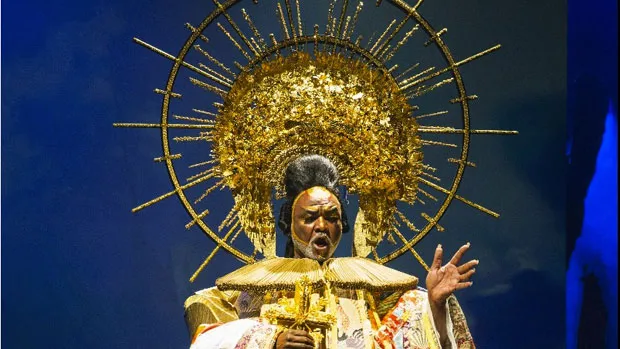
What you need to knowTerry Gilliam's production of Berlioz's Benvenuto Cellini for the English National Opera has opened at the Coliseum, London. Screenwriter, film director, animator and Monty Python member Gilliam directs Hector Berlioz's rarely-performed 19th century opera with ENO Music Director Edward Gardner.
In Berlioz's semi-fictional retelling of the life of the Florentine sculptor, Cellini (Michael Spyres) struggles with a commission for the Vatican, while trying to win his beloved Teresa (Corinne Winters) from a rival sculptor. Runs until 27 June.
What the critics likeWith typical madcap invention, Gilliam has created "a rumbustious and gloriously fanciful three hours of entertainment", says Richard Morrison in The Times. With acrobats, fire-jugglers, stilt-walkers, constantly swirling sets and a cast of hundreds in a perpetual choreographic frenzy its the operatic romp of the year.
The Week
Escape your echo chamber. Get the facts behind the news, plus analysis from multiple perspectives.
SUBSCRIBE & SAVE
Sign up for The Week's Free Newsletters
Join more than 350,000 subscribers and keep yourself informed with a selection of The Week’s most interesting, enlightening and entertaining stories - plus daily puzzles.
Join more than 350,000 subscribers and keep yourself informed with a selection of The Week’s most interesting, enlightening and entertaining stories - plus daily puzzles.
Latest Videos FromThe Week US
Gilliam's production goes at Berlioz's difficult opera with "tremendous gusto", says Andrew Clements in The Guardian. The action spills exuberantly into the audience before the overture has finished and the sheer energy and generous humour of the show are hard to resist.
There are Python-esque flashes, "an eyeful of spectacle", swirling eddies of carnival music and a wonderfully ribald ballet, says Andrew Clark in the Financial Times. The translation is sharp and funny and Michael Spyres's hero is an unqualified triumph of histrionic charisma, tenorial grace and easy musicianship.
What they don't like"The trouble is, nobody's still for a moment, and neither is the set," says Michael Church in The Independent. While this opera has serious things to say about art and patronage and has a love-story grafted on, the graft doesn't take and everything becomes a cue for another panto sight-gag.