Sign up to get Today’s Best Articles in your inbox
Join 350,000+ subscribers and keep yourself informed with a selection of
The Week’s most interesting, enlightening and entertaining stories - plus daily puzzles.
You are now subscribed
Your newsletter sign-up was successful
Want to add more newsletters?
An account already exists for this email address, please log in.
Why cheerleaders in North Korea have little to cheer about
Cheerleaders sent to Asian Games to make peace with South Korea will not want to put a foot wrong
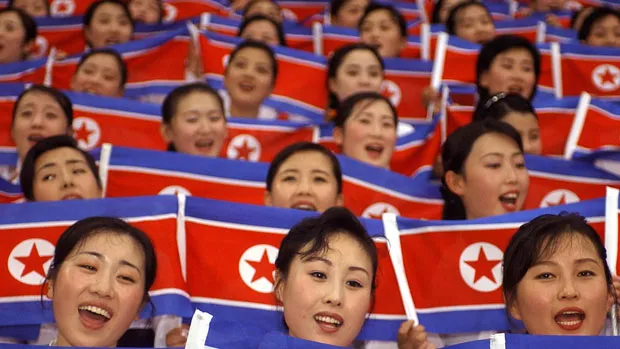
North Korea is sending its "prized" cheerleading squad to this year's Asian Games in South Korea for the first time in nearly a decade.
Pyongyang claims the squad will help to "improve relationships" and "create an atmosphere" of reconciliation between the North and South. But the fate of North Korea's last cheerleading squad suggests the trip might not be a cause for celebration.
Pyongyang has sent cheerleaders to South Korea only three times since the Korean War, the last occasion being in 2005 for the Asian Athletics Championships in Incheon. Among the 101 cheerleaders who attended those games was Ri Sol Ju, who later married Kim Jong Un.
The Week
Escape your echo chamber. Get the facts behind the news, plus analysis from multiple perspectives.
Join more than 350,000 subscribers and keep yourself informed with a selection of The Week’s most interesting, enlightening and entertaining stories - plus daily puzzles.
Join more than 350,000 subscribers and keep yourself informed with a selection of The Week’s most interesting, enlightening and entertaining stories - plus daily puzzles.
But 21 of her squad members were reportedly sent to a prison camp on their return for talking about what they saw in the South. A North Korean defector told South Korea's Chosun Ilbo newspaper in 2006 that the women were held in the camp where he had been a prisoner. Another unnamed defector said the women had pledged to treat South Korea as "enemy territory" and never speak about what they saw there, accepting punishment if they broke the promise.
North Korea takes a carrot and stick approach with its sports men and women, says Gu-Kyeong Bang, a student athlete who defected to South Korea. Those who return after a successful trip are often given prize money, cars and apartments, he told ABC News during the London Games.
But those who give a poor performance are subjected to a public "review". Anyone deemed to be "disloyal" to their Dear Leader is likely to be expelled from their sports organisation or even sent to a labour camp.
North Korea's cheerleaders have proved a huge attraction in the past, with their tightly choreographed routines often attracting more media attention than their country's athletes. With the task of reconciling two feuding countries, the cheerleaders at this year's Games will not want to put a foot wrong.
Sign up to get Today’s Best Articles in your inbox
A free daily email with the day’s biggest news and analysis – and the best features from TheWeek.com