Sign up to get Today’s Best Articles in your inbox
Join 350,000+ subscribers and keep yourself informed with a selection of
The Week’s most interesting, enlightening and entertaining stories - plus daily puzzles.
You are now subscribed
Your newsletter sign-up was successful
Want to add more newsletters?
An account already exists for this email address, please log in.
Daniel Lurie: San Francisco's moderate next mayor
Lurie beat a fellow Democrat, incumbent Mayor London Breed, for the job
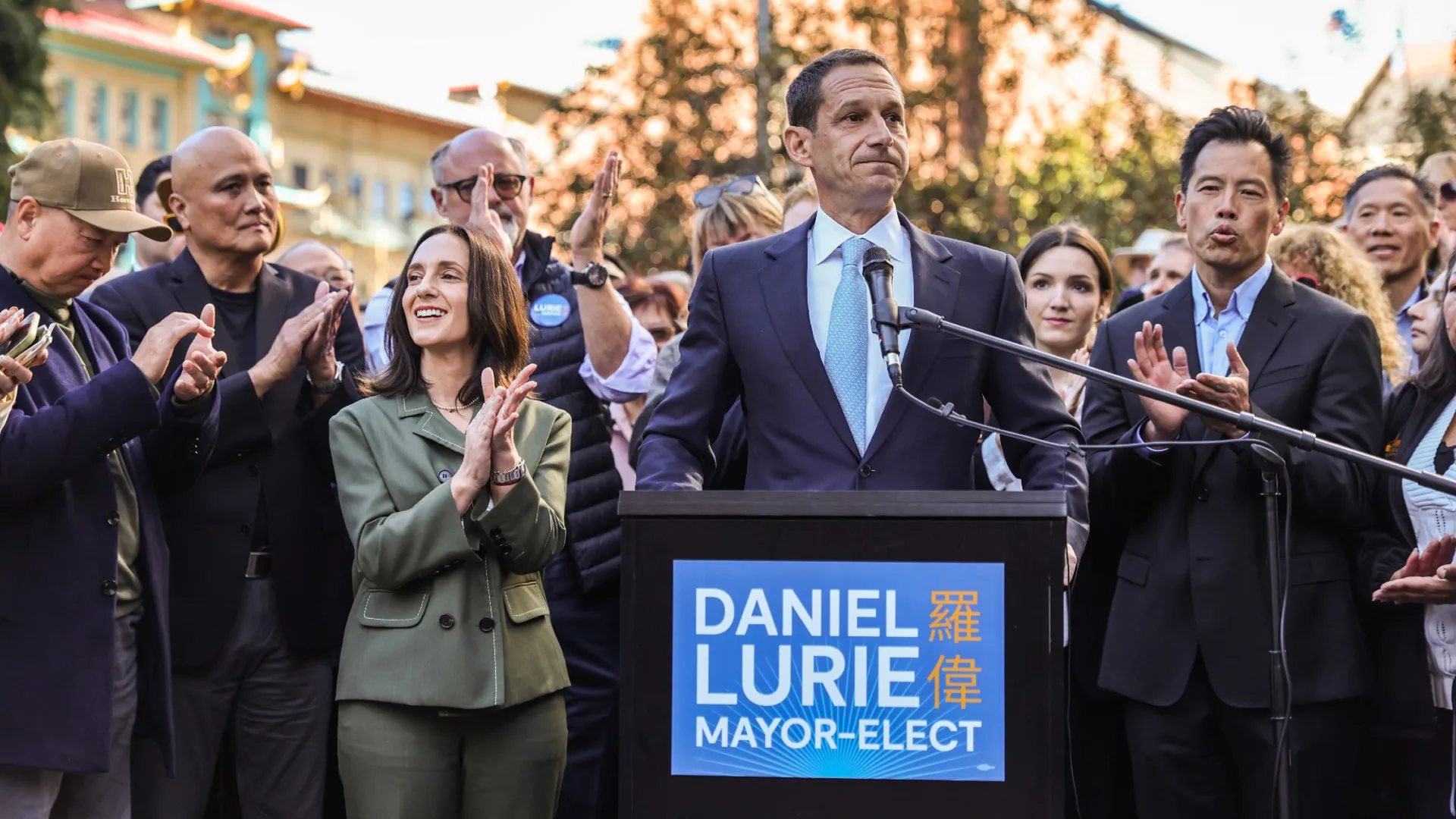
The City by the Bay will soon have a new leader, as Democrat Daniel Lurie was elected the next mayor of San Francisco on Nov. 7. Lurie, a political newcomer, beat a fellow Democrat, incumbent Mayor London Breed, to earn the city's top job. He won the mayoral race by a large margin; Lurie led through all 14 rounds of the city's ranked-choice voting system and beat Breed by more than 34,000 votes in the final round.
While Breed, the first Black woman mayor of San Francisco, was seen as among the most progressive leaders in the city's history, Lurie took a more moderate, centrist approach throughout his campaign. Having survived allegations of buying the race, Lurie will now look to implement a series of changes when he takes office on Jan. 6.
Who is Daniel Lurie?
Lurie was born in San Francisco in 1977. Through his mother Mimi Haas and stepfather Peter Haas, Lurie is an heir to one of the most recognizable clothing brands in American history: Levi Strauss & Co. Both the "Levi's name and Haas family philanthropic foundations are deeply embedded in San Francisco's history and identity," said CBS News. Lurie's biological father also has well-known connections within the city.
The Week
Escape your echo chamber. Get the facts behind the news, plus analysis from multiple perspectives.
Join more than 350,000 subscribers and keep yourself informed with a selection of The Week’s most interesting, enlightening and entertaining stories - plus daily puzzles.
Join more than 350,000 subscribers and keep yourself informed with a selection of The Week’s most interesting, enlightening and entertaining stories - plus daily puzzles.
Lurie graduated from Duke University and worked on Democratic policymaking before starting his best-known venture, Tipping Point Community. This nonprofit group has "invested $440 million over more than 200 organizations helping Bay Area residents on a path out of poverty," according to its website. Lurie announced his mayoral run last year and invested nearly $9 million of his own money in the campaign, helping him surge to victory.
What will he do as San Francisco's mayor?
Though he was new to politics, Lurie "delivered a clear message" that would broadly resonate with dissatisfied residents craving change and eventually help win him the election," said the San Francisco Chronicle. Under Breed's tenure, problems continued to plague San Francisco, with "open-air drug dealing, brazen retail thefts and empty downtown offices tarnishing the city’s reputation," and Lurie argued that an outsider was needed to tackle these issues.
Lurie's mandate is to "show how government must deliver on its promises: clean and safe streets for all, tackling our drug and behavioral health crisis, shaking up the corrupt and ineffective bureaucracy," the mayor-elect said in his victory speech. He also pledged to build more affordable housing and revitalize the city's businesses.
One of Lurie's main plans is to "declare a state of emergency on fentanyl on his first day in office in January," said The New York Times. This included a pledge to "shut down the open-air fentanyl markets that had proliferated in the city's Tenderloin and South of Market neighborhoods." He vowed during his campaign to "build 1,500 new shelter beds in his first six months in office, make drug treatment available to anyone who wants it and use ankle monitors to track first-time drug dealers."
Sign up to get Today’s Best Articles in your inbox
A free daily email with the day’s biggest news and analysis – and the best features from TheWeek.com
His election isn't a total surprise, as Lurie's win "marks the latest in a push, not only in San Francisco but across California, to more moderate candidates and tough-on-crime policies," said USA Today. Similarly, Los Angeles' progressive district attorney was also ousted in favor of a more moderate candidate.
But while Lurie has pledged to clean up San Francisco, some have questioned how effective he can be. Lurie will be the city's first mayor in more than 100 years to not have prior government experience — though "his decades-long ties to the city's political, philanthropic and social elite through his anti-poverty nonprofit, Tipping Point, don't exactly make him an outsider either," said The San Francisco Standard.
Justin Klawans has worked as a staff writer at The Week since 2022. He began his career covering local news before joining Newsweek as a breaking news reporter, where he wrote about politics, national and global affairs, business, crime, sports, film, television and other news. Justin has also freelanced for outlets including Collider and United Press International.



 talking pointsA leadership power vacuum may await Republicans
 QUOTE OF THE DAY‘What kind of culture looks at sexual violence and sees an opportunity for profit? This is rape culture. And it should disturb every single one of us.’
 today’s big questionHow long can US consumers continue their spending spree?