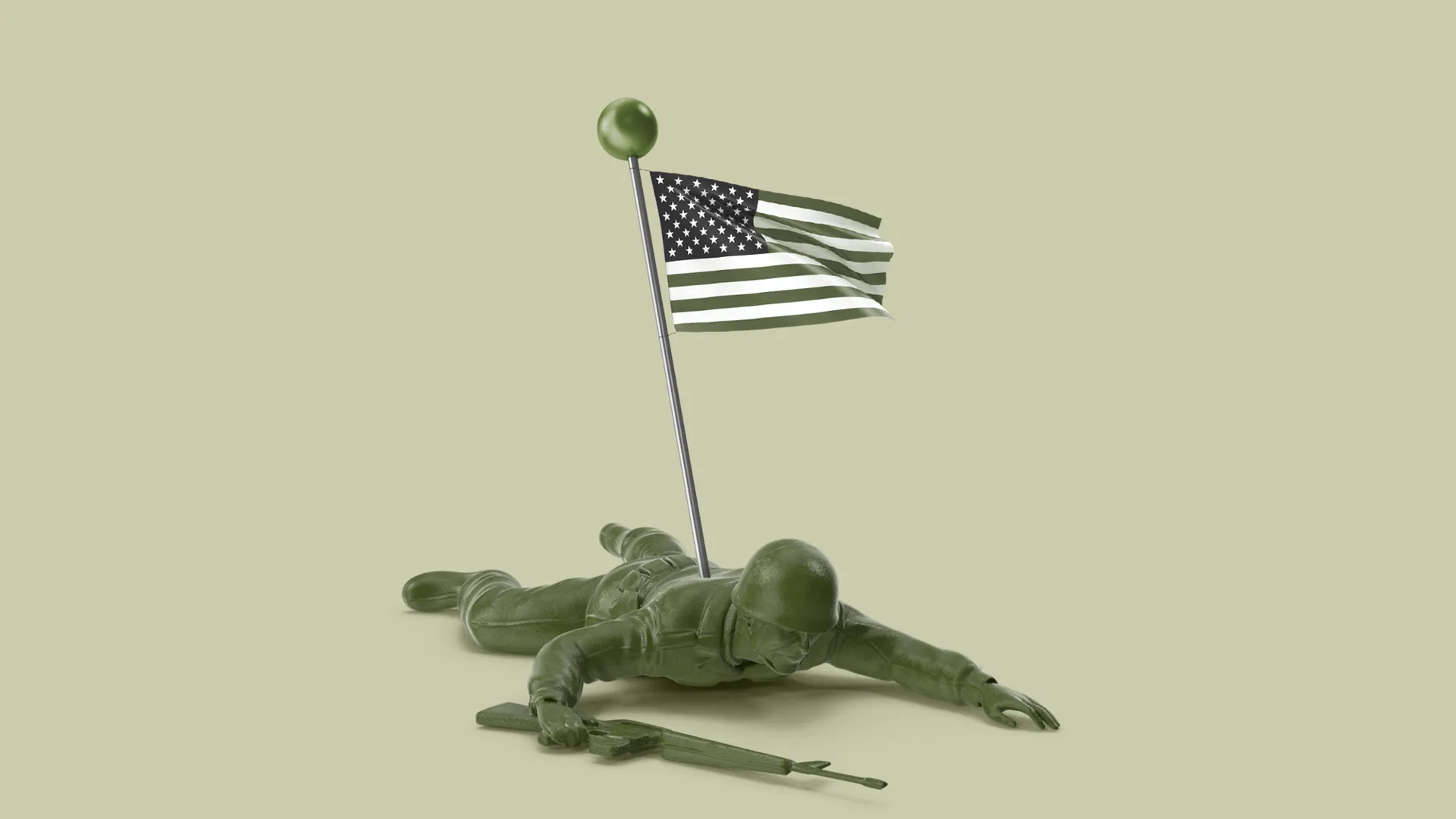
The American military is often lauded as the fiercest fighting force in the world, but there are gathering signs that something is off-kilter. Morale problems aboard rust-coated Navy ships, a purge of top officers in the Army, and a shortage of munitions in the Middle East have contributed to a growing sense of alarm. And critics, including some Republicans, are pointing the finger at Defense Secretary Pete Hegseth.
The Pentagon is in “turmoil,” said Axios, riven by internal ideological disputes while fighting a war with Iran. The secretary’s “firings and feuds” have left the Army “rudderless,” said The New York Times. The service has been without a permanent leader since Hegseth dismissed Gen. Randy George in April “without explanation.” Internal disputes reportedly led to this week’s resignation of Army Secretary Dan Driscoll, who had been seen as a possible Hegseth successor.
The war, meanwhile, is “piling pressure on budgets across the military,” said The Guardian, with the Navy forced to dip into its payroll budget to “cover the costs of combat.” The conflict is also taking a visible toll on the service: The rust-covered and morale-sapped USS Abraham Lincoln this week “shocked” observers who encountered it at a Thai port after 286 days at sea, said CNN.
The Week
Escape your echo chamber. Get the facts behind the news, plus analysis from multiple perspectives.
SUBSCRIBE & SAVE
Sign up for The Week's Free Newsletters
Join more than 350,000 subscribers and keep yourself informed with a selection of The Week’s most interesting, enlightening and entertaining stories - plus daily puzzles.
Join more than 350,000 subscribers and keep yourself informed with a selection of The Week’s most interesting, enlightening and entertaining stories - plus daily puzzles.
Latest Videos FromThe Week US
The various crises have led senior commanders to warn Hegseth the war is “unsustainable and risks weakening their ability to confront threats elsewhere,” said The Washington Post. Hegseth is nonetheless “escalating the strain” on U.S. forces by “quietly extending troop deployments” in the Middle East, said The Wall Street Journal. The Pentagon is “giving up presence in other regions” like the Pacific in order to devote those resources to Iran, the Hudson Institute’s Bryan Clark told the outlet. The Navy, in particular, is “officially stretched beyond its limits,” Mackenzie Eaglen and Nicholas Carl said at The National Interest.
Hegseth’s “purges” of top officers has “created a dangerous leadership vacuum” that is “jeopardizing national security,” Max Boot said at The Washington Post. The secretary’s focus appears to be “publicly performing pushups” and eliminating diversity programs in the military, Jeff McCausland said at MS NOW.Hegseth still having his job is a sign that President Donald Trump “simply likes the way” the secretary is performing despite the growing criticisms, Shane Croucher said at Newsweek.
What next?
A growing number of Republicans in Congress are “sick” of Hegseth, said The New Republic. Trump should “find a new leader at the Pentagon,” Sen. Thom Tillis (R-N.C.) said this week on X. Hegseth “has not been a very good leader in many ways,” Rep. Don Bacon (R-Neb.) said on CNN.
Trump disagrees. Hegseth is “doing a fantastic job,” Trump told reporters this week. But polls show that Hegseth is “possibly the most unpopular” member of the president’s cabinet, said CNN. His problems — and the challenges faced by the military — “are getting harder to ignore.”