Sign up to get Today’s Best Articles in your inbox
Join 350,000+ subscribers and keep yourself informed with a selection of
The Week’s most interesting, enlightening and entertaining stories - plus daily puzzles.
You are now subscribed
Your newsletter sign-up was successful
Want to add more newsletters?
An account already exists for this email address, please log in.
How has a year of National Guard deployment affected Washington, DC?
The deployment is expected to cost billions of dollars through the end of Trump’s term
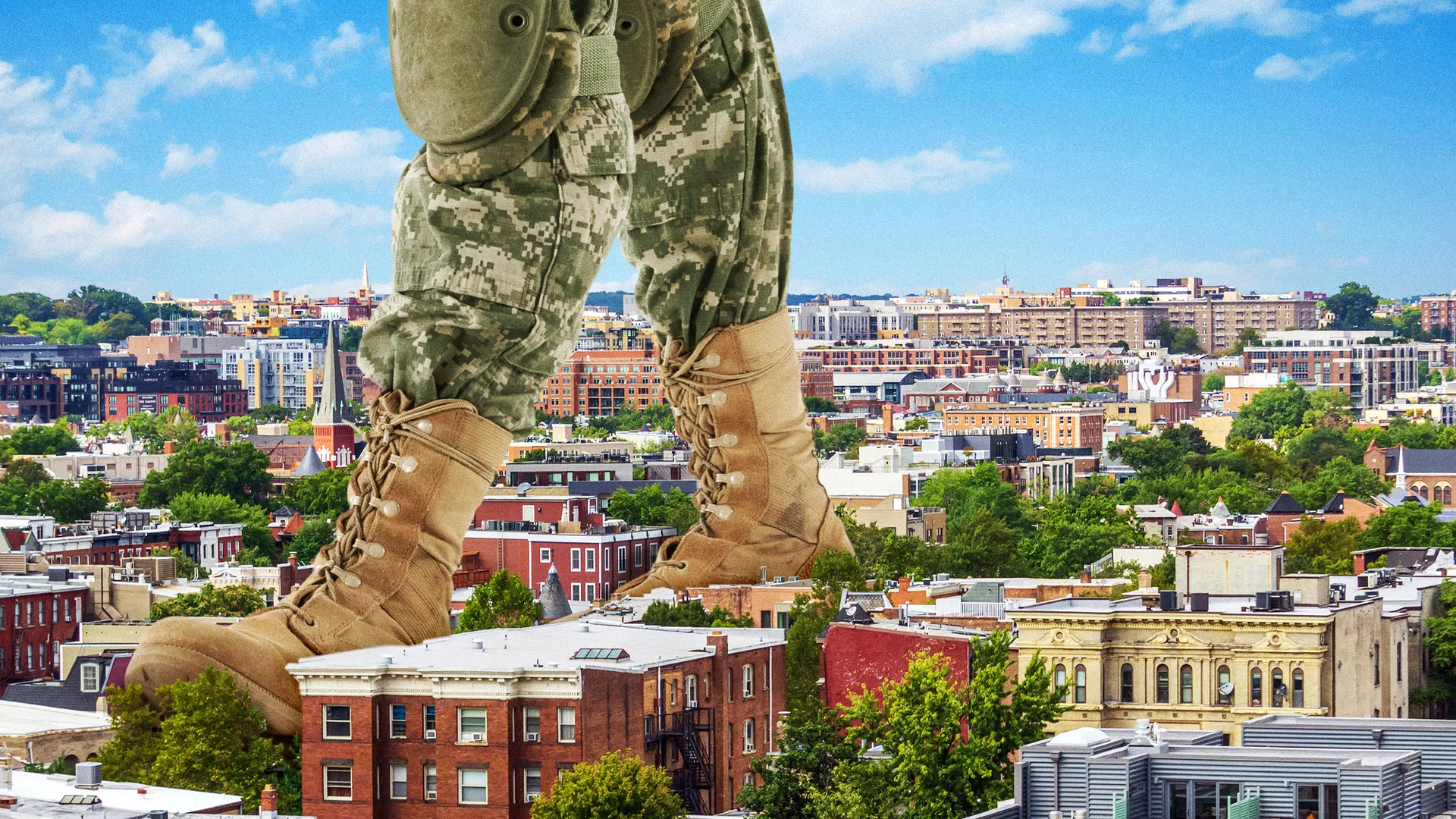
August 2026 marks one year since National Guard soldiers began patrolling Washington, D.C., at the behest of the Trump administration, and the past 12 months of troop presence have changed what daily life looks like for many in the nation’s capital. While some feel the National Guard has helped to reduce crime and maintain a sense of safety in Washington, others say that the past year has been indicative of an authoritarian takeover.
What did the commentators say?
Throughout Washington, armed soldiers have become “fixtures in Metro stations, on downtown streets and around newly refurbished federal parks,” said The New York Times. These “federal agents in flak jackets patrol residential streets alongside city police officers” and appear unlikely “to go away soon,” as the White House recently extended the National Guard deployment through the end of 2029.
At the outset, President Donald Trump “cast the deployment in dire terms, describing a city overwhelmed by violence and disorder and promising that federal intervention would restore control,” said ABC News. But the deployment came as “violent crime is in precipitous decline nationwide, falling to record lows in cities with no federal intervention,” said the Times. Specifically in Washington, violent crime “was already reaching the lowest levels in decades” before the August 2025 mobilization; it has since gone back up 3% on the year, according to the city’s policing data.
The Week
Escape your echo chamber. Get the facts behind the news, plus analysis from multiple perspectives.
Join more than 350,000 subscribers and keep yourself informed with a selection of The Week’s most interesting, enlightening and entertaining stories - plus daily puzzles.
Join more than 350,000 subscribers and keep yourself informed with a selection of The Week’s most interesting, enlightening and entertaining stories - plus daily puzzles.
Opinions on the National Guard remain “mixed among residents, politicians and experts,” said Al Jazeera. “For the most part, they’ve kept things peaceful and tranquil here,” Aaron Taslitz, a 30-year-old teacher in D.C., told Al Jazeera. Some residents feel they’ve overstayed their welcome. The soldiers “ain’t doing nothing but walking,” Ybonne Coles, a 60-year-old restaurant worker, said to Al Jazeera. “That money could go toward organizations to help people that really need help.”
Others are concerned about the continued symbolism of the National Guard, as it has become “part of the city scenery,” said NPR. “I worry about these troops standing on street corners fading into the background, and people starting to accept this as just a fact of life,” Joseph Nunn, a counsel in the Brennan Center’s Liberty and National Security program, told NPR. Soldiers “standing on the street corners in an American city should never be normal.”
What next?
The White House’s extension of the troops’ stationing is set to keep National Guard soldiers in Washington through at least the end of Trump’s term in 2029. This will cost an additional $1.4 billion, according to estimates given to the Senate Armed Services Committee.
Many are wary of what this extended stay could mean for the city’s future, and some find the situation ironic given that the U.S. “was the first to establish the modern democratic norm of divorcing the military and civilian policing,” Nunn said to NPR, also noting there is a line in the Declaration of Independence “condemning King George III for keeping standing armies among the population in times of peace.” The troops were “deployed to our communities under false pretenses,” Monica Hopkins, the director of the Washington, D.C., ACLU, told NPR. “It’s not a genuine emergency.”
Sign up to get Today’s Best Articles in your inbox
A free daily email with the day’s biggest news and analysis – and the best features from TheWeek.com
Justin Klawans has worked as a staff writer at The Week since 2022. He began his career covering local news before joining Newsweek as a breaking news reporter, where he wrote about politics, national and global affairs, business, crime, sports, film, television and other news. Justin has also freelanced for outlets including Collider and United Press International.