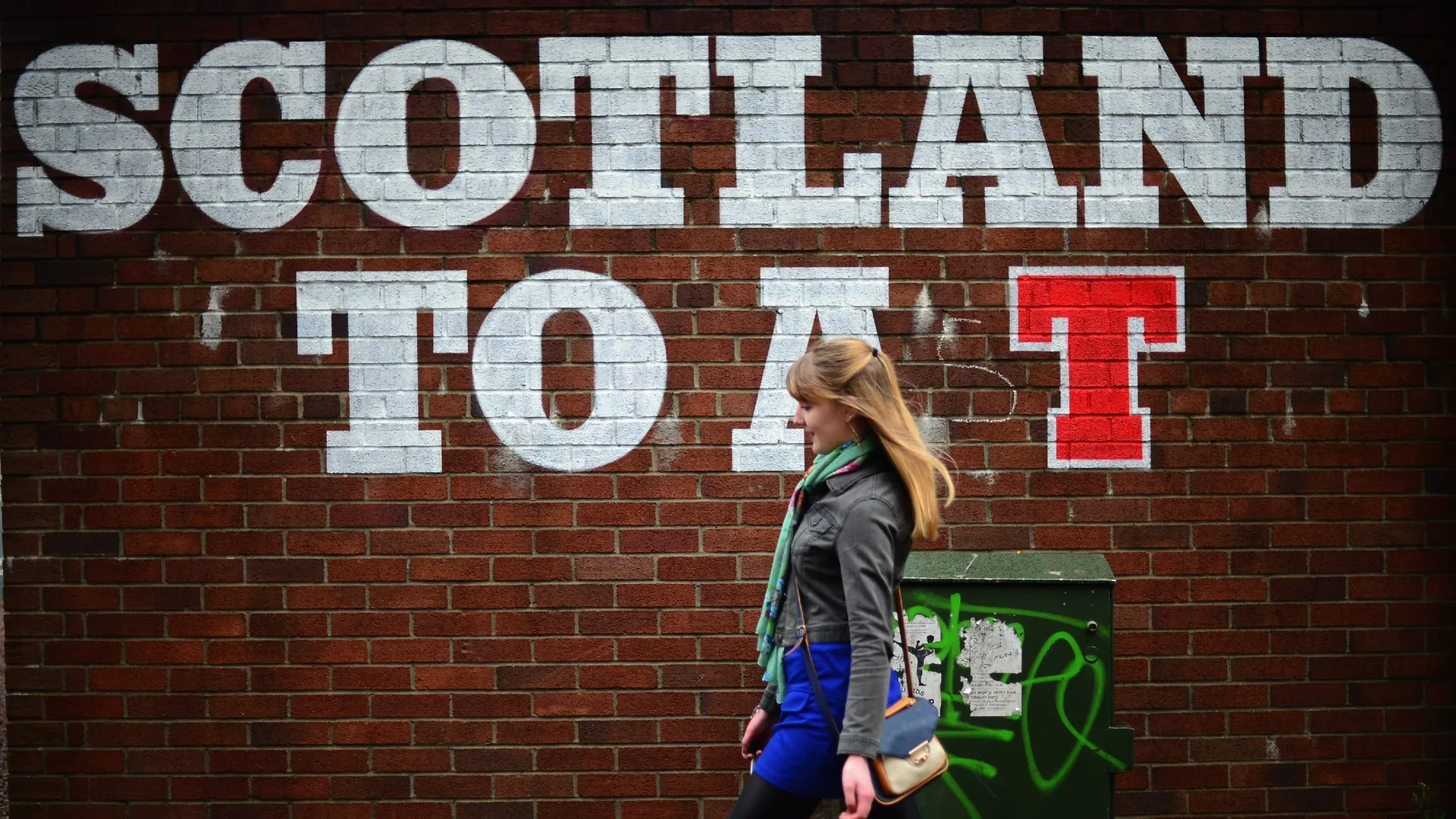
The UK government has rejected a call from Scotland’s devolved parliament for a new Scottish independence referendum. MSPs voted 72-55 in favour of being able to call another ballot, 12 years after the last one failed, but Downing Street said there was no UK-wide consensus for another vote.
Back in 2014, “there was agreement across all parties, across civic society in Scotland and across the Scottish and UK parliaments, that there should be a referendum”, said a No. 10 spokesperson. In the absence of that now, we do not support another referendum; neither does the UK government support independence.
Not a ‘potent issue’
Scottish voters rejected independence in 2014 by 55% to 45%. Over a decade on, the nation is almost evenly divided “on the question of its constitutional future”, said The Institute for Government. Support for independence has “fluctuated” in opinion poll data, “without either yes or no ever establishing a decisive lead”.
The Week
Escape your echo chamber. Get the facts behind the news, plus analysis from multiple perspectives.
SUBSCRIBE & SAVE
Sign up for The Week's Free Newsletters
Join more than 350,000 subscribers and keep yourself informed with a selection of The Week’s most interesting, enlightening and entertaining stories - plus daily puzzles.
Join more than 350,000 subscribers and keep yourself informed with a selection of The Week’s most interesting, enlightening and entertaining stories - plus daily puzzles.
Latest Videos FromThe Week US
When BBC Scotland sampled opinion in a Savanta online survey earlier this year, 47% of the 2,136 Scots surveyed said they would vote yes to independence, and 44% said they would vote no, with 8% undecided. While just a “snapshot”, this is “in line with the polling trend”, said Glenn Campbell, the BBC’s Scotland political editor. But there’s “another consideration” here: only 13% of those polled ranked independence as a “top three priority” for Scotland. Way higher came the cost of living (62%), the NHS (50%) and the economy (31%).
Independence remains an “important motivator for some voters” but “it does not feel as potent an issue” as it has in the past. That said, “independence is significantly more popular” than the SNP, the main nationalist party, itself.
‘The SNP fights for Scotland’
“As if Scotland hasn’t suffered enough at the hands of the SNP, the luxury campervan party and its Green accomplices” now want a second independence referendum, said The Spectator. Thankfully, Keir Starmer “is in no mood to indulge Scottish First Minister John Swinney’s fantasies by granting a Section 30 order” and allowing that to happen.
While this week’s Holyrood vote was “largely symbolic”, said Bloomberg, “it highlights how Scotland’s constitutional future has returned to the core of British politics”. The SNP may have fallen short of an overall majority in the recent elections to the Scottish Parliament but, with the Greens, they have still “secured their largest ever pro-independence majority”.
That the SNP secured a fifth consecutive election victory, despite its “patchy record on public service delivery”, “its bouts of internal warfare”, and the scandal of Peter Murrell’s embezzling of party funds, reflects “the independence aspirations among half the population and the sense that the SNP fights for Scotland”, said Simeon Kerr, the Financial Times’ Scotland correspondent.
“The SNP don’t have to be good; they just have to be Scottish,” Andy Maciver of PR consultancy Message Matters told the FT. But to build support for independence above 50%, the party will need to restore faith in its competence. The prospect of Reform UK’s Nigel Farage in No. 10 could certainly help. “They need people to run away from the rain in Westminster and towards the sun in Holyrood”.