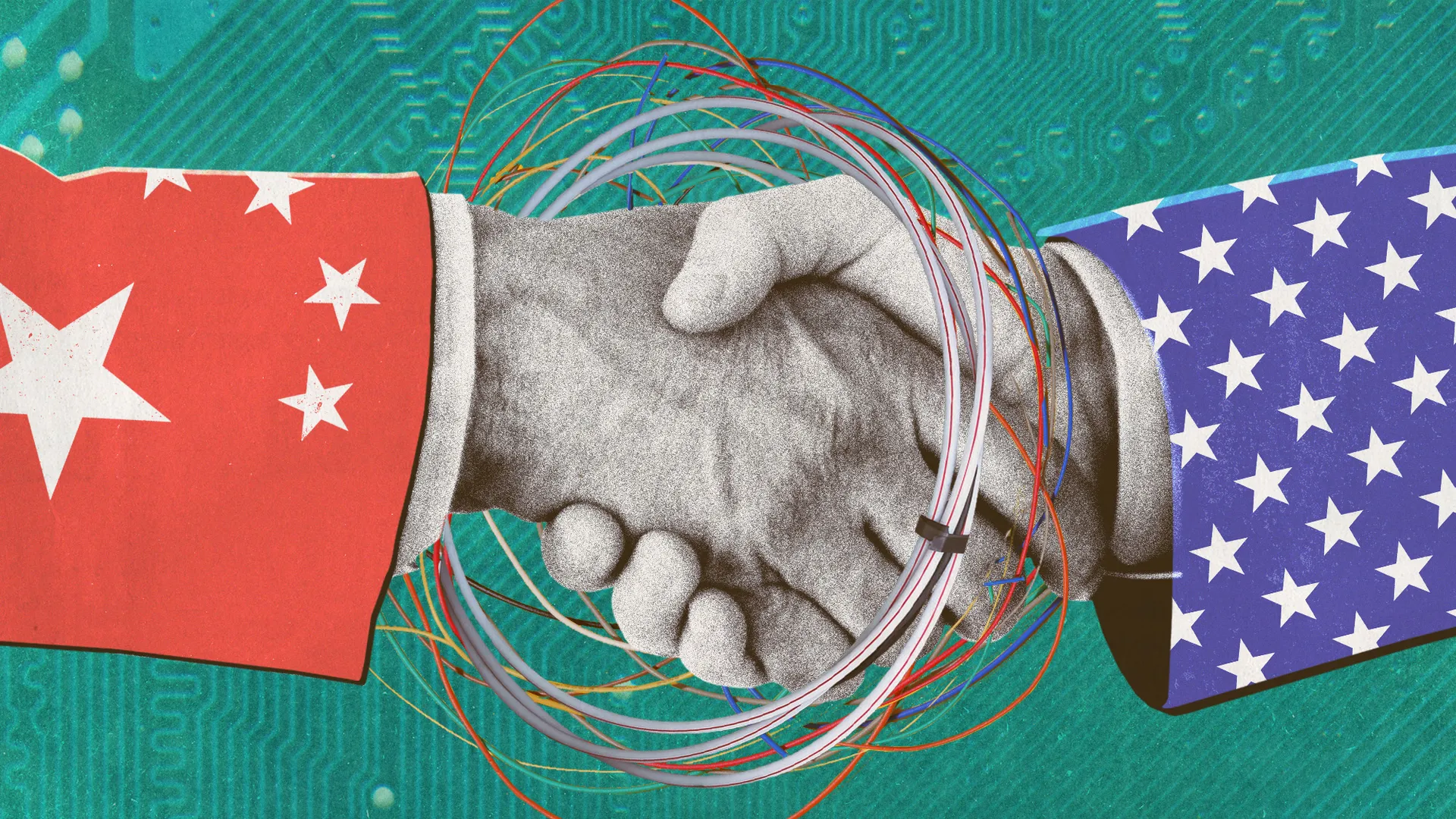
China and the U.S. are locked in a race to develop the most powerful artificial intelligence models. Industry leaders are increasingly calling for regulations and guardrails to keep the technology from threatening humanity, which means the competing nations must collaborate to rein in AI as it gallops ahead. But observers are skeptical that Washington and Beijing can find the will to do so.
AI safety is “on the agenda” for this week’s summit between President Donald Trump and Chinese leader Xi Jinping, said The Associated Press. But both sides “see the other as the problem.” Trump has warned that “any efforts to regulate the technology would help China,” while Chinese leaders see talk of new safety rules as an attempt to slow their nation’s rapid advances so that the U.S. can create a “monopoly” on AI.
Some experts say Trump and Xi do not need to come to a full agreement on rules to create room for a slowdown. The two leaders “just need to create political space by acknowledging AI poses risks to both countries,” said Samm Sacks, a fellow at John Hopkins, to the AP.
The Week
Escape your echo chamber. Get the facts behind the news, plus analysis from multiple perspectives.
SUBSCRIBE & SAVE
Sign up for The Week's Free Newsletters
Join more than 350,000 subscribers and keep yourself informed with a selection of The Week’s most interesting, enlightening and entertaining stories - plus daily puzzles.
Join more than 350,000 subscribers and keep yourself informed with a selection of The Week’s most interesting, enlightening and entertaining stories - plus daily puzzles.
Latest Videos FromThe Week US
Chinese leaders don’t see AI as an “existential threat to humanity,” said Kyle Chan, of the Brookings Institution, at The New York Times. The two countries have different anxieties. U.S. companies like Anthropic and OpenAI use AI to “develop even better AI systems,” creating concerns about a “feedback loop” in which humans “no longer have control over the process.”
Chinese companies like DeepSeek and Moonshot, by contrast, have “limited access to AI computing power” and so see that tipping point as being a “long way off.” Beijing is more worried about AI being used to spark a “mass movement powerful enough to topple the Communist Party.” It will be hard for the two countries to find common ground on the issue “without a baseline level of mutual understanding.”
Beijing would be “perfectly happy to watch Washington scare America into slowing itself down,” said Rep. Kat Cammack (R-Fla.) at the National Review. China’s Communist leaders are “actively working to exploit Americans’ fears” about the technology, and Beijing wins every time the U.S. “makes itself slower, more expensive and more afraid to experiment.” Washington is “flirting with exactly that mentality on AI.”
What next?
The U.S. is proposing an “emergency AI hotline” with China, said Axios. “More transparency” between the world’s AI superpowers is “very important," said Treasury Secretary Scott Bessent to reporters, per the outlet.
Still, neither nation “expects a breakthrough” at this week’s Trump-Xi summit, said The Economist. The growing risks posed by artificial intelligence “demand more urgency” than either side is bringing to the table. Until that urgency arrives, the “best hope is that the two sides keep talking.”