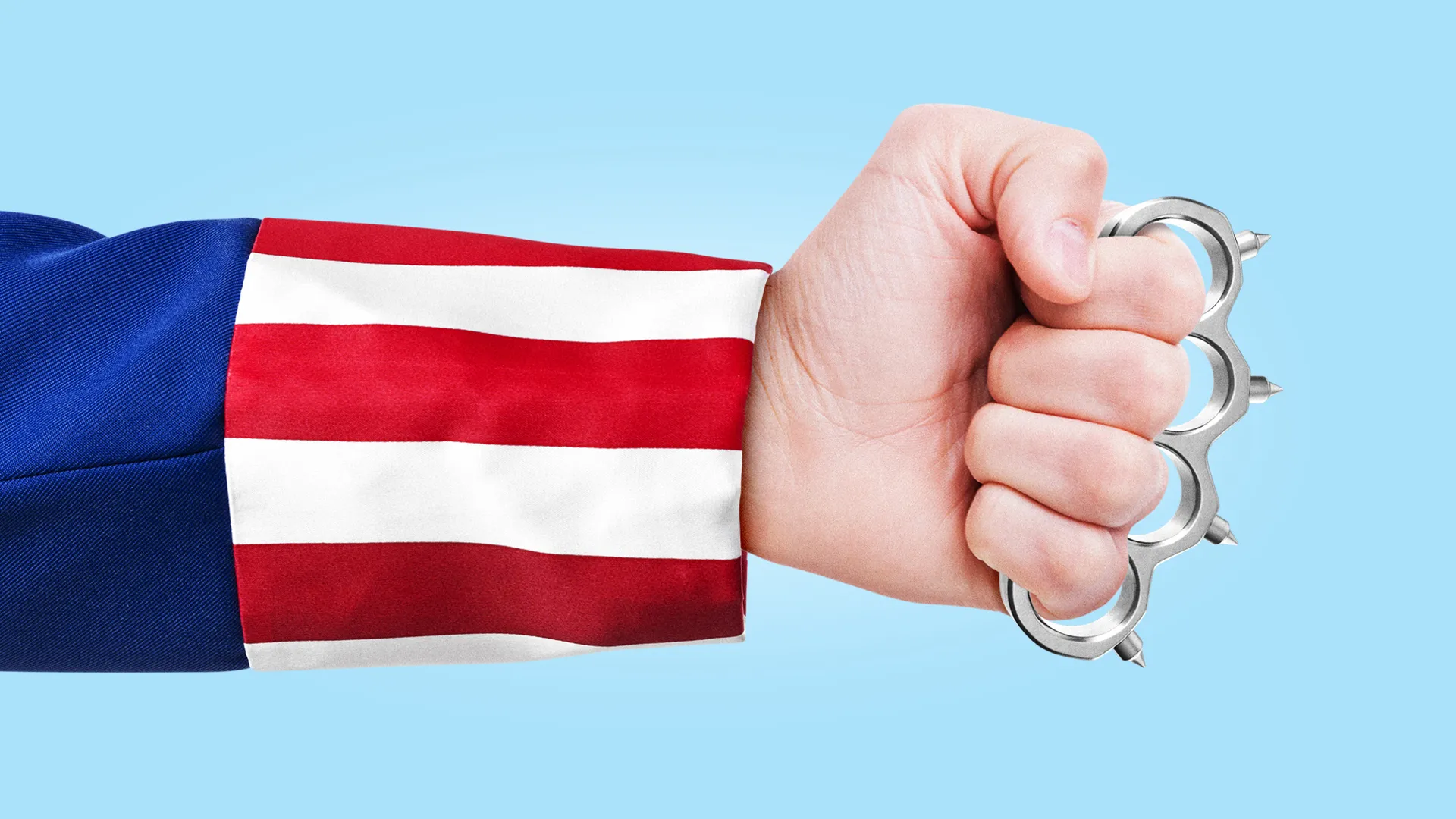
The Iran war follows on the heels of President Donald Trump’s tariffs on allies and threats to take Greenland from NATO partner Denmark. Now, the president is demanding that other countries reopen the Strait of Hormuz closed by the war he launched. And critics say he has transformed the U.S. from the so-called leader of the free world into a rogue superpower that threatens global stability.
Trump has driven “deep and perhaps permanent wedges” between the U.S. and its allies in Europe and Asia, said Robert Kagan at The Atlantic. The Iran war was launched with “no public debate, no vote in Congress” and no consultation with “allies other than Israel.” Europeans must now wonder if the war signals that the president is “more or less likely” to “take similarly bold action on Greenland.” American global leadership survived unpopular wars in Vietnam and Afghanistan. But it may not survive this.
Weaker, lonelier and less effective
The fallout from Iran demonstrates the administration “either didn’t understand how its actions would affect other states or simply didn’t care,” said Stephen M. Walt at Foreign Policy. That leaves “every country in the world” trying to determine how to work with an “increasingly rogue” U.S. For now, its ostensible friends have to weigh whether U.S. power “could be used to harm them either intentionally or inadvertently.”
The Week
Escape your echo chamber. Get the facts behind the news, plus analysis from multiple perspectives.
SUBSCRIBE & SAVE
Sign up for The Week's Free Newsletters
Join more than 350,000 subscribers and keep yourself informed with a selection of The Week’s most interesting, enlightening and entertaining stories - plus daily puzzles.
Join more than 350,000 subscribers and keep yourself informed with a selection of The Week’s most interesting, enlightening and entertaining stories - plus daily puzzles.
Latest Videos FromThe Week US
Every post-Cold War administration has taken on actual “rogue” states, said Matthew Kroenig at The Wall Street Journal. U.S. presidents have waged a “de facto campaign of toppling anti-American dictators” such as Saddam Hussein in Iraq and Moammar Gadhafi in Libya. And Iran is the “biggest prize” on the list. Even if the Islamic regime does not fall under the weight of U.S. attacks, it will be “too weak to pose a serious threat for years to come.” That puts Trump “on the verge of eliminating the world’s rogue states.”
A swaggering superpower “could be a collective asset for the democratic world,” said Hal Brands at Bloomberg. But Trump’s approach could transform the U.S. into an “out-of-control hegemon” at risk of being “weaker, lonelier and less effective than before.” Success in Iran might “create a new Middle East with a U.S.-led coalition at its core,” but failure will serve as a “damaging rebuff of U.S. power.”
Allies look to Beijing
The U.S. “had to do it ourselves” because other countries would not join the “decapitation of Iran,” said Trump in a Wednesday night prime-time address to the nation. The president has threatened to leave NATO over the issue, but there are “few signs that’s happening,” said Politico.
Polling shows residents of Canada, France, Germany and the U.K. now “believe it’s better to depend on China” than the U.S., said Politico. The U.S. “no longer works in partnership” with its old allies, said former Deputy Assistant Secretary Mark Lambert to the outlet, and is “only focused on itself.”