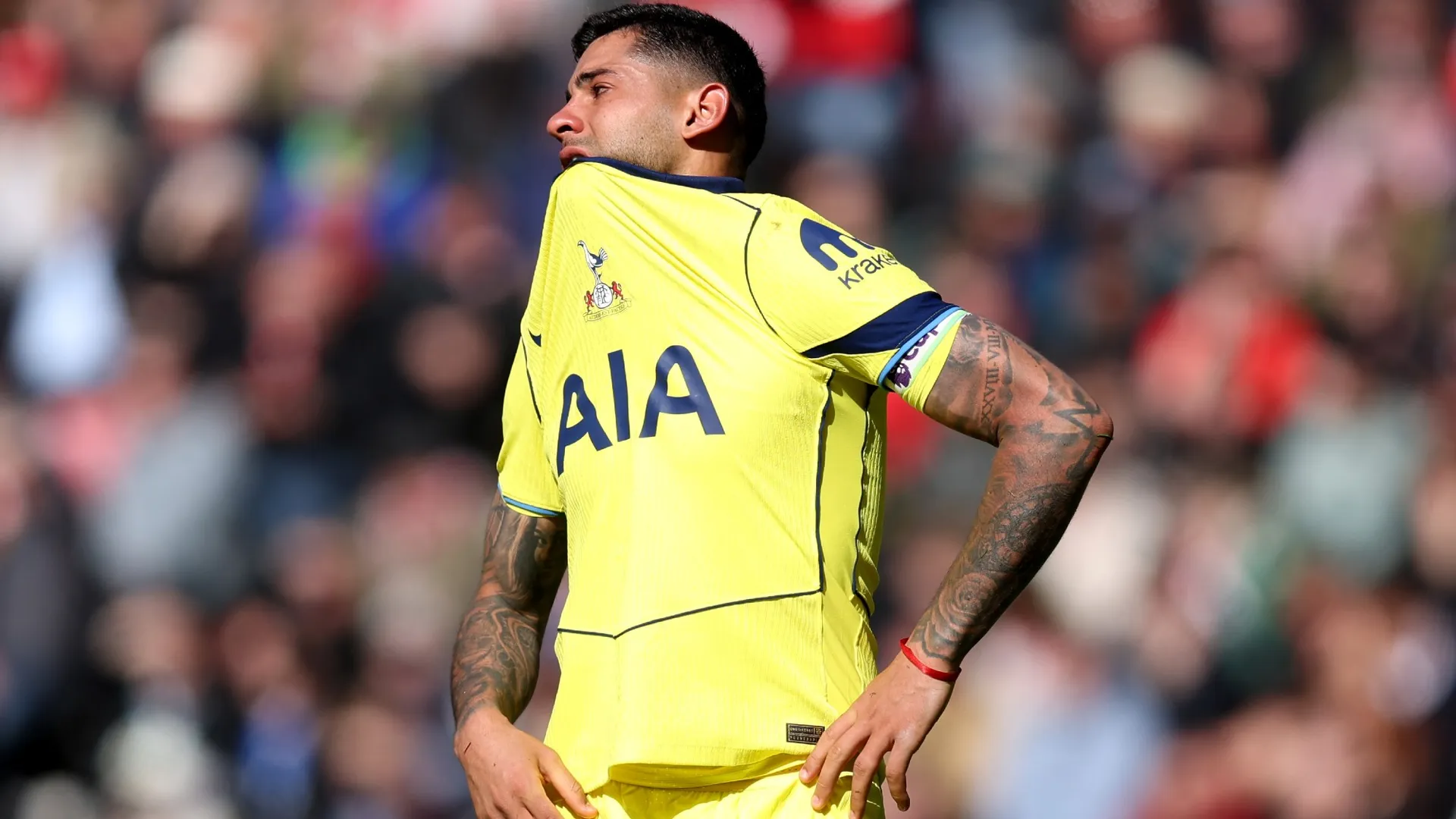
Tottenham Hotspur’s defeat at Sunderland plunged them into the Premier League relegation zone with only six matches left to save their season.
No football club wants to be relegated but for a famous name like Tottenham, the drop can be particularly tough because “the bigger they are, the harder they fall”, said The i Paper.
Departing jewels
The north London club have won two league titles, eight FA Cups, four League Cups, and four European trophies in their illustrious past. As recently as 2019, they were beaten finalists in the Champions League. Spurs are the ninth richest club in the world but it’s their position in the Premier League that really matters right now – and they are third from bottom.
The Week
Escape your echo chamber. Get the facts behind the news, plus analysis from multiple perspectives.
SUBSCRIBE & SAVE
Sign up for The Week's Free Newsletters
Join more than 350,000 subscribers and keep yourself informed with a selection of The Week’s most interesting, enlightening and entertaining stories - plus daily puzzles.
Join more than 350,000 subscribers and keep yourself informed with a selection of The Week’s most interesting, enlightening and entertaining stories - plus daily puzzles.
Latest Videos FromThe Week US
Spurs’ wage bill is the seventh highest in the Premier League at £2.63 million per week – nearly twice as much as relegation rivals West Ham. A clause in player contracts imposes a 50% pay cut if the club are relegated but sports finance expert Rob Wilson said this is “nowhere near enough”. The club would need to cut wages by a minimum 75% to “balance” the books.
The club would then need to sell the “crown jewels” in the squad, such as Archie Gray, Djed Spence, Dominic Solanke and Cristian Romero. Rival clubs will “squeeze down the value” of players and “open with offers 30-50% below Spurs’ asking price”, said Wilson. Its annual revenue, which was £565.3 million at the last count, would be expected to drop by £200 million after relegation.
On the brighter side, Spurs would receive “parachute payments”. These are a series of “solidarity payments” the Premier League makes to relegated clubs for up to three years, to “help them adapt to reduced revenues”, such as “significantly less TV revenue”, said the BBC.
Big target
The experience of other big clubs relegated from the Premier League offers precious little hope for Spurs fans. Between 2000 and 2003, Leeds United finished in the top five of the league and reached the semi-final of the Champions League in 2001, but the club were still relegated in 2004. Three years later, Leeds dropped into League One, the third tier, where they spent three seasons. It took them 16 years to get back to the Premier League.
When Manchester City were relegated from the Premier League in 1996, they too ended up in the third tier. They returned in 2002, after changing divisions six times in a “dizzying seven-season period”, said The Sporting News.
When Aston Villa were relegated in 2016, they won only one of their first 12 matches in the Championship, partly because opponents often raised their game against such a big club. One Villa player, Ashley Westwood, said you play with “a big target on your back” in the Championship. “Did teams try harder against us? It certainly felt like that,” he told The Athletic.
The “wider fallout” of Villa’s drop included a redundancy programme to reduce the workforce by around a third. Steve Hollis, the chairman, was “left astonished” after some of the staff told him they would be “willing to work for nothing” because they “loved the club so much”.