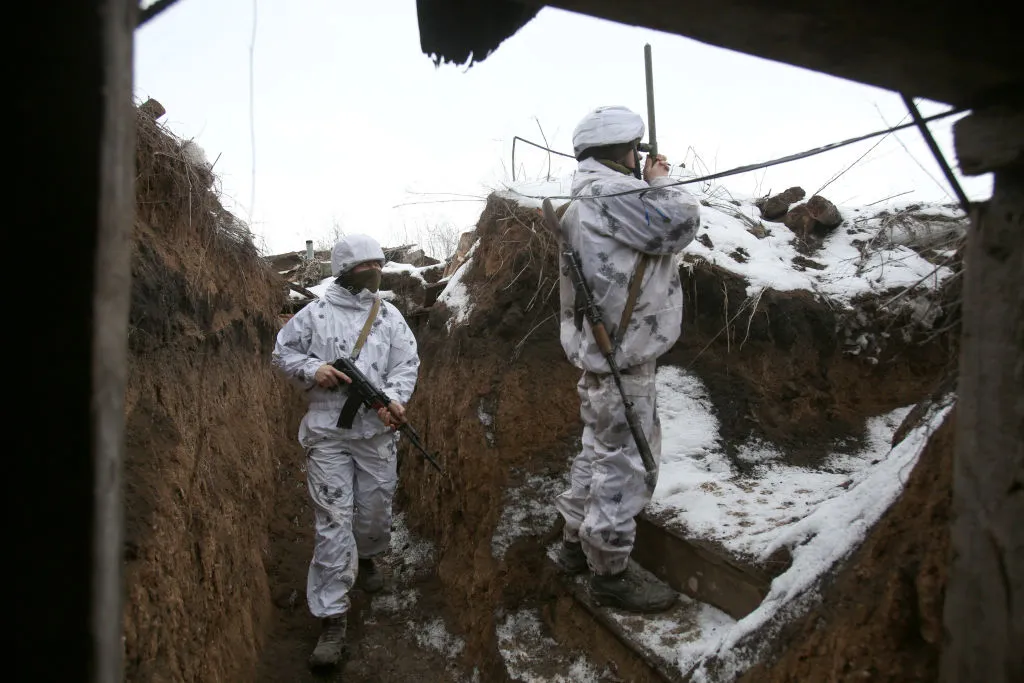
Ukraine's army may have trouble transitioning from low-level conflict with Russian-backed separatists to full-scale war with Russia, a New York Times report published Tuesday claimed.
According to the Times, the ongoing conflict in Eastern Ukraine, which began in 2014 and has killed more than 14,000 people, "is fought mostly with rifles, machines guns, rocket propelled grenades, mortars and artillery systems dating to the 1970s or earlier." Ukrainian tactics, which focus on infantry-heavy trench warfare, are seen as equally outdated.
The United States, United Kingdom, and Eastern European NATO members have all sent high-tech anti-aircraft and anti-tank weapons to Ukraine, but Ukrainian troops have little to no experience using these weapons in combat.
The Week
Escape your echo chamber. Get the facts behind the news, plus analysis from multiple perspectives.
SUBSCRIBE & SAVE
Sign up for The Week's Free Newsletters
Join more than 350,000 subscribers and keep yourself informed with a selection of The Week’s most interesting, enlightening and entertaining stories - plus daily puzzles.
Join more than 350,000 subscribers and keep yourself informed with a selection of The Week’s most interesting, enlightening and entertaining stories - plus daily puzzles.
Latest Videos FromThe Week US
The more than 100,000 troops Russia has massed on Ukraine's border would enjoy a number of advantages over Ukrainian forces, including air superiority and more modern weapons. Forbes suggested last month that "infantry packing anti-tank missiles, scurrying across a network of trenches and bunkers, are central to Ukraine's defense plans" but that Russia could use fuel-air explosives to neutralize these fortifications.
Fuel-air weapons, Forbes explained, "burst over their targets, spreading a fuel vapor, before exploding and igniting the fuel and creating a pressure wave that's twice as powerful as that from a conventional artillery shell." Defenses like trenches reportedly don't protect against the effects of fuel-air explosives.
Ukrainian forces on the eastern front operate mostly out of trenches soldiers dig for themselves. The Times reported that the entrenched position their reporters visited was covered with plastic sheeting.
The Times writes that Ukraine's forces are in "far better shape than in 2014, when Russia annexed the Crimean Peninsula," but remain "decidedly old-fashioned."