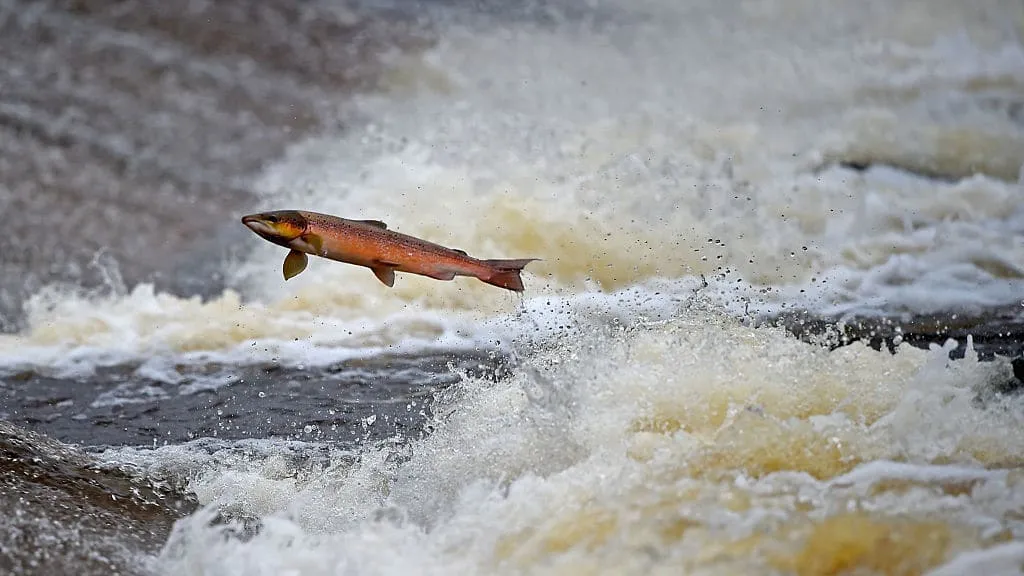
California high schoolers rescue 4,000 endangered salmon
The students at Casa Grande High School in Petaluma, California, have stepped up to save endangered coho salmon.
In 1993, the school built a large hatchery on campus, where students typically raise steelhead trout. Because of California's drought, the water became too warm for 4,000 endangered coho salmon at a Lake Sonoma hatchery, and they were moved to Casa Grande, where the tanks can be kept at an optimal temperature for the fish.
Manfred Kittel of the California Department of Fish and Wildlife told The San Francisco Chronicle he was impressed by the quality of the program and "professionalism" of science teacher Dan Hubacker, who oversees the hatchery, and his students. Before students are allowed to participate in the program, they must take a conservation and biology class and pass two safety tests. It's a full-time job taking care of the fish, with students coming in on the weekends to feed them.
The Week
Escape your echo chamber. Get the facts behind the news, plus analysis from multiple perspectives.
Sign up for The Week's Free Newsletters
Join more than 350,000 subscribers and keep yourself informed with a selection of The Week’s most interesting, enlightening and entertaining stories - plus daily puzzles.
This is the first time Casa Grande has had the chance to rescue an endangered species, and the students are up for the challenge. "We have this opportunity to save coho salmon, to see that we can do it, if people put their minds to it," Kate Carlson, 17, told the Chronicle.
Stories of progress and joy, delivered every Thursday
Catherine Garcia has worked as a senior writer at The Week since 2014. Her writing and reporting have appeared in Entertainment Weekly, The New York Times, Wirecutter, NBC News and "The Book of Jezebel," among others. She's a graduate of the University of Redlands and the Columbia University Graduate School of Journalism.