Report: U.S. considering sending high-level official to Kyiv
The United States is considering sending a high-level official to Ukraine in the near future, as a sign of solidarity with the country amid its war with Russia, a person with knowledge of the matter told The New York Times on Wednesday.
The official would go to Kyiv, Ukraine's capital. Since the start of the war, President Biden, Vice President Kamala Harris, and Secretary of State Antony Blinken have visited neighboring countries, but no U.S. official has publicly entered Ukraine.
The person familiar with the matter told the Times that because of security concerns, it's highly unlikely Biden or Harris would make the high-risk trip to Kyiv. Instead, the idea of sending a Cabinet or senior military member, who would need a smaller security team, is being explored. Typically, when a senior U.S. official visits a war zone, it isn't announced until they arrive — and in the most sensitive cases, it isn't made public until they have left.
The Week
Escape your echo chamber. Get the facts behind the news, plus analysis from multiple perspectives.
Sign up for The Week's Free Newsletters
From our morning news briefing to a weekly Good News Newsletter, get the best of The Week delivered directly to your inbox.
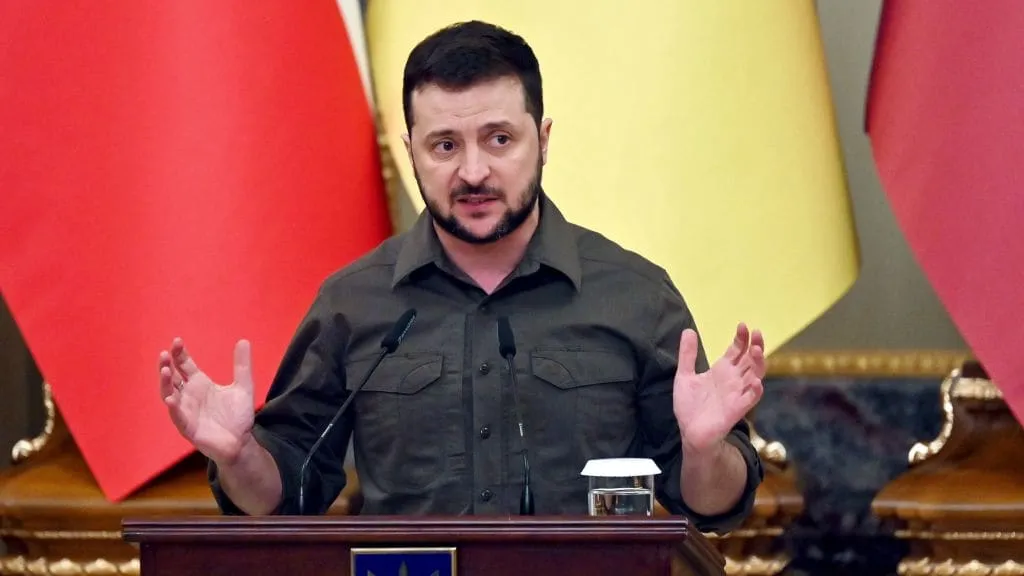
Several world leaders have met with Ukrainian President Volodymyr Zelensky in Kyiv this month, including British Prime Minister Boris Johnson, Estonian President Alar Karis, Lithuanian President Gitanas Nausėda, Polish President Andrzej Duda, and Latvian President Egils Levits.
A free daily email with the biggest news stories of the day – and the best features from TheWeek.com
Catherine Garcia has worked as a senior writer at The Week since 2014. Her writing and reporting have appeared in Entertainment Weekly, The New York Times, Wirecutter, NBC News and "The Book of Jezebel," among others. She's a graduate of the University of Redlands and the Columbia University Graduate School of Journalism.
-
Moon dust has earthly elements thanks to a magnetic bridgeUnder the radar The substances could help supply a lunar base
-
World’s oldest rock art discovered in IndonesiaUnder the Radar Ancient handprint on Sulawesi cave wall suggests complexity of thought, challenging long-held belief that human intelligence erupted in Europe
-
Claude Code: the viral AI coding app making a splash in techThe Explainer Engineers and noncoders alike are helping the app go viral
-
What would a UK deployment to Ukraine look like?Today's Big Question Security agreement commits British and French forces in event of ceasefire
-
Would Europe defend Greenland from US aggression?Today’s Big Question ‘Mildness’ of EU pushback against Trump provocation ‘illustrates the bind Europe finds itself in’
-
Is conscription the answer to Europe’s security woes?Today's Big Question How best to boost troop numbers to deal with Russian threat is ‘prompting fierce and soul-searching debates’
-
Trump peace deal: an offer Zelenskyy can’t refuse?Today’s Big Question ‘Unpalatable’ US plan may strengthen embattled Ukrainian president at home
-
The Baltic ‘bog belt’ plan to protect Europe from RussiaUnder the Radar Reviving lost wetland on Nato’s eastern flank would fuse ‘two European priorities that increasingly compete for attention and funding: defence and climate’
-
How should Nato respond to Putin’s incursions?Today’s big question Russia has breached Nato airspace regularly this month, and nations are primed to respond
-
What will bring Vladimir Putin to the negotiating table?Today’s Big Question With diplomatic efforts stalling, the US and EU turn again to sanctions as Russian drone strikes on Poland risk dramatically escalating conflict
-
The mission to demine UkraineThe Explainer An estimated quarter of the nation – an area the size of England – is contaminated with landmines and unexploded shells from the war