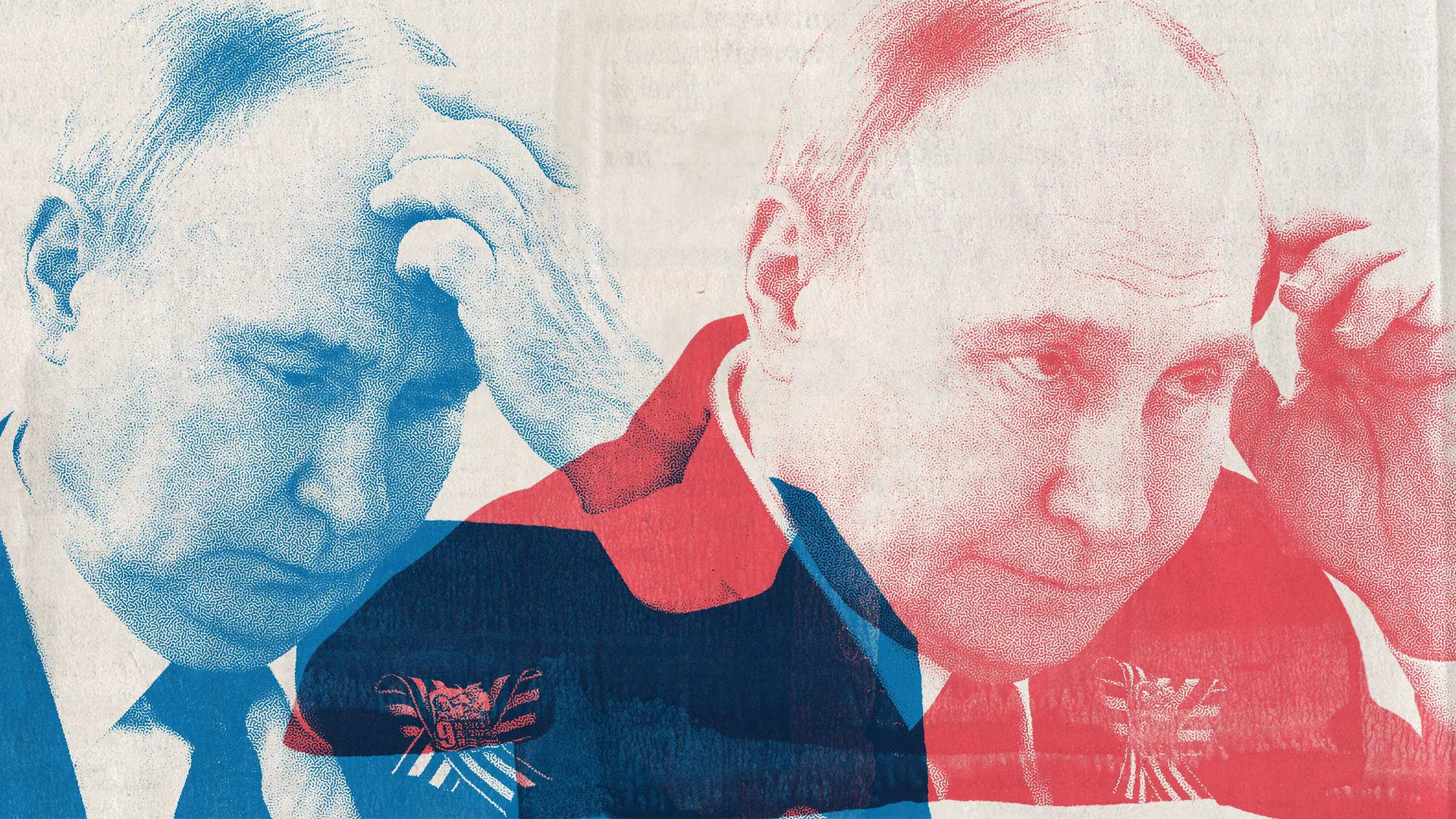
For nearly a quarter of a century, Vladimir Putin has led the Russian Federation as one of the most successful authoritarians on Earth. But more than four years after launching an all-out invasion of Ukraine, the Russian president synonymous with Moscow’s kleptocratic rule finds himself in unfamiliar territory. Russia is now roiled by rumors of organized unrest with months to go before parliamentary elections, while Putin himself faces allegations of extreme isolation and a weakening grip on power.
There is a sense of “mounting unease within the Kremlin” as it grapples with domestic and economic problems plus “increasing signs of dissent and setbacks on the battlefield in Ukraine,” said CNN, citing a report from a European intelligence agency. The Kremlin has “dramatically increased” Putin’s security, even installing surveillance systems “in the homes of close staffers” in measures “prompted by a wave of assassinations of top Russian military figures and fears of a coup.” Putin is “increasingly concerned” about an alleged “plot by members of the Russian political elite to topple him, or even assassinate him with drones,” said The Times. The president and his family have “stopped visiting their luxury residences” and Putin is spending “weeks at a time in bunkers.”
The report focuses on “growing internal tensions” between Putin and former Defense Minister and current Security Council Secretary Sergei Shoigu, said the Kyiv Post. Considered a “potential coup risk” for his “continued influence within the military leadership,” Shoigu has not “personally” been linked with hard evidence to “any wrongdoing.” The arrest this past March of one of Shoigu’s deputies was “presented in the report” as a “sign of weakening informal protections among the elite” that has contributed to the tensions.
The Week
Escape your echo chamber. Get the facts behind the news, plus analysis from multiple perspectives.
SUBSCRIBE & SAVE
Sign up for The Week's Free Newsletters
Join more than 350,000 subscribers and keep yourself informed with a selection of The Week’s most interesting, enlightening and entertaining stories - plus daily puzzles.
Join more than 350,000 subscribers and keep yourself informed with a selection of The Week’s most interesting, enlightening and entertaining stories - plus daily puzzles.
Latest Videos FromThe Week US
Putin’s slipping power is “not only about falling approval ratings,” said The Economist. Russia’s future is “no longer discussed” in terms of what Putin “will decide” but as “something that will unfold independently of him — and possibly already without him.” This waning authority comes from a “confluence” of factors, including rising wartime costs and a “growing demand for rules among elites who have been forced back into Russia, along with their capital.” Shifting geopolitical winds and the collapse of Russia’s previous “social contract,” in which the state “stayed out of people’s private lives while citizens stayed out of politics,” have created a “situation which in chess is known as a Zugzwang: when every move worsens the position.”
This isn’t to say that “revolution is imminent” or that the 73-year-old Putin “will be sidelined soon,” said The Wall Street Journal. Nevertheless, the “change in mood is remarkable” compared to “just last December,” when Russia was “buoyed by hopes” of a Moscow-friendly, Trump-negotiated ceasefire with Ukraine.
Changes in national mood notwithstanding, the “sudden spate” of coup-oriented reporting stemming from the “conveniently anonymous ‘European intelligence agency’” looks “suspiciously more like a psyop meant to generate paranoia in the Russian elite than a serious assessment,” said The Spectator. Europe has a “desperate appetite” for a “deus ex machina, for some miraculous end to the Ukraine war,” and a coup to oust Putin “certainly fits the bill.” Still, this would “hardly be the first time” intelligence services “succumbed to the temptation to provide their masters with what they want, not need, to hear.”
What next?
For the time being, Moscow “understands that there could be serious discontent ahead” and has accordingly “decided to allow low-level discontent to manifest itself,” said former Putin adviser Marat Gelman at the Journal. As things stand, Putin has “enough resources to crush any civil revolt.”
“In Russia, they say that things don’t happen fast, but when they happen, they happen fast,” former U.S. Ambassador to Russia John Sullivan said to the Journal. While he “wouldn’t have said it a year or two ago,” civic revolt is “possible now.”