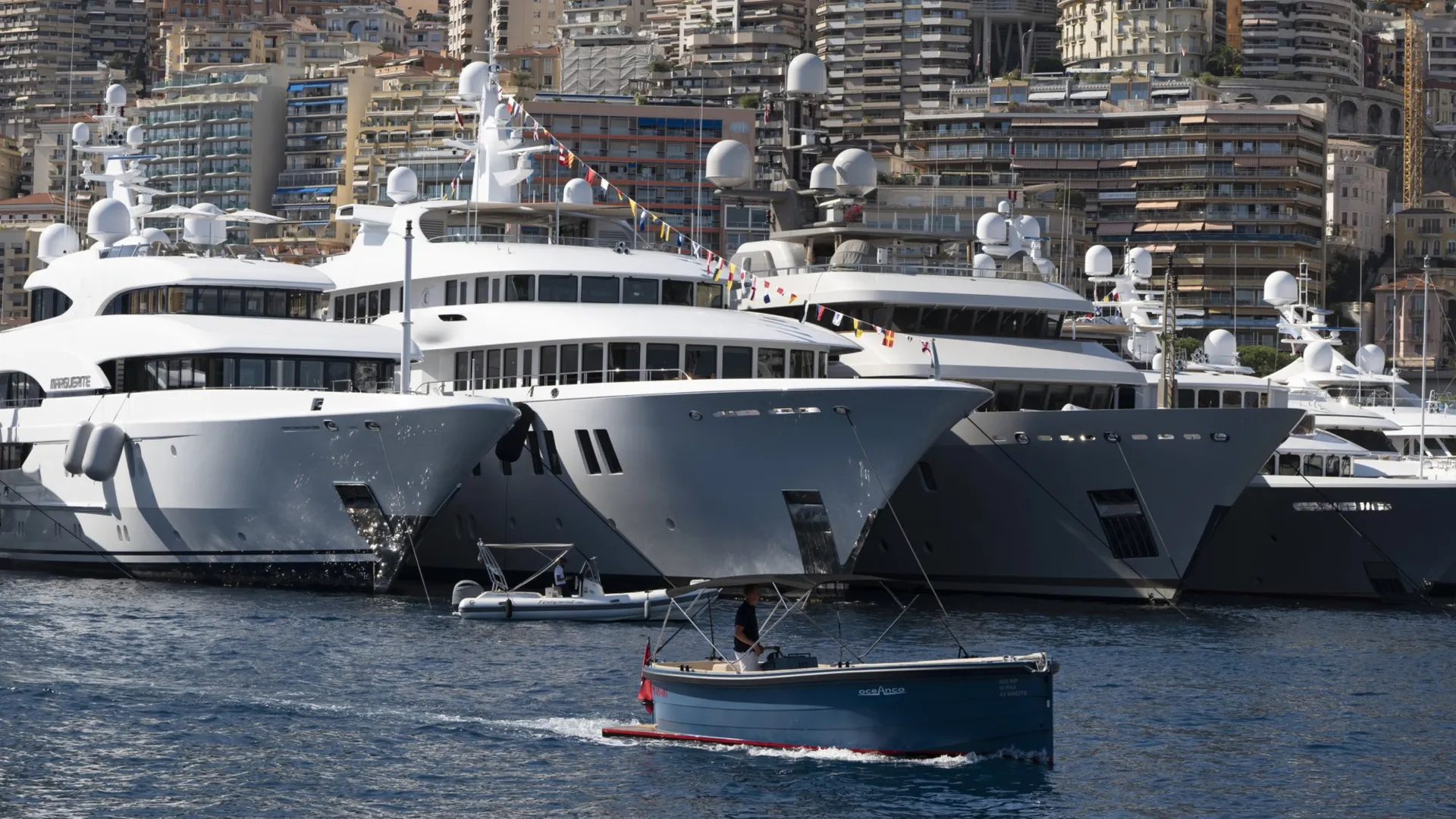
Even the rich and powerful may not be safe from the world of international espionage, as recent reports have alleged that countries are using multimillion-dollar superyachts in spy operations. And at least one country, China, has reportedly been spying on the superyacht manufacturers themselves.
Wealthy oligarchs have long been both targets and tools of espionage, especially from authoritarian states. But the apparent superyacht spy tie-in marks a new chapter in this saga.
How are superyachts connected with spying?
Most notable is Russia, which is reportedly "using its unrivaled underwater warfare capabilities to map, hack and potentially sabotage critical British infrastructure," said The Sunday Times. Much of this seems to involve the use of superyachts for surveillance. Before Russia invaded Ukraine in 2022, there was "credible intelligence that superyachts owned by oligarchs may have been used to conduct underwater reconnaissance around Britain."
The Week
Escape your echo chamber. Get the facts behind the news, plus analysis from multiple perspectives.
SUBSCRIBE & SAVE
Sign up for The Week's Free Newsletters
Join more than 350,000 subscribers and keep yourself informed with a selection of The Week’s most interesting, enlightening and entertaining stories - plus daily puzzles.
Join more than 350,000 subscribers and keep yourself informed with a selection of The Week’s most interesting, enlightening and entertaining stories - plus daily puzzles.
Latest Videos FromThe Week US
This is noteworthy given that many of these oligarchs' yachts have moon pools, which are openings in the bottom of a ship's hull that can be "used covertly to deploy and retrieve deep-sea reconnaissance and diving equipment," said the Times. This type of surveillance is said to go back even before Russia's invasion of Ukraine. In 2018, the British ship HMS Albion had been "docked for under 24 hours when a huge superyacht belonging to an oligarch pulled up alongside it" in Cyprus. British Navy officials suspected the yacht was there "covertly to surveil the Albion."
Beyond the yachts themselves, Chinese officials may be spying on superyacht manufacturers, in particular luxury shipbuilder Ferretti SpA, according to a Bloomberg report. In 2024, the "relationship between senior managers at Ferretti — one of the world's leading designers of yachts for the super-rich — and its biggest shareholder," the Chinese conglomerate Weichai group, had "soured over a share-buyback program."
As this continued, Ferretti's "executive director, Xu Xinyu, discovered he was being followed and found surveillance devices in the company's Milan offices," said Bloomberg. Similar devices were reportedly also found in the offices of Ferretti's board secretary and Chinese-Italian translator. This eventually led to a "spy-vs.-spy scenario" where Xu saw people "following him while visiting hotels" in Milan, said Robb Report.
How are other countries fighting back?
Countries are working to minimize the impact of superyachts that may be compromised by spying. Alongside NATO and other European allies, the U.K. is "strengthening our response to ensure that Russian ships and aircraft cannot operate in secrecy near the U.K. or near NATO territory," a spokesperson for the British Defense Ministry told Newsweek.
The U.K. is "committed to enhancing the security of critical offshore infrastructure," the spokesperson told Newsweek, noting that the defense ministry was also using AI to "detect and minimize threats to undersea infrastructure." This includes the type of undersea spying outlined in the yacht allegations.
Some outlets have also highlighted ways that superyacht owners can protect their vessels from intrusions. This includes installing a sonar system that "detects, tracks and identifies divers and underwater vehicles approaching a superyacht," said Forbes, as well as an anti-drone device that "detects and identifies commercial drones." While these types of devices are "being used to deter pirates" in international waters, they may also act as a deterrent for spies.