Sign up to get Today’s Best Articles in your inbox
Join 350,000+ subscribers and keep yourself informed with a selection of
The Week’s most interesting, enlightening and entertaining stories - plus daily puzzles.
You are now subscribed
Your newsletter sign-up was successful
Want to add more newsletters?
An account already exists for this email address, please log in.
Can protecting mosquitos from malaria defeat the disease?
Experts say newly discovered microbe inside the insects could help prevent countless human deaths
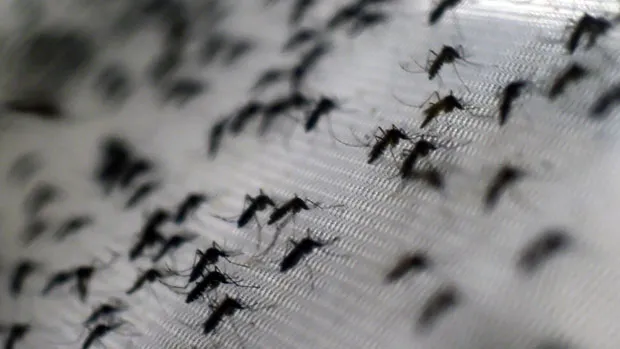
Scientists have discovered a microbe carried by some mosquitos that prevents the insects from being infected with malaria parasites - and by extension, from transmitting the deadly disease to humans.
The malaria-blocking bug, Microsporidia MB, was identified by researchers at Kenya’s International Centre of Insect Physiology and Ecology, and appears to occur naturally in around 5% of the mosquitos studied, the i news site report.
“The data we have so far suggest it is 100% blockage, it’s a very severe blockage of malaria,” the team’s Dr Jeremy Herren told the BBC.
The Week
Escape your echo chamber. Get the facts behind the news, plus analysis from multiple perspectives.
Join more than 350,000 subscribers and keep yourself informed with a selection of The Week’s most interesting, enlightening and entertaining stories - plus daily puzzles.
Join more than 350,000 subscribers and keep yourself informed with a selection of The Week’s most interesting, enlightening and entertaining stories - plus daily puzzles.
The parasite is responsible for the deaths of around 400,000 people every year, most of them children aged under five, but scientists hope the new findings could “be investigated as a strategy to limit malaria transmission”, says the researcher in a newly published paper in the journal Nature.
Scientists could infect male mosquitoes with Microsporidia MB and then release them into the wild, where the insects would pass it on to females and their offspring. Once at least 40% of a region’s mosquito population is carrying the microbe, malaria infection rates in humans should start to fall, according to experts.
Professor Steven Sinkins, from the Medical Research Council-University of Glasgow Centre for Virus Research, told The Times: “It is a very exciting finding, and we very much hope that we can translate it into a new malaria control tool.”