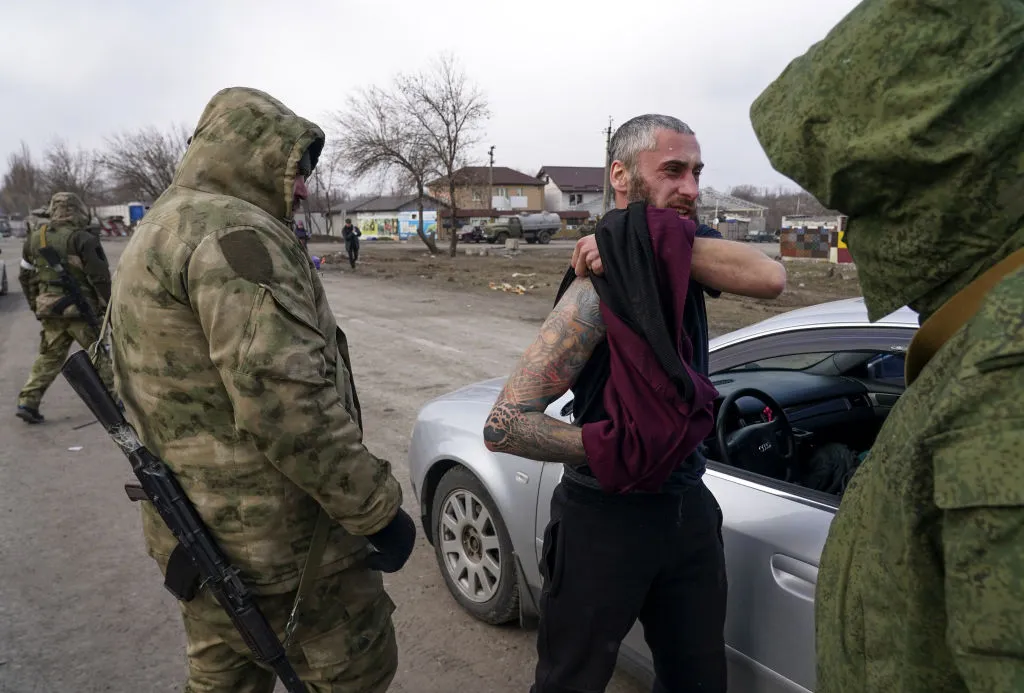
Mariupol official claims thousands of Ukrainians have been forcibly taken to Russia
Pyotr Andryuschenko, an assistant to the mayor of the Russian-encircled Ukrainian city of Mariupol, said Saturday that "between 4,000 and 4,500" of the city's inhabitants have been taken "forcibly across the border to [the Russian city of] Taganrog," The New York Times reports.
Andryuschenko also said he feared those taken to Russia could be compelled to perform forced labor.
Russian news outlets say buses have transported several hundred people from Mariupol to Russia in recent days, but claim those people were refugees, not captives, Reuters reports.
The Week
Escape your echo chamber. Get the facts behind the news, plus analysis from multiple perspectives.
Sign up for The Week's Free Newsletters
From our morning news briefing to a weekly Good News Newsletter, get the best of The Week delivered directly to your inbox.
Per the Times, an official from the Russian Defense Ministry said Friday that over 7,800 Ukrainians had "expressed their desire to escape to the Russian Federation" in the past 24 hours.
According to the Office of the United Nations High Commissioner for Refugees, as of Sunday, Russia had taken in around 184,000 of the more than 3.3 million refugees who have fled Ukraine since the invasion began on Feb. 24. This count includes those who have fled from separatist-controlled areas in eastern Ukraine, which Russia recognizes as independent republics.
Ukrainian President Volodymyr Zelensky described Russia's bombardment of Mariupol as a war crime and "a terror that will be remembered for centuries to come" in an address to the nation Sunday. He also said over 4,000 civilians have been successfully evacuated from Mariupol.
On Saturday, Mariupol's city council said Russian forces bombed an art school in which 400 of the city's inhabitants had taken shelter, according to Reuters.
A free daily email with the biggest news stories of the day – and the best features from TheWeek.com
On Wednesday, the deputy mayor of Mariupol said Russian forces bombed a theater that held hundreds of civilians — many of them children. The word "children" had been written on the pavement outside the theater in large Cyrillic letters to protect those inside from Russian bombing raids.
Grayson Quay was the weekend editor at TheWeek.com. His writing has also been published in National Review, the Pittsburgh Post-Gazette, Modern Age, The American Conservative, The Spectator World, and other outlets. Grayson earned his M.A. from Georgetown University in 2019.
-
Woolf Works: the Royal Ballet’s ‘inspired’ production’The Week Recommends Wayne McGregor’s three-act show brings Virginia Woolf’s creative world ‘vividly’ to life
-
The 8 best biopic movies of the 21st century (so far!)the week recommends Not all true stories are feel good tales, but the best biopics offer insight into broader social and political trends
-
Washington grapples with ICE’s growing footprint — and futureTALKING POINTS The deadly provocations of federal officers in Minnesota have put ICE back in the national spotlight
-
What would a UK deployment to Ukraine look like?Today's Big Question Security agreement commits British and French forces in event of ceasefire
-
Would Europe defend Greenland from US aggression?Today’s Big Question ‘Mildness’ of EU pushback against Trump provocation ‘illustrates the bind Europe finds itself in’
-
Did Trump just end the US-Europe alliance?Today's Big Question New US national security policy drops ‘grenade’ on Europe and should serve as ‘the mother of all wake-up calls’
-
Is conscription the answer to Europe’s security woes?Today's Big Question How best to boost troop numbers to deal with Russian threat is ‘prompting fierce and soul-searching debates’
-
Trump peace deal: an offer Zelenskyy can’t refuse?Today’s Big Question ‘Unpalatable’ US plan may strengthen embattled Ukrainian president at home
-
Vladimir Putin’s ‘nuclear tsunami’ missileThe Explainer Russian president has boasted that there is no way to intercept the new weapon
-
The Baltic ‘bog belt’ plan to protect Europe from RussiaUnder the Radar Reviving lost wetland on Nato’s eastern flank would fuse ‘two European priorities that increasingly compete for attention and funding: defence and climate’
-
How should Nato respond to Putin’s incursions?Today’s big question Russia has breached Nato airspace regularly this month, and nations are primed to respond