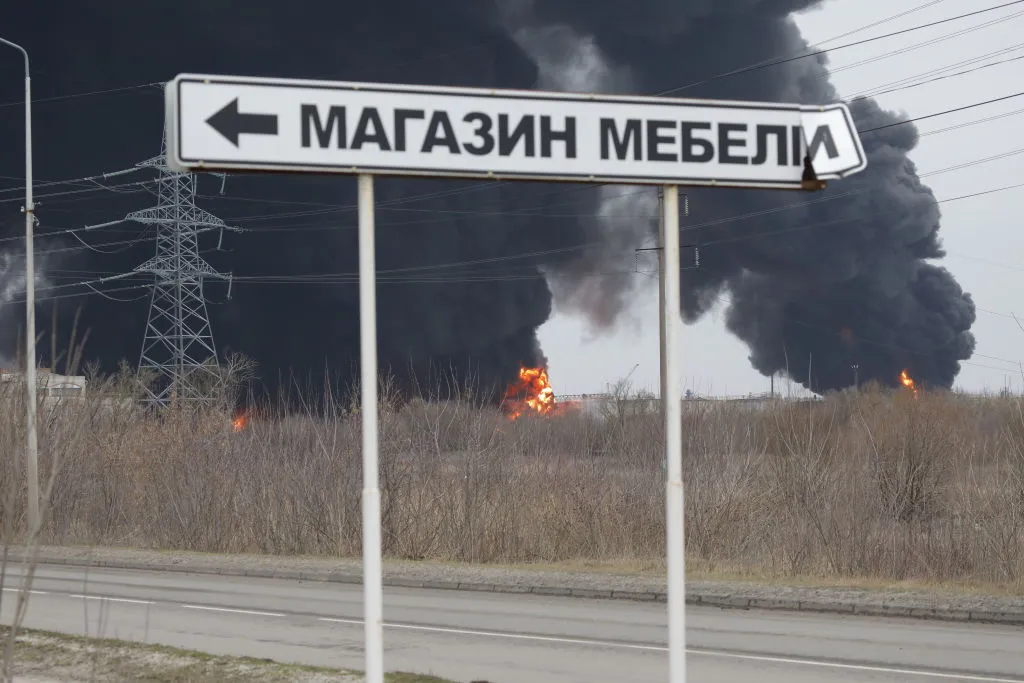
Russian officials said Wednesday that an ammunition depot caught fire near the border with Ukraine and that air defense systems shot down Ukrainian drones flying over Russia, The Wall Street Journal reports.
Ukraine has not claimed responsibility for the incidents, which are only the latest in a series of fires and explosions that have occurred on Russian soil in the past month.
On April 1, explosions rocked a fuel depot in Belgorod, Russia. Regional Governor Vyacheslav Gladkov blamed "an airstrike coming from two helicopters of the Ukrainian Armed Forces." Two days later, Ukrainian President Volodymyr Zelensky denied that his country's troops had carried out the strike. "We're fighting for our country on our terrain," he said.
The Week
Escape your echo chamber. Get the facts behind the news, plus analysis from multiple perspectives.
SUBSCRIBE & SAVE
Sign up for The Week's Free Newsletters
Join more than 350,000 subscribers and keep yourself informed with a selection of The Week’s most interesting, enlightening and entertaining stories - plus daily puzzles.
Join more than 350,000 subscribers and keep yourself informed with a selection of The Week’s most interesting, enlightening and entertaining stories - plus daily puzzles.
Latest Videos FromThe Week US
The Journal reports that fires also "broke out at two fuel-storage depots in [Russia's] Bryansk region on April 25."
On Tuesday, local authorities in the Russian-backed Moldovan separatist region of Transnistria reported an attack on a military unit and on two radio antennas. Again, the two sides offered opposing claims, with Russia blaming Ukraine and Ukraine characterizing the attacks as a Russian false flag operation.
Ukrainian presidential adviser Mykhailo Podolyak suggested on Twitter that the fires and explosions in Russia could be "karma for the murder of [Ukrainian] children." He also urged Europe to stop importing oil from Russia, "a country where everything is self-destructing."
Russian security expert Keir Giles told the Journal that the incidents inside Russia could easily be explained as "natural accidents" caused by Russia's "negligence."