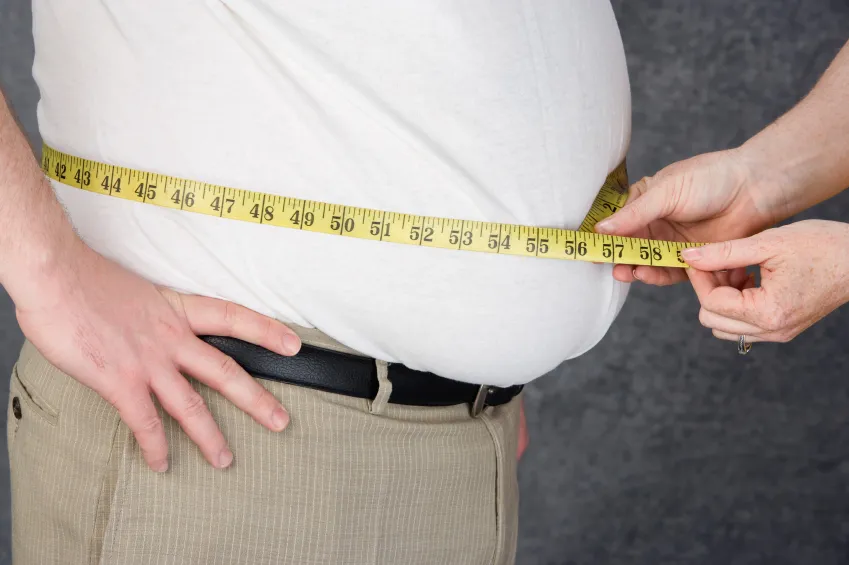
The Biggest Loser doesn't actually work, according to science
Scientists are using reality TV to crack the mysteries of the human body — specifically, why people tend to gain so much weight back after major weight losses. Following contestants from NBC's The Biggest Loser, researchers concluded that it is because bodies biologically fight tooth-and-nail to climb back to their original weight.
The problem mainly lies with metabolisms, which slow radically as the body loses weight so that they eventually don't burn enough calories to maintain the thinner body size. Former contestant Danny Cahill, 46, for example, weighed 430 pounds before The Biggest Loser, 191 at the finale of the show, and six years later now weighs 295 pounds. His body burns 800 fewer calories a day than would be expected for a man of his size.
"All my friends were drinking beer and not gaining massive amounts of weight. The moment I started drinking beer, there goes another 20 pounds. I said, 'This is not right. Something is wrong with my body,''' Cahill said.
The Week
Escape your echo chamber. Get the facts behind the news, plus analysis from multiple perspectives.
Sign up for The Week's Free Newsletters
From our morning news briefing to a weekly Good News Newsletter, get the best of The Week delivered directly to your inbox.
It turns out, he's right. "This is a subset of the most successful [dieters]," Dr. David Ludwig, who was not involved in the study, said of the Biggest Loser findings. "If they don't show a return to normal in metabolism, what hope is there for the rest of us?"
But with the problem identified, Ludwig adds researchers and people concerned about their weight shouldn't lose hope. "[It] shouldn't be interpreted to mean we are doomed to battle our biology or remain fat," Ludwig said. "It means we need to explore other approaches."
Learn more about what those approaches might be, and the science behind weight gain and loss, at The New York Times.
A free daily email with the biggest news stories of the day – and the best features from TheWeek.com
Jeva Lange was the executive editor at TheWeek.com. She formerly served as The Week's deputy editor and culture critic. She is also a contributor to Screen Slate, and her writing has appeared in The New York Daily News, The Awl, Vice, and Gothamist, among other publications. Jeva lives in New York City. Follow her on Twitter.
-
The best books of 2025The Week Recommends A deep dive into the site of a mass shooting, a new release from the author of ‘Atonement’ and more
-
Inside Minnesota’s extensive fraud schemesThe Explainer The fraud allegedly goes back to the Covid-19 pandemic
-
‘What a corrective to such nonsense’Instant Opinion Opinion, comment and editorials of the day
-
US offers Ukraine NATO-like security pact, with caveatsSpeed Read The Trump administration has offered Ukraine security guarantees similar to those it would receive from NATO
-
Hong Kong court convicts democracy advocate LaiSpeed Read Former Hong Kong media mogul Jimmy Lai was convicted in a landmark national security trial
-
Australia weighs new gun laws after antisemitic attackSpeed Read A father and son opened fire on Jewish families at Sydney’s Bondi Beach, killing at least 15
-
How Bulgaria’s government fell amid mass protestsThe Explainer The country’s prime minister resigned as part of the fallout
-
Benin thwarts coup attemptSpeed Read President Patrice Talon condemned an attempted coup that was foiled by the West African country’s army
-
Femicide: Italy’s newest crimeThe Explainer Landmark law to criminalise murder of a woman as an ‘act of hatred’ or ‘subjugation’ but critics say Italy is still deeply patriarchal
-
Brazil’s Bolsonaro behind bars after appeals run outSpeed Read He will serve 27 years in prison
-
Americans traveling abroad face renewed criticism in the Trump eraThe Explainer Some of Trump’s behavior has Americans being questioned