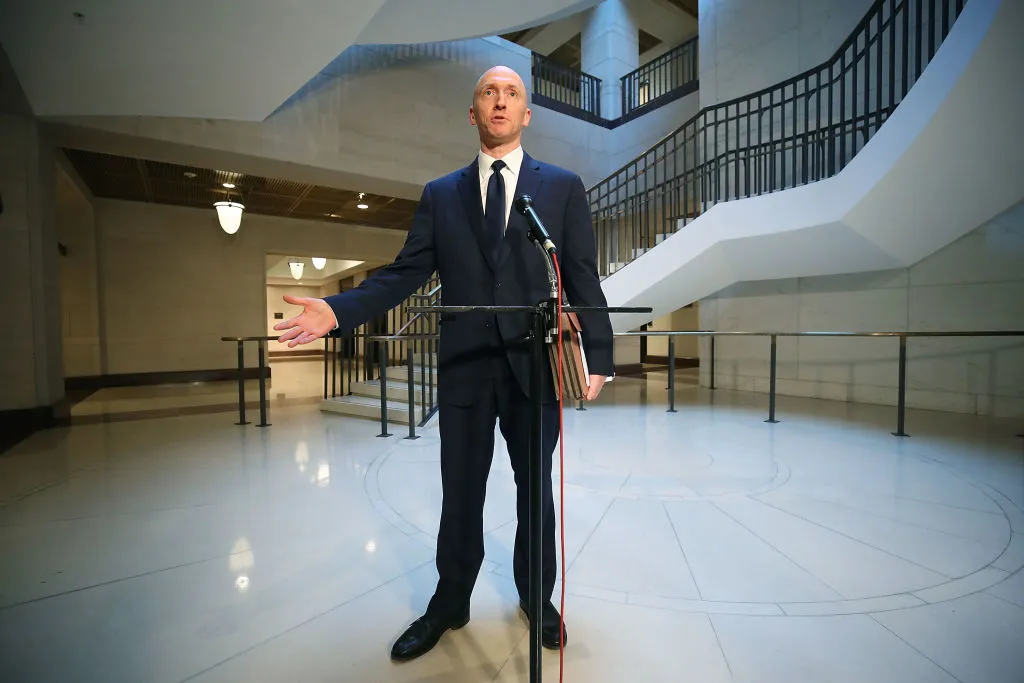
The New York Times argues for the release of documents related to the wiretapping of Carter Page
On Monday, The New York Times argued that because President Trump declassified the so-called Nunes memo last week, there is no longer justification for the confidentiality of documents related to the wiretapping of his former campaign associate, Carter Page. The Times has apparently notified the Justice Department about its decision to petition the Foreign Intelligence Surveillance Court to unseal the documents.
The Nunes memo, compiled for House Intelligence Committee Chairman Devin Nunes (R-Calif.), was declassified last Friday. The memo asserts that the FBI improperly surveilled Page, beginning in October 2016. The warrant for Page was approved for a 90-day extension three subsequent times.
As the Times argues:
The Week
Escape your echo chamber. Get the facts behind the news, plus analysis from multiple perspectives.
Sign up for The Week's Free Newsletters
From our morning news briefing to a weekly Good News Newsletter, get the best of The Week delivered directly to your inbox.
…President Trump lowered the shield of secrecy surrounding such materials on Friday by declassifying the Republican memo about Mr. Page, after finding that the public interest in disclosing its contents outweighed any need to protect the information. Because Mr. Trump did so, the Times argues, there is no longer a justification "for the Page warrant orders and application materials to be withheld in their entirety," and "disclosure would serve the public interest." [The New York Times]
It's quite the long shot. Since the Foreign Intelligence Surveillance Act — which regulates domestic electronic spying — was enacted in 1978, no wiretap application documents have ever been declassified.
A free daily email with the biggest news stories of the day – and the best features from TheWeek.com
Jeva Lange was the executive editor at TheWeek.com. She formerly served as The Week's deputy editor and culture critic. She is also a contributor to Screen Slate, and her writing has appeared in The New York Daily News, The Awl, Vice, and Gothamist, among other publications. Jeva lives in New York City. Follow her on Twitter.
-
How climate change is affecting ChristmasThe Explainer There may be a slim chance of future white Christmases
-
The MAGA civil war takes center stage at the Turning Point USA conferenceIN THE SPOTLIGHT ‘Americafest 2025’ was a who’s who of right-wing heavyweights eager to settle scores and lay claim to the future of MAGA
-
The 8 best drama movies of 2025the week recommends Nuclear war, dictatorship and the summer of 2020 highlight the most important and memorable films of 2025
-
Son arrested over killing of Rob and Michele ReinerSpeed Read Nick, the 32-year-old son of Hollywood director Rob Reiner, has been booked for the murder of his parents
-
Rob Reiner, wife dead in ‘apparent homicide’speed read The Reiners, found in their Los Angeles home, ‘had injuries consistent with being stabbed’
-
Hungary’s Krasznahorkai wins Nobel for literatureSpeed Read László Krasznahorkai is the author of acclaimed novels like ‘The Melancholy of Resistance’ and ‘Satantango’
-
Primatologist Jane Goodall dies at 91Speed Read She rose to fame following her groundbreaking field research with chimpanzees
-
Florida erases rainbow crosswalk at Pulse nightclubSpeed Read The colorful crosswalk was outside the former LGBTQ nightclub where 49 people were killed in a 2016 shooting
-
Trump says Smithsonian too focused on slavery's illsSpeed Read The president would prefer the museum to highlight 'success,' 'brightness' and 'the future'
-
Trump to host Kennedy Honors for Kiss, StalloneSpeed Read Actor Sylvester Stallone and the glam-rock band Kiss were among those named as this year's inductees
-
White House seeks to bend Smithsonian to Trump's viewSpeed Read The Smithsonian Institution's 21 museums are under review to ensure their content aligns with the president's interpretation of American history