Israel's election too close to call
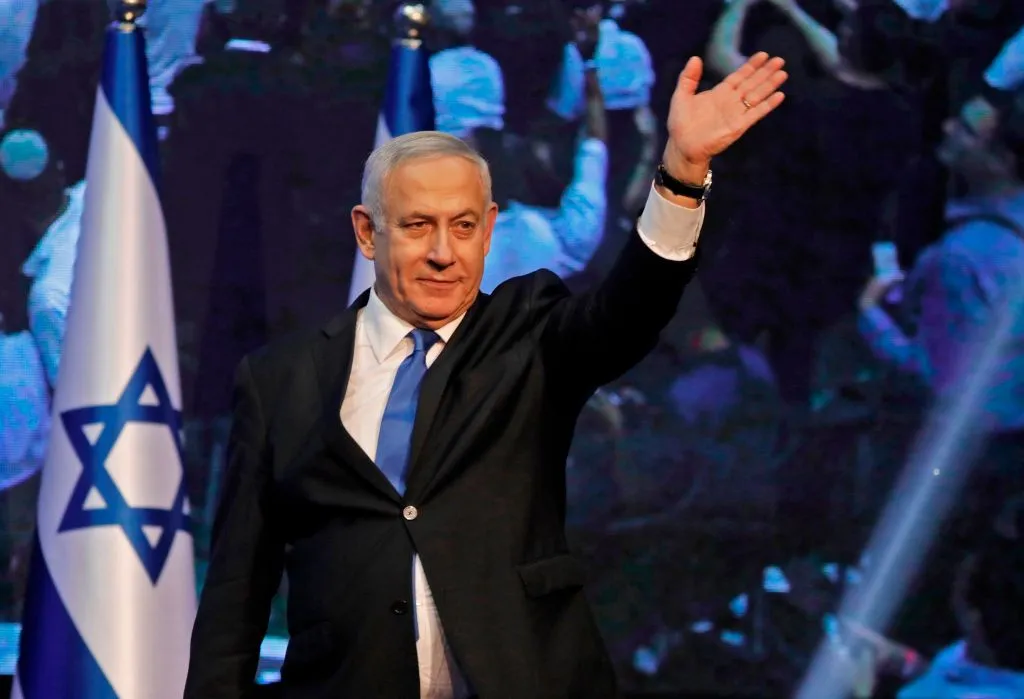
The results of Israel's Tuesday election are starting to trickle in, and the race is too close to call.
With 26 percent of votes counted early Wednesday, Prime Minister Benjamin Netanyahu's right-wing Likud party has 28.42 percent of the vote, followed by the centrist Blue and White Party with 25.4 percent. Exit polls showed that Netanyahu did not appear to have enough votes for a parliamentary majority, and the Central Elections Commission told the Times of Israel the final tally might not be known until Wednesday afternoon.
The commission also said 69.4 percent of eligible voters cast their ballots, with higher turnout among Arab voters; this was likely due to Netanyahu's actions before the election, when he questioned their loyalty and vowed to annex settlements in the West Bank.
The Week
Escape your echo chamber. Get the facts behind the news, plus analysis from multiple perspectives.
Sign up for The Week's Free Newsletters
From our morning news briefing to a weekly Good News Newsletter, get the best of The Week delivered directly to your inbox.
Speaking to supporters late Tuesday, Benny Gantz of the Blue and White Party said that "starting tonight, we will work to form a broad unity government that will express the will of the people." At his rally, Netanyahu said the country "needs a strong and stable and Zionist government." He touted his relationship with his "close friend President Trump," and declared there can't be a government "that is being supported by anti-Zionist, Arabic parties that don't believe in Israel as a Jewish and democratic state."
Netanyahu is expected to be indicted soon on bribery, fraud, and breach of trust charges related to three separate scandals. He wanted to secure a majority so he could work with his allies to pass legislation giving him immunity, The Associated Press reports.
A free daily email with the biggest news stories of the day – and the best features from TheWeek.com
Catherine Garcia has worked as a senior writer at The Week since 2014. Her writing and reporting have appeared in Entertainment Weekly, The New York Times, Wirecutter, NBC News and "The Book of Jezebel," among others. She's a graduate of the University of Redlands and the Columbia University Graduate School of Journalism.
-
How will China’s $1 trillion trade surplus change the world economy?Today’s Big Question Europe may impose its own tariffs
-
‘Autarky and nostalgia aren’t cure-alls’Instant Opinion Opinion, comment and editorials of the day
-
Japan’s Princess Aiko is a national star. Her fans want even more.IN THE SPOTLIGHT Fresh off her first solo state visit to Laos, Princess Aiko has become the face of a Japanese royal family facing 21st-century obsolescence
-
Judge orders release of Ghislaine Maxwell recordsSpeed Read The grand jury records from the 2019 prosecution of convicted sex offender Jeffrey Epstein will be made public
-
Miami elects first Democratic mayor in 28 yearsSpeed Read Eileen Higgins, Miami’s first woman mayor, focused on affordability and Trump’s immigration crackdown in her campaign
-
Ex-FBI agents sue Patel over protest firingspeed read The former FBI agents were fired for kneeling during a 2020 racial justice protest for ‘apolitical tactical reasons’
-
Trump unveils $12B bailout for tariff-hit farmersSpeed Read The president continues to insist that his tariff policy is working
-
Trump’s Comey case dealt new setbackspeed read A federal judge ruled that key evidence could not be used in an effort to reindict former FBI Director James Comey
-
Moscow cheers Trump’s new ‘America First’ strategyspeed read The president’s national security strategy seeks ‘strategic stability’ with Russia
-
Trump tightens restrictions for work visasSpeed Read The length of work permits for asylum seekers and refugees has been shortened from five years to 18 months
-
Supreme Court revives Texas GOP gerrymanderSpeed Read Texas Republicans can use the congressional map they approved in August at President Donald Trump’s behest