Coronavirus is decimating New York City's transit workforce
As COVID-19 spreads throughout the city, New York has seen ridership on its MTA system drop by more than 90 percent. But trains and buses are still running, and that's led to 50 MTA workers contracting and dying from the new coronavirus so far, MTA Chairman Pat Foye said Friday.
So far, nearly 1,900 MTA workers have tested positive for the new coronavirus, and the number of quarantined workers recently hit a peak of 6,000. A total of 50 MTA employees have died of the disease; they're dying at a much higher rate than the rest of the city. Most of those workers who'd died had worked on the city's buses and subways.
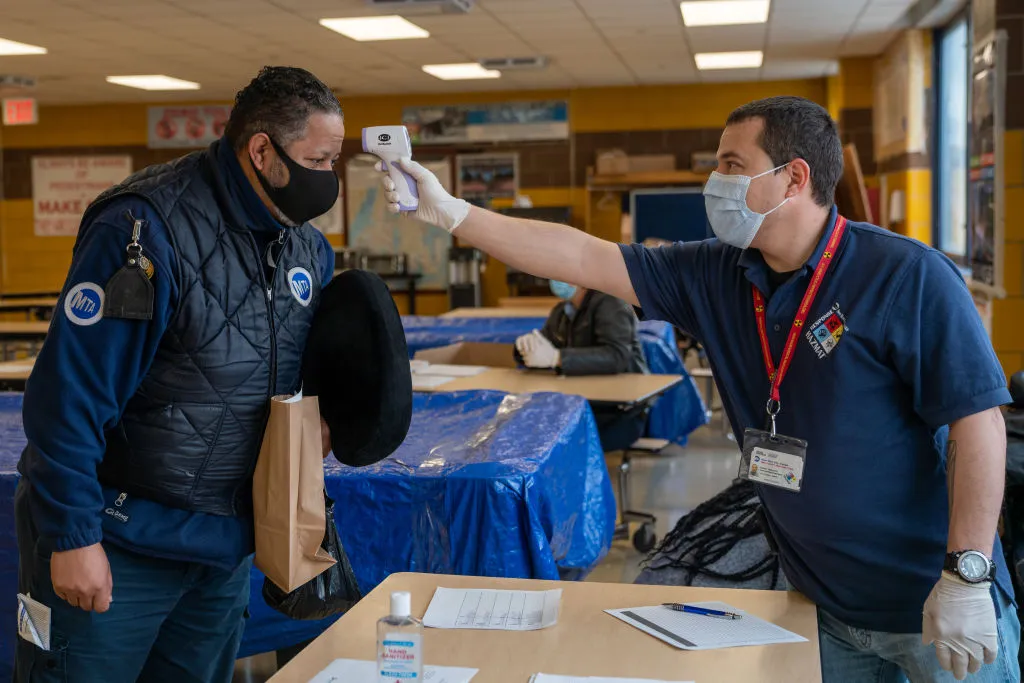
To combat disease spread, the MTA is now taking the temperature of everyone who reports to work and sending those with a fever back home. About 1,800 MTA workers who'd self-quarantined after potential exposure to the virus have since returned to work, Foye added. But staffing shortages have still caused over 800 subway delays and led to 40 percent of trips being canceled in a single day, per The New York Times.
The Week
Escape your echo chamber. Get the facts behind the news, plus analysis from multiple perspectives.
Sign up for The Week's Free Newsletters
From our morning news briefing to a weekly Good News Newsletter, get the best of The Week delivered directly to your inbox.
Ridership is dramatically down across the entire MTA system, Foye also said. Subway ridership has fallen 93 percent since the coronavirus crisis began, Long Island Railroad traffic has plunged 97 percent, and Metro-North commuter rail has seen ridership drop 95 percent. That resulting deep dive in revenue will surely be a problem for the aging transit system that was struggling to stay afloat even before a global pandemic hit.
A free daily email with the biggest news stories of the day – and the best features from TheWeek.com
Kathryn is a graduate of Syracuse University, with degrees in magazine journalism and information technology, along with hours to earn another degree after working at SU's independent paper The Daily Orange. She's currently recovering from a horse addiction while living in New York City, and likes to share her extremely dry sense of humor on Twitter.
-
Saving for a down payment on a house? Here is how and where to save.the explainer The first step of the homebuying process can be one of the hardest
-
Music reviews: Zach Bryan, Dry Cleaning, and Madison BeerFeature “With Heaven on Top,” “Secret Love,” and “Locket”
-
Book reviews: ‘The Mattering Instinct: How Our Deepest Longing Drives and Divides Us’ and ‘Family of Spies: A World War II Story of Nazi Espionage, Betrayal, and the Secret History Behind Pearl Harbor’Feature The pursuit of ‘mattering’ and a historic, devastating family secret
-
Trump HHS slashes advised child vaccinationsSpeed Read In a widely condemned move, the CDC will now recommend that children get vaccinated against 11 communicable diseases, not 17
-
Covid-19 mRNA vaccines could help fight cancerUnder the radar They boost the immune system
-
FDA OKs generic abortion pill, riling the rightSpeed Read The drug in question is a generic version of mifepristone, used to carry out two-thirds of US abortions
-
The new Stratus Covid strain – and why it’s on the riseThe Explainer ‘No evidence’ new variant is more dangerous or that vaccines won’t work against it, say UK health experts
-
RFK Jr. vaccine panel advises restricting MMRV shotSpeed Read The committee voted to restrict access to a childhood vaccine against chickenpox
-
Texas declares end to measles outbreakSpeed Read The vaccine-preventable disease is still spreading in neighboring states, Mexico and Canada
-
RFK Jr. shuts down mRNA vaccine funding at agencySpeed Read The decision canceled or modified 22 projects, primarily for work on vaccines and therapeutics for respiratory viruses
-
Measles cases surge to 33-year highSpeed Read The infection was declared eliminated from the US in 2000 but has seen a resurgence amid vaccine hesitancy