Sign up to get Today’s Best Articles in your inbox
Join 350,000+ subscribers and keep yourself informed with a selection of
The Week’s most interesting, enlightening and entertaining stories - plus daily puzzles.
You are now subscribed
Your newsletter sign-up was successful
Want to add more newsletters?
An account already exists for this email address, please log in.
Big-league robot umpires are set to alter baseball
The automated system will let players contest balls and strikes
When the crack of the bat signals opening day for the 2026 Major League Baseball (MLB) season today, there will be a new addition to the diamond: robot umpires. The technological change has been fiercely debated among sports enthusiasts for years but has finally made its way to the big leagues. It marks one of the biggest changes in the history of modern baseball.
What are robot umpires?
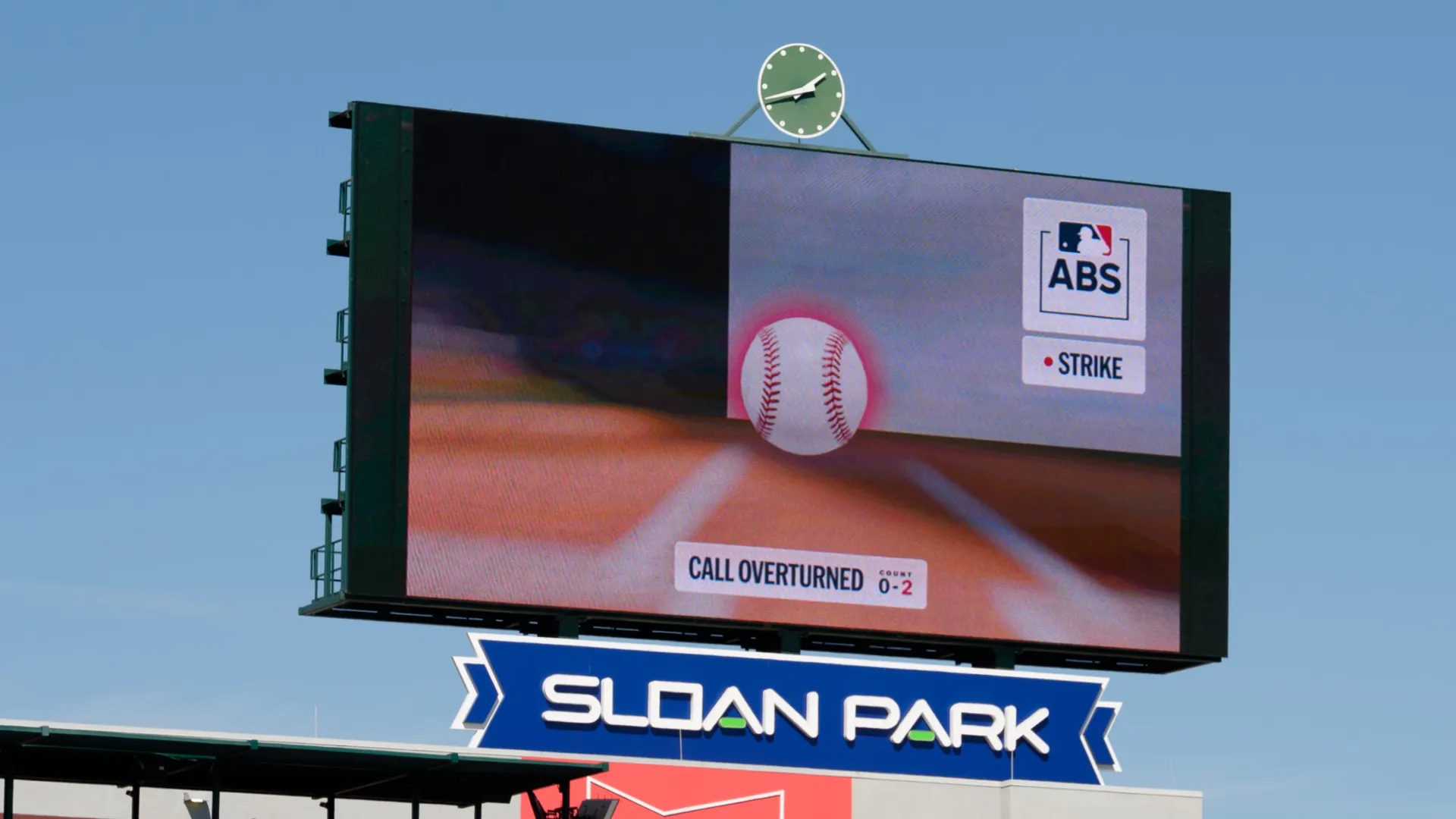
While the term makes it sound like robots are replacing the game’s human umpires, this is not the case. The robot umpires aren’t on the field. Instead, they are a “network of specialized cameras set up in every ballpark to track the baseball’s exact location,” said The New York Times. The system, officially called the Automated Ball-Strike (ABS) Challenge System, will allow teams to challenge balls and strikes.
Each team starts the game with two challenges it can use throughout the game. By tapping his head, a pitcher, catcher or batter can request to “summon the robot umpire and see whether the human behind home plate missed a ball or strike call,” said the Times. A successful challenge allows the team to reuse a challenge, but after two incorrect challenges, the team “loses the power altogether.”
The Week
Escape your echo chamber. Get the facts behind the news, plus analysis from multiple perspectives.
Join more than 350,000 subscribers and keep yourself informed with a selection of The Week’s most interesting, enlightening and entertaining stories - plus daily puzzles.
Join more than 350,000 subscribers and keep yourself informed with a selection of The Week’s most interesting, enlightening and entertaining stories - plus daily puzzles.
MLB is not the first baseball league to adopt this technology. It has been tried in minor league baseball for several years and was also tested during the 2025 MLB All-Star Game. This “testing, which started in 2021, led to Triple-A players in 2023 using ABS challenges three days a week and a full ABS system, with every pitch adjudicated by computer, the other three,” said ESPN. Following positive feedback in the minor leagues, MLB announced last year it would adopt the ABS system.
Why is this such a big change?
It allows players and managers to do what is typically forbidden in baseball: argue balls and strikes with the umpire. Doing so has generally led to ejection from the game; last season, at least “61.5% of ejections among players, managers and coaches (99 of 161) were related to ball/strike calls,” said The Associated Press, though this figure also “included what MLB counted as inappropriate comments and conduct, and throwing equipment in protest.”
This change “should in theory make everyone better off,” as it will give teams an “appeal in the event of a potential blown call at a crucial moment,” said Vox. As is the case with AI, some are worried about the bigger changes robotic umpires could have. Once “you’ve conceded that the machine is the final authority on whether a call is right — which is exactly what baseball has done here — you’ve quietly eliminated the case for having the human there.” And if they are there, the “human behind the mask doesn’t stay independent.”
Despite this, most players and managers don’t seem to have an issue with the change — for now. “I’m in favor of anything that allows our technology to play in this game,” Tampa Bay Rays manager Kevin Cash said to the AP. “We have so much of it. Why not use it?” Even people formerly around the game agree. “I really like the ABS,” Jim Leyland, a retired manager who led four MLB clubs, said to the outlet. “I think it’s going to be great for the game.”
Sign up to get Today’s Best Articles in your inbox
A free daily email with the day’s biggest news and analysis – and the best features from TheWeek.com
Justin Klawans has worked as a staff writer at The Week since 2022. He began his career covering local news before joining Newsweek as a breaking news reporter, where he wrote about politics, national and global affairs, business, crime, sports, film, television and other news. Justin has also freelanced for outlets including Collider and United Press International.