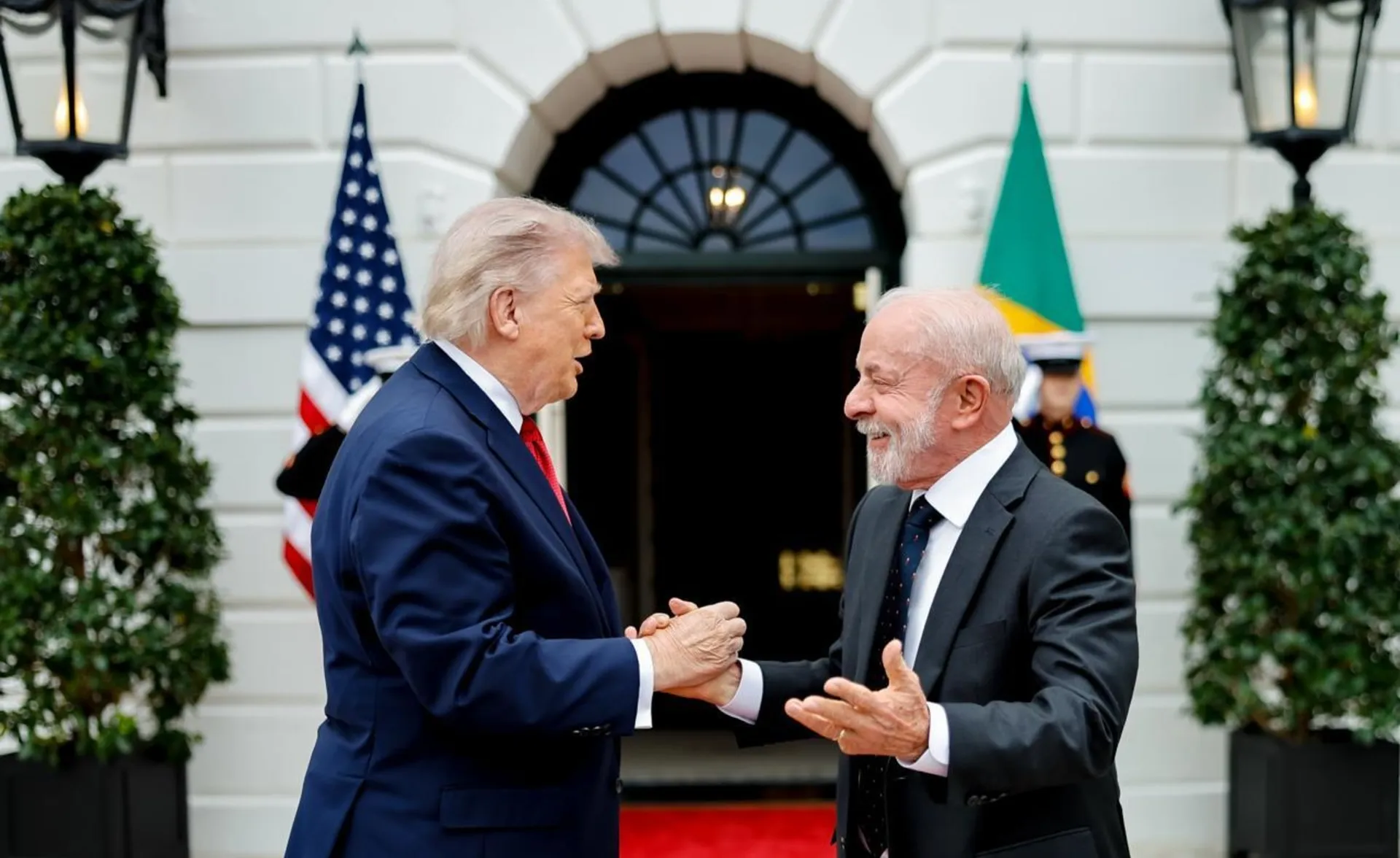
A growing feud between the United States and Brazil has put both nations’ diplomatic corps on high alert, as South America’s largest economy finds itself on the receiving end of a Trumpian diplomatic spat. This month, Washington revoked the visa of Brazilian Ambassador Maria Luiza Ribeiro Viotti after Brasilia refused visas for several Trump administration officials whom authorities claimed were planning to denounce the country’s leftist government.
Brazil has said it will not formally accept Trump’s Senate-approved ambassador pick, Florida House Speaker Daniel Perez, until after its October election. The country also complained that the United States had named Perez before completing certain diplomatic obligations.
‘Protocol can double as a weapon’
The visa cancellation is the “latest split” between “two governments that have spent the past year oscillating between confrontation and detente,” said The New York Times. But this episode is “very, very unique and severe,” said Brazilian political science professor Carlos Poggio to the outlet. Visa revocations are typically reserved for diplomatic foes, but “Brazil is not a U.S. adversary. It’s actually a major ally.”
The Week
Escape your echo chamber. Get the facts behind the news, plus analysis from multiple perspectives.
SUBSCRIBE & SAVE
Sign up for The Week's Free Newsletters
Join more than 350,000 subscribers and keep yourself informed with a selection of The Week’s most interesting, enlightening and entertaining stories - plus daily puzzles.
Join more than 350,000 subscribers and keep yourself informed with a selection of The Week’s most interesting, enlightening and entertaining stories - plus daily puzzles.
Latest Videos FromThe Week US
“On the surface,” the diplomatic kerfuffle “may seem like tit-for-tat pettiness,” said Puck. “True practitioners of statecraft” understand that “protocol can double as a weapon.” Countries whose diplomatic corps “undergo some of the most rigorous training in the world” are “not naive about the message Washington is sending.”
Voiding Viotti’s visa “is not an isolated incident,” said the office of President Luiz Inácio Lula da Silva in a statement to NBC. Rather, it is part of a “deliberate escalation of hostile measures” fueled by “ideological motives that are incompatible with a bilateral partnership that has always been guided by mutual respect.”
Questioning Trump’s ‘confrontational approach’
Some in the Brazilian diplomatic corps have questioned why Trump is “rushing to have an ambassador in Brasilia only months before October’s election,” said The Associated Press — particularly given that the post has been “vacant since Trump returned to the White House” last year. The deepening rift comes as da Silva, a leftist, runs for a fourth term.
His opponent this time is Flávio Bolsonaro, the son of former president Jair Bolsonaro, himself a “close Trump ally on the political right” who was convicted of “trying to overturn the results of the last election,” said The Washington Post. Speaking on condition of anonymity, one State Department official decried Washington’s “confrontational approach” to the outlet. “Each time Brasilia portrays itself as standing up to Trump,” said the official, the leftist government’s “standing in the polls only improves.”
“This isn’t just about Brazil,” said Orna Blum, a former senior State Department official who focused on Brazil, to Puck. “It’s part of a pattern.” The Trump administration has aligned itself with “far-right political movements from Germany’s AfD to Marine Le Pen in France, and now with Jair Bolsonaro and his son Flávio in Brazil.” Being seen as “picking sides in another democracy’s elections” under Trump has “cost America credibility with allies around the world.”