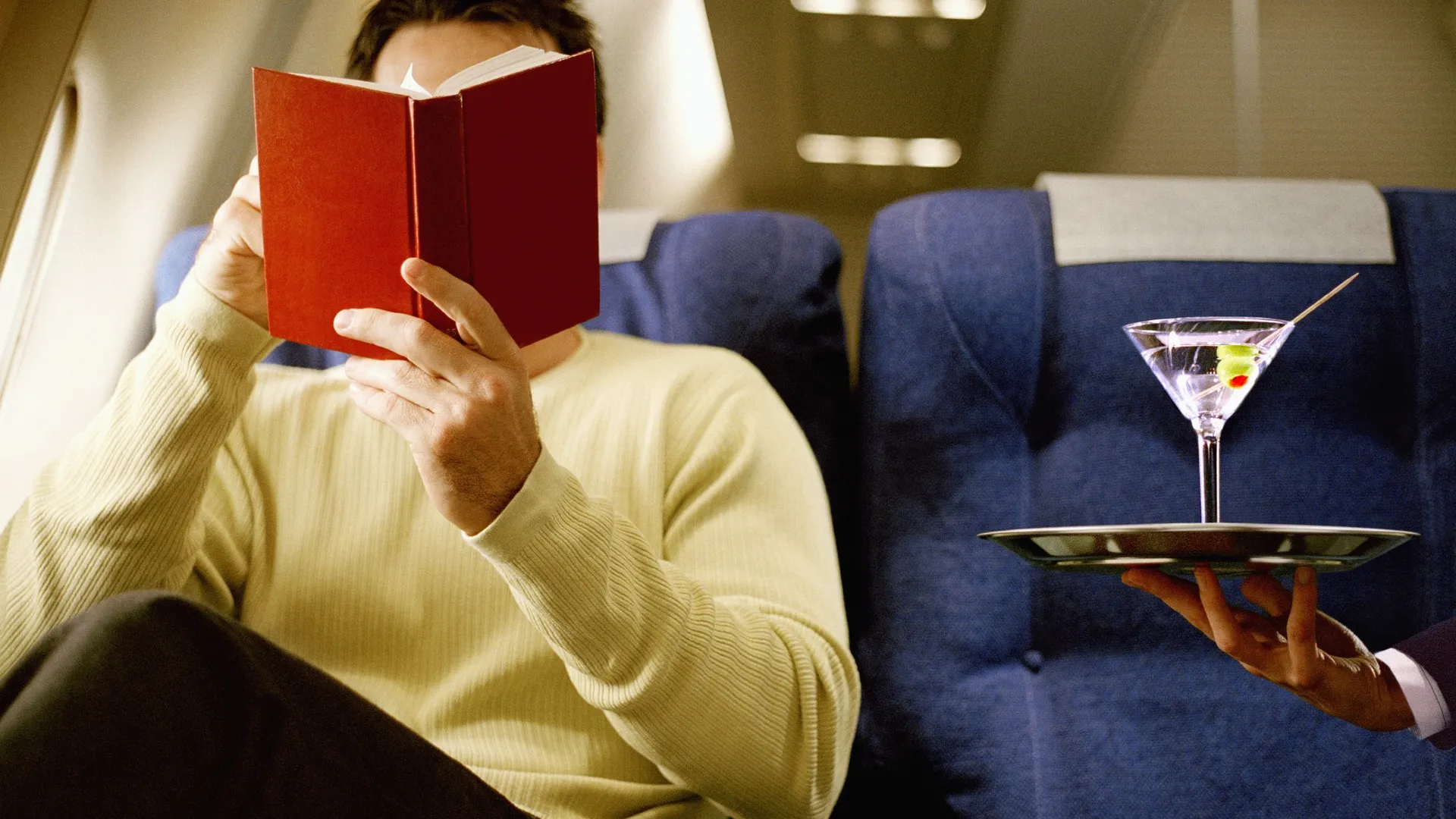
A K-shaped economy, in which the rich get richer while everybody else falls behind, is showing up at the airport. Airlines in desperate search of profits are expanding roomy first- and business-class seating on flights while economy class continues to get more cramped.
‘Literal experience of class division’
American Airlines is “ripping up existing airplane configurations” to add more business-class seating, said CNBC. Half the airline’s revenues come from the 30% of seats in the high-end category, which is why the more expensive (and more luxurious) seating options are “only going to grow in our fleet,” said American Airlines CEO Robert Isom this week at an industry conference, per the outlet.
American’s newest Boeing 777 aircraft will feature a “monster 70-suite business-class cabin,” said CNBC. “Higher-spending customers” are a “resilient and bright spot” for airlines struggling with rising fuel costs. So the K-shaped economy is “taking flight.”
The Week
Escape your echo chamber. Get the facts behind the news, plus analysis from multiple perspectives.
SUBSCRIBE & SAVE
Sign up for The Week's Free Newsletters
Join more than 350,000 subscribers and keep yourself informed with a selection of The Week’s most interesting, enlightening and entertaining stories - plus daily puzzles.
Join more than 350,000 subscribers and keep yourself informed with a selection of The Week’s most interesting, enlightening and entertaining stories - plus daily puzzles.
Latest Videos FromThe Week US
Budget airlines are joining the rush. JetBlue is revamping its first-class cabins with “redesigned seats, premium amenities and upgraded seatback technology,” said Fox Business. Flyers are “increasingly looking for more premium experiences,” said JetBlue CEO Joanna Geraghty in a statement, per the outlet. Southwest Airlines does not offer a first-class cabin on its flights, but it is building deluxe lounges at four airports — Austin, Baltimore, Honolulu and Nashville — as it transitions from a no-frills carrier “known for free bags and open seating” to an outfit “fighting competitors for bigger spenders,” said The Washington Post.
You should “go fly on an airplane” if you want to understand the K-shaped economy, said Allison Morrow at CNN. Delta Airlines started 2026 with projections of a 20% profit increase “largely on the backs of its ‘premium’ customers.” The industry’s shift to a greater reliance on high-dollar offerings suggests the shift to “more expensive travel isn’t just a fad.”
Economy-class passengers, meanwhile, are getting squeezed. Legroom for standard economy seats has shrunk “from roughly 35 inches in the 1970s to about 31 inches today,” said Simple Flying. Some airlines leave passengers a mere 28 inches of space. The disparity between experiences in the front and back of airliners is the “literal experience of class division" in the U.S., said Morrow.
Economy: ‘Essential for filling aircraft’
Airlines not so long ago “routinely gave first- and business-class seats away in free upgrades” to loyal customers, said ABC News. But those days are done for, given the money that can now be made from selling those tickets.
Revenue from pricier seating has “more than doubled” in the last decade, said Delta CEO Ed Bastian at a March conference, per ABC News. That can help airlines be “resilient through these tougher times.”
Economy passengers are still needed, even if they do not get the same legroom as business-class peers. The back-of-the-plane crowd is “essential for filling aircraft and covering fixed costs” for airlines, said Quartz. These days, though, it is the top-end passengers who “increasingly determine whether a route, and a carrier, makes money.”