Sign up to get Today’s Best Articles in your inbox
Join 350,000+ subscribers and keep yourself informed with a selection of
The Week’s most interesting, enlightening and entertaining stories - plus daily puzzles.
You are now subscribed
Your newsletter sign-up was successful
Want to add more newsletters?
An account already exists for this email address, please log in.
Birth tourism: a key part of Trump’s anti-immigration platform
The practice may be a major factor in an upcoming Supreme Court ruling
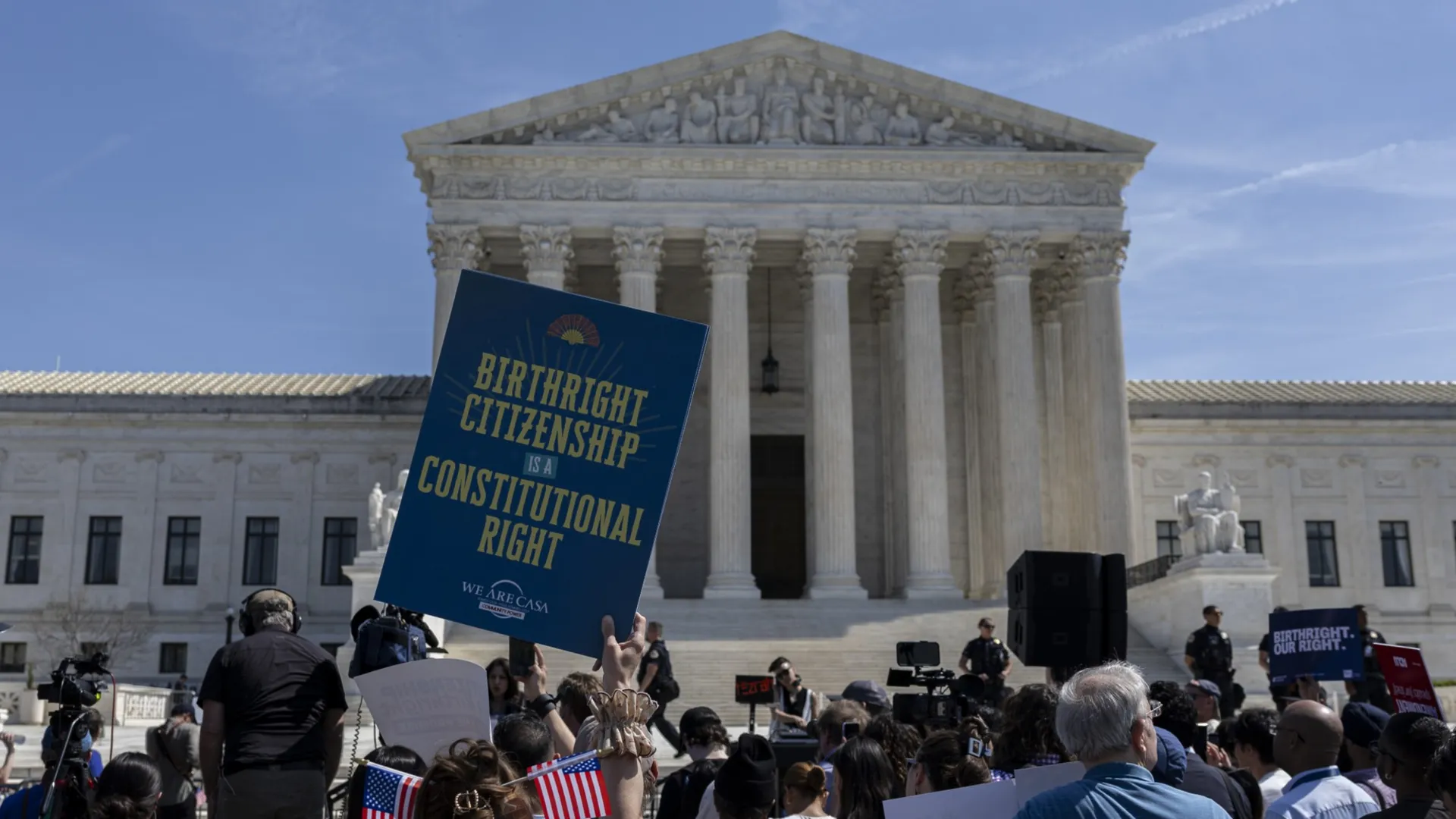
With the Supreme Court set to rule on President Donald Trump’s challenge to birthright citizenship, an oft-cited practice is at the center of it all. The practice, called birth tourism, has become commonplace for women who want their kids to have U.S. citizenship. But the Supreme Court may further support the Trump administration’s anti-immigration stance by cracking down on it.
‘Side issue into a main argument’
Birth tourism occurs when pregnant women from other nations “travel to the U.S. for the purpose of giving birth, thereby obtaining citizenship for their babies,” said The Philadelphia Inquirer. The practice is regularly mentioned by legal scholars, yet birth tourism is “actually rare, despite the outsized role it’s gained in the debate over citizenship.” There are about 26,000 cases of birth tourism in the U.S. annually, according to the Migration Policy Institute.
While this is just a small fraction of the 3.5 million yearly U.S. births, the White House has “elevated what was once a side issue into a main argument for revocation,” said the Inquirer. It is part of Trump’s “aggressive immigration agenda that includes attempts to restrict birthright citizenship,” said Newsweek. Trump signed an order banning birthright citizenship in 2025, triggering a “series of legal challenges now before the Supreme Court” given that the practice is enshrined in the 14th Amendment.
The Week
Escape your echo chamber. Get the facts behind the news, plus analysis from multiple perspectives.
Join more than 350,000 subscribers and keep yourself informed with a selection of The Week’s most interesting, enlightening and entertaining stories - plus daily puzzles.
Join more than 350,000 subscribers and keep yourself informed with a selection of The Week’s most interesting, enlightening and entertaining stories - plus daily puzzles.
The Trump administration continues to use birth tourism as a primary point of contention when presenting its case to the court. Immigration laws have “spawned a sprawling industry of birth tourism as uncounted thousands of foreigners from potentially hostile nations have flocked to give birth in the United States in recent decades, creating a whole generation of American citizens abroad with no meaningful ties to the United States,” U.S. Solicitor General D. John Sauer said in oral arguments to the Supreme Court.
‘The scale of the problem is marginal’
Even though the White House has positioned birth tourism as a major factor in why birthright citizenship should be overturned, proponents “say that the scale of the problem is marginal,” said The New York Times. They typically “argue that it can be addressed through regulation and law enforcement without eliminating what has long been considered a central tenet of the United States — equality at birth, regardless of race, religion or the immigration status of the parents.”
Republicans have long used birth tourism as a way to highlight criminal enterprises. In 2019, officials in California “arrested three people who operated multimillion-dollar birth tourism companies and had charged as much as $100,000 to Chinese couples” for a luxury bundle that included “housing, nannies and shopping excursions to Gucci,” said the Times. GOP lawmakers have also “cited birth tourism in the Northern Mariana Islands, a U.S. territory that has looser visa requirements and is closer to China.”
Support for overturning birthright citizenship remains low. Nearly two-thirds of Americans, 65%, think citizenship “should be granted to all children born on American soil, no matter the circumstances,” according to a recent AP-NORC survey of 2,596 adults. Republicans are less convinced; only 44% are in favor of birthright citizenship. “It’s fundamental to sovereignty, being able to determine who is a citizen,” said Jessica Vaughan, the director of policy studies for the Center for Immigration Studies, to the Times.
Sign up to get Today’s Best Articles in your inbox
A free daily email with the day’s biggest news and analysis – and the best features from TheWeek.com
Justin Klawans has worked as a staff writer at The Week since 2022. He began his career covering local news before joining Newsweek as a breaking news reporter, where he wrote about politics, national and global affairs, business, crime, sports, film, television and other news. Justin has also freelanced for outlets including Collider and United Press International.