Ukrainian officials urge residents in the east to evacuate ahead of expected Russian attacks
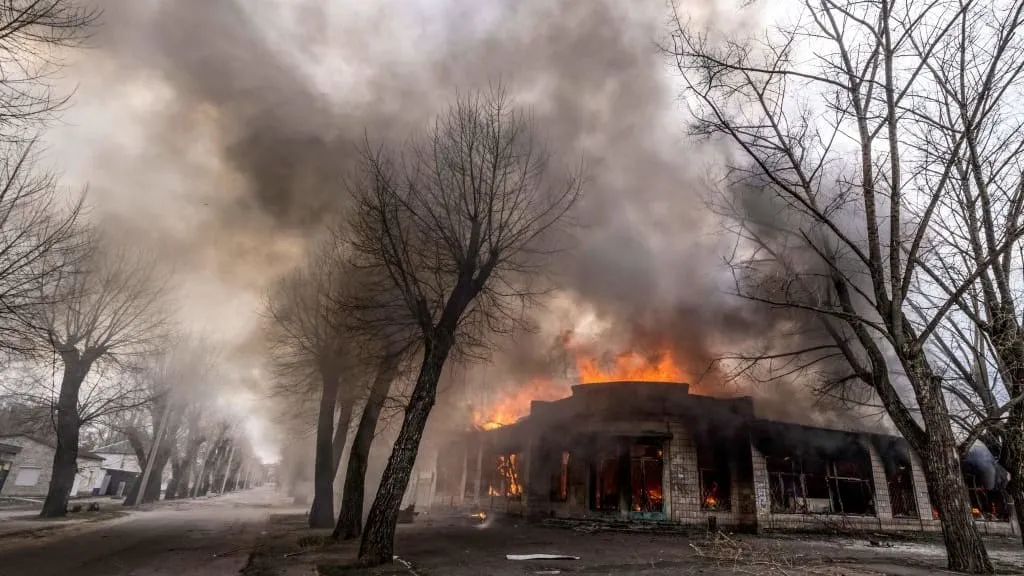
Officials in Ukraine say Russia is preparing to launch a new offensive in the Donetsk and Luhansk regions, and are imploring residents to leave while they still can.
"Later, people will come under fire," Deputy Prime Minster Iryna Vereshchuk said Wednesday. "And we won't be able to do anything to help them."
A U.S. defense official told reporters on Wednesday that Russia has finished its withdrawal of troops from Kyiv and Chernihiv in northern Ukraine, sending them back to Russia and Belarus to reorganize and stock up on supplies. It's believed they will then move to eastern Ukraine and launch a major offensive. Those forces were battered over the last several weeks, a second defense official told The Associated Press, and it could take as long as a month for them to prepare for the next stage of the invasion.
The Week
Escape your echo chamber. Get the facts behind the news, plus analysis from multiple perspectives.
Sign up for The Week's Free Newsletters
From our morning news briefing to a weekly Good News Newsletter, get the best of The Week delivered directly to your inbox.
Ukrainian President Volodymyr Zelensky also warned on Wednesday that Russian forces are gearing up for battle in eastern Ukraine. In the Donbas region, separatists have formed the self-proclaimed Luhansk People's Republic and Donetsk People's Republic, which Russian President Vladimir Putin formally recognized ahead of the invasion. It's expected that Putin's aim is to gain control of these breakaway states and the rest of the Donbas.
That won't be easy, Zelensky said. "We will fight and we will not retreat," he declared. "We will seek all possible options to defend ourselves until Russia begins to seriously seek peace. This is our land. This is our future. And we won't give them up."
A free daily email with the biggest news stories of the day – and the best features from TheWeek.com
Catherine Garcia has worked as a senior writer at The Week since 2014. Her writing and reporting have appeared in Entertainment Weekly, The New York Times, Wirecutter, NBC News and "The Book of Jezebel," among others. She's a graduate of the University of Redlands and the Columbia University Graduate School of Journalism.
-
Will Trump’s 10% credit card rate limit actually help consumers?Today's Big Question Banks say they would pull back on credit
-
3 smart financial habits to incorporate in 2026the explainer Make your money work for you, instead of the other way around
-
‘The surest way to shorten our lives even more is to scare us about sleep’Instant Opinion Opinion, comment and editorials of the day
-
What would a UK deployment to Ukraine look like?Today's Big Question Security agreement commits British and French forces in event of ceasefire
-
Would Europe defend Greenland from US aggression?Today’s Big Question ‘Mildness’ of EU pushback against Trump provocation ‘illustrates the bind Europe finds itself in’
-
Did Trump just end the US-Europe alliance?Today's Big Question New US national security policy drops ‘grenade’ on Europe and should serve as ‘the mother of all wake-up calls’
-
Is conscription the answer to Europe’s security woes?Today's Big Question How best to boost troop numbers to deal with Russian threat is ‘prompting fierce and soul-searching debates’
-
Trump peace deal: an offer Zelenskyy can’t refuse?Today’s Big Question ‘Unpalatable’ US plan may strengthen embattled Ukrainian president at home
-
Vladimir Putin’s ‘nuclear tsunami’ missileThe Explainer Russian president has boasted that there is no way to intercept the new weapon
-
The Baltic ‘bog belt’ plan to protect Europe from RussiaUnder the Radar Reviving lost wetland on Nato’s eastern flank would fuse ‘two European priorities that increasingly compete for attention and funding: defence and climate’
-
How should Nato respond to Putin’s incursions?Today’s big question Russia has breached Nato airspace regularly this month, and nations are primed to respond