Sign up to get Today’s Best Articles in your inbox
Join 350,000+ subscribers and keep yourself informed with a selection of
The Week’s most interesting, enlightening and entertaining stories - plus daily puzzles.
You are now subscribed
Your newsletter sign-up was successful
Want to add more newsletters?
An account already exists for this email address, please log in.
The Old Masters are seeing a renaissance
Market popularity for traditional artworks is on the rise, driven by younger artists and collectors
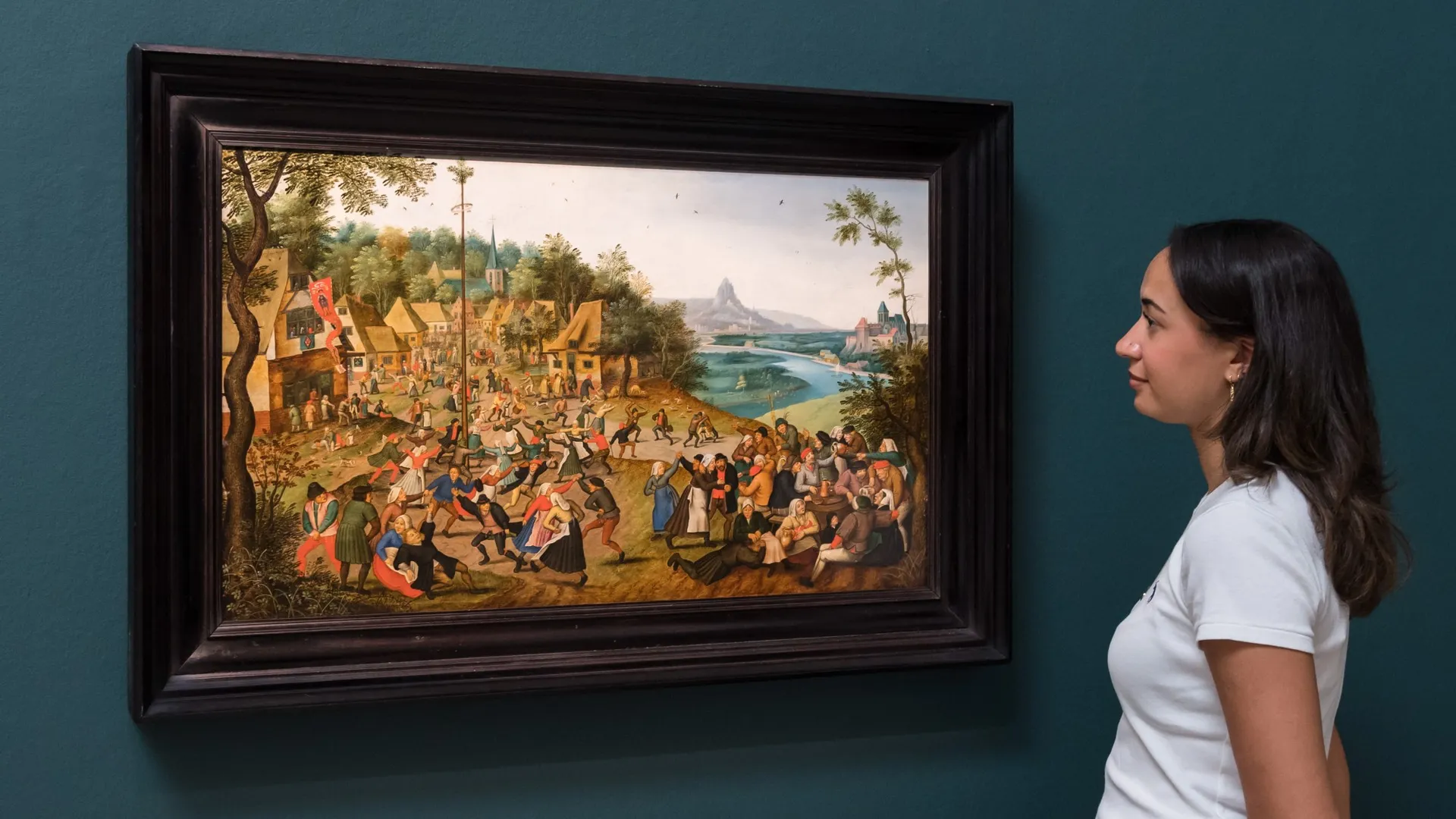
Until the 1980s, Old Masters – paintings typically completed before 1850 – “ruled the art world”, said The Economist. But collectors began to see the “centuries-spanning” category as “too old-timey”, instead turning to more modern and Impressionist art in the following decades.
Now, experts are not only witnessing unforeseen rises in sales, but also dramatic changes in the attitudes of collectors and artists alike.
‘Untrammelled by tradition’
Old Masters have had “new life breathed into them”, said The Economist. In 2025, global sales of the paintings reached “$1.2 billion [£895 million], 30% higher than a year earlier”. And it’s younger buyers who are “showing more enthusiasm”.
The Week
Escape your echo chamber. Get the facts behind the news, plus analysis from multiple perspectives.
Join more than 350,000 subscribers and keep yourself informed with a selection of The Week’s most interesting, enlightening and entertaining stories - plus daily puzzles.
Join more than 350,000 subscribers and keep yourself informed with a selection of The Week’s most interesting, enlightening and entertaining stories - plus daily puzzles.
This year at Sotheby’s, one of the world’s largest auction houses, “around 16% of bidders in Old Masters sales” were “under the age of 40, nearly triple the share from five years ago”.
Several changes have occurred in the last 50 years. For instance, the contemporary art market has shown “signs of volatility”, causing collectors to turn to Old Masters which are more “stable and significantly less expensive”. There is also an element of “scarcity” that makes them more attractive, as higher numbers of the older paintings enter museum collections with each passing year.
However portraits and figurative art are “in vogue” because they are, ultimately, “Instagrammable”. People are drawn to what appears to be a “simpler life (if you ignore the revolutions, plagues and awful dentistry of past eras)”. And they are so used to seeing pictures of people online that observers are “primed to connect to painted ones”.
There’s also “new money in Old Masters,” said Margaret Carrigan on Artnet. There was a longstanding belief that “newly minted millionaires and billionaires could be lured” to the art market via modern, “tech-flavoured” offerings, such as non-fungible tokens (NFTs), but the “pop of the NFT bubble” has seemed to disprove that.
Sign up to get Today’s Best Articles in your inbox
A free daily email with the day’s biggest news and analysis – and the best features from TheWeek.com
Yet sales suggest they are “still in the game”. During London’s Classics Week, Sotheby’s and Christie’s brought in £76.7 million, a “respectable 9.4% rise on the same auctions last year”. Buyers are now more likely to collect “cross-category”, and there is a “hunger” for works that “feel contemporary, regardless of age”.
“Amid rapid, destabilising technological change, visualising the creation of a new world and meditating on our inescapable mortality seem pretty apropos.”
Works by “household-name” artists such as Canaletto, Michelangelo and Rembrandt, have always been popular, said Emma Crichton-Miller in the Financial Times. What’s more surprising is the “surge in value for images by lesser-known artists”. A new generation of collectors, “untrammelled by tradition” have a new set of criteria: there is a “striking” pattern that desirable paintings are portraits, that can be “admired with little contextual knowledge beyond our shared human nature”. Once seen as the “backwater for scholarly private collectors” this new trend has “encouraged works not seen for decades out into the marketplace”. When auctions come around, “expect surprises”.
‘Embraced’ by artists
In the past, lesser-known artists would imitate bigger names – in effect “art historical name-dropping” to improve the “gravity and market confidence” of their works, said J. Cabelle Ahn on Artnet. Cynics would call evoking Old Masters styles as a form of “reference-baiting”. But one of the main reasons for this “trans-historical escalation” is “technological unease”. Not only do artists fear being eclipsed by AI, but there is a movement to explore “foundational concepts like meaning and originality in the endless sea of information”.
Not only is figurative painting “back in a big way” for collectors, but it is being “embraced” by large numbers of emerging artists “keen to demonstrate their skills”, said Chloe Stead in the Financial Times. This could be guided by materials, and neglected older techniques appearing “new”. Oil paint became popular in the Netherlands in the 12th century, even now, for artists seeking to create realistic images, there is “no better alternative”.
There may be “some merit” to the idea that current “geopolitical and financial instability” has “spooked” collectors to return to what they know, and that artists are capitalising on this movement. But it is worth remembering that “Renaissance art was intended to be accessible and easily readable”. Perhaps this reversion of style by young artists is not influenced by a “retrograde nostalgia”, but by a “desire to connect to audiences outside the confines of the art world”.
Will Barker joined The Week team as a staff writer in 2025, covering UK and global news and politics. He previously worked at the Financial Times and The Sun, contributing to the arts and world news desks, respectively. Before that, he achieved a gold-standard NCTJ Diploma at News Associates in Twickenham, with specialisms in media law and data journalism. While studying for his diploma, he also wrote for the South West Londoner, and channelled his passion for sport by reporting for The Cricket Paper. As an undergraduate of Merton College, University of Oxford, Will read English and French, and he also has an M.Phil in literary translation from Trinity College Dublin.

 talking pointsA leadership power vacuum may await Republicans
 QUOTE OF THE DAY‘What kind of culture looks at sexual violence and sees an opportunity for profit? This is rape culture. And it should disturb every single one of us.’
 today’s big questionHow long can US consumers continue their spending spree?