Sign up to get Today’s Best Articles in your inbox
Join 350,000+ subscribers and keep yourself informed with a selection of
The Week’s most interesting, enlightening and entertaining stories - plus daily puzzles.
You are now subscribed
Your newsletter sign-up was successful
Want to add more newsletters?
An account already exists for this email address, please log in.
‘The Odyssey’ has kicked off a debate among authors
The discourse might be proof that anti-intellectualism hasn’t won
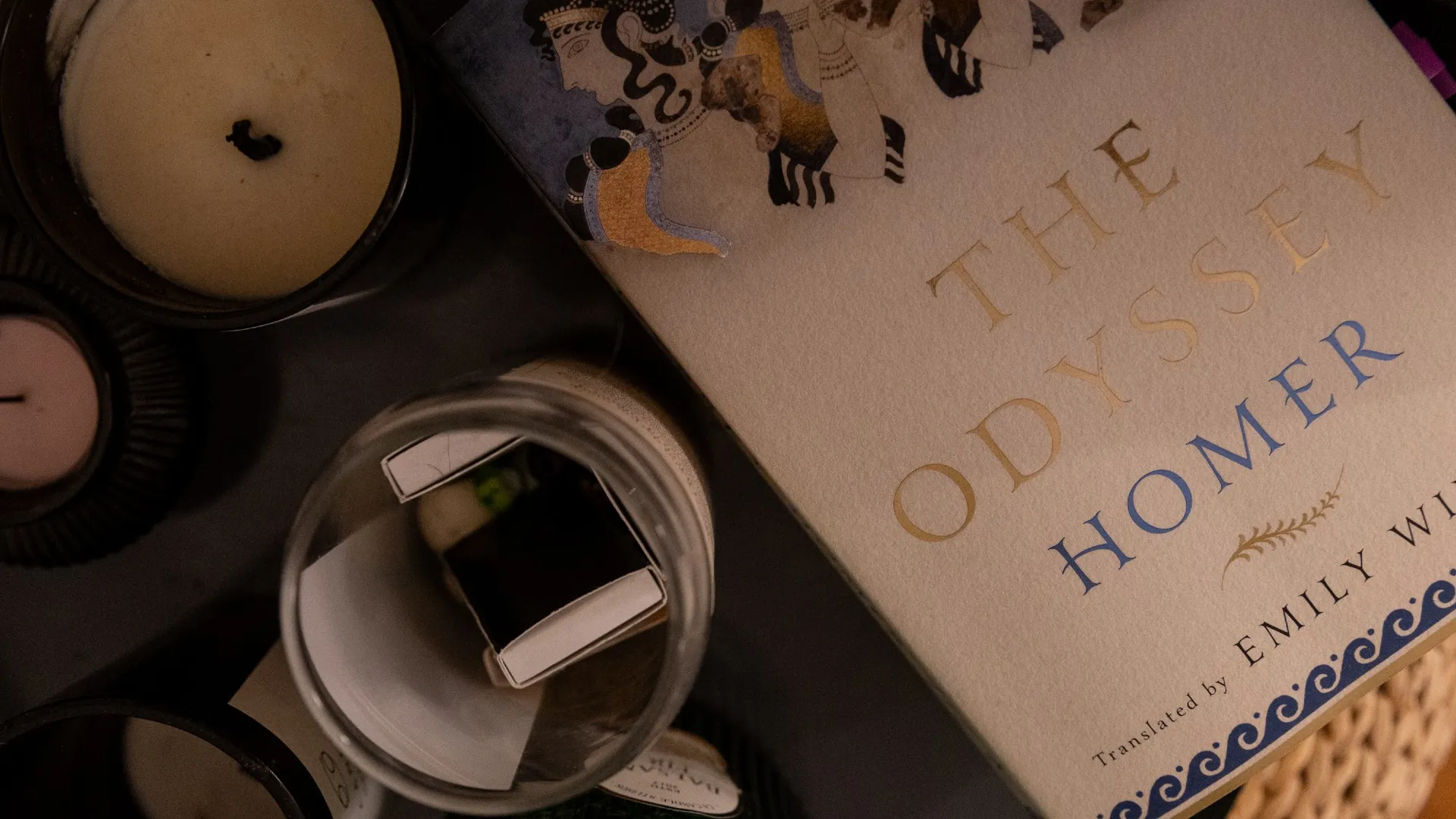
While promoting his latest blockbuster, filmmaker Christopher Nolan listed scholar Emily Wilson’s translation of “The Odyssey” as one of his influences. Now, Wilson’s scathing critique of Nolan’s cinematic take on the epic poem has gone viral, inspiring additional backlash from critics and academics alike. Amid the heated controversy over one of the year’s biggest films, there may be a silver lining to the discourse.
Why Wilson trashed Nolan’s adaptation
Wilson’s expertise in the classics is undeniable. She is also no stranger to backlash. In 2017, she became the first woman to translate “The Odyssey” from ancient Greek into English, an interpretation “widely celebrated in academia and the literary world” as “comprehensive, modern in sensibilities and faithful” to Homer’s almost 3,000-year-old classic, said The New York Times. Her translation departs from the “masculine framing used by her male predecessors,” a move that has “subjected her to online harassment and misogyny from men and far-right figures.”
Before Nolan’s movie premiered, Wilson was “pumped” to see how the epic played out on the big screen, she said on The New York Times’ The Daily podcast. However, after seeing Nolan’s adaptation, Wilson said she would be “ashamed to have written any part of this script” at The London Review of Books. The film had “nothing convincing to say,” it lacked “psychological, emotional, political and ethical depth,” and the “writing is abysmal,” Wilson added. It was a “family-friendly audiovisual spectacle” comparable to an “elaborate Fourth of July fireworks display.”
The Week
Escape your echo chamber. Get the facts behind the news, plus analysis from multiple perspectives.
Join more than 350,000 subscribers and keep yourself informed with a selection of The Week’s most interesting, enlightening and entertaining stories - plus daily puzzles.
Join more than 350,000 subscribers and keep yourself informed with a selection of The Week’s most interesting, enlightening and entertaining stories - plus daily puzzles.
Most of the nonwhite actors “play versions of the Black best friend, whose only role in the drama is to provide aid to the white protagonist,” Wilson said in her LRB review. She has since expressed regret for this “paragraph about the uses of the POC actors — who are all great, but IMO under-utilized,” Wilson wrote on social media. She still thinks the film “largely wastes its strong cast,” but she “framed it badly.”
A debate reminiscent of the golden era of critics
One of the most prominent figures to come to Nolan’s defense against Wilson was Joyce Carol Oates, a retired professor of the humanities and a prolific writer who has won a National Book Award. Wilson’s “tone of dismissal & haughty superiority strike a sour note,” Oates said on X. Instead of “disagreeing with interpretations of Homer in a collegial manner,” Wilson, who has “benefited enormously from Nolan’s film,” speaks in the “crude language of MAGA folks attacking someone with ideas that differ from hers.” Within the world of translators, Wilson’s review “seems all the more surprising since all translations are, presumably, subjective & not equivalent to the original text.” One would expect a translator to be “just a wee bit more thoughtful & respectful of others who are acting in good faith just as (she would claim) she is.”
Wilson used “baffling arguments” to “flay” Nolan’s adaptation of Homer’s poem, classicist Theo Nash said at Slate. She criticizes Nolan for deviating from the text, “as if the filmmaker’s choices were not also an act of interpretation.” The close attention that informs her translation is “lacking in her reading of the movie,” and the “idea that Nolan might have something new to say about ‘The Odyssey’ is denied.”
Whether or not you agree with Wilson’s perspective, it’s “always exciting to read a particularly full-throated pan,” said critic Kathryn VanArendonk at Vulture. Even if you don’t believe Wilson did her job as a critic, she has “done her job as a writer,” which is to “be a compelling read who makes her argument unmistakably clear.”
Sign up to get Today’s Best Articles in your inbox
A free daily email with the day’s biggest news and analysis – and the best features from TheWeek.com
Figuring out “who is punching down here is really interesting,” VanArendonk added. Since Wilson has “academic authority” and is “writing with such vigor,” it is “easy to forget that she has less power” than Nolan, a Hollywood darling. That is also “part of the pleasure of the conversation.” Wilson is not interested in “softening any of it.” Still Nolan’s the one who “walks away unscathed, no question.” Of all the topics we could watch people fight about online, “how someone adapted ‘The Odyssey’ is such a good one.”
Theara Coleman has worked as a staff writer at The Week since September 2022. She frequently writes about technology, education, literature and general news. She was previously a contributing writer and assistant editor at Honeysuckle Magazine, where she covered racial politics and cannabis industry news.