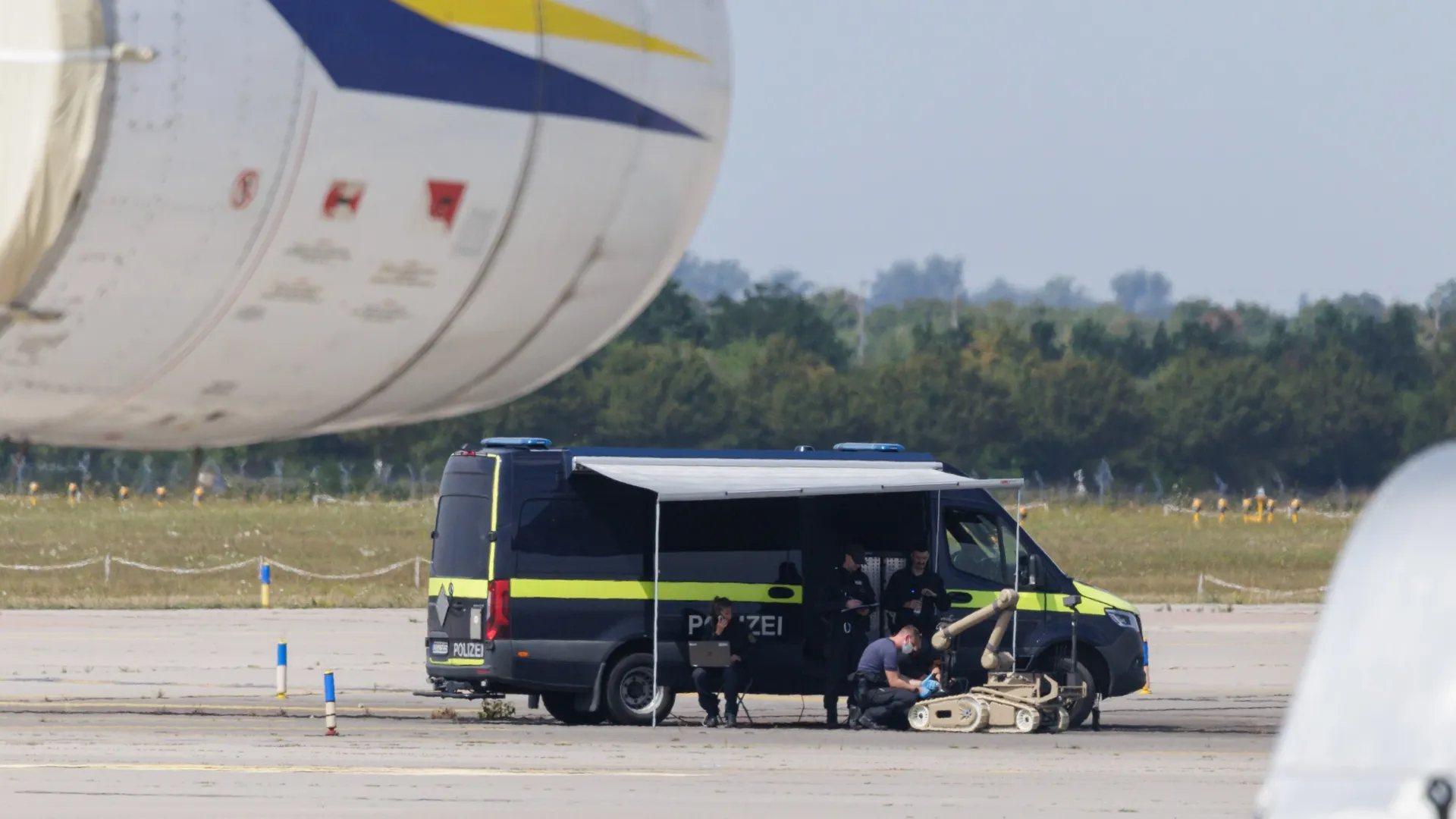
“The fact that a drone armed with explosives is here on the grounds of an airport represents a new threat scenario,” said Germany’s Interior Minister Alexander Dobrindt in Leipzig. “We’re talking about a professional hybrid threat situation.”
Dobrindt looked “ashen-faced” as he addressed the media, said Newsweek. Flights were halted after the discovery of a quadcopter armed with explosives in a restricted area near Ukrainian Antonov freight planes. Nato has acknowledged it is aware of the incident.
Security experts and officials are asking a question that was “once unthinkable”: is Germany “de facto at war, or at least engaged in a hybrid war – and with whom?”
The Week
Escape your echo chamber. Get the facts behind the news, plus analysis from multiple perspectives.
SUBSCRIBE & SAVE
Sign up for The Week's Free Newsletters
Join more than 350,000 subscribers and keep yourself informed with a selection of The Week’s most interesting, enlightening and entertaining stories - plus daily puzzles.
Join more than 350,000 subscribers and keep yourself informed with a selection of The Week’s most interesting, enlightening and entertaining stories - plus daily puzzles.
Latest Videos FromThe Week US
Germany becoming ‘primary target’
Leipzig/Halle airport is a Nato and German military logistics hub, and since 2022 has been used by Ukraine to transport military equipment. It is also the base for Ukraine’s Antonov Airlines in Europe, a cargo carrier, and as the drone was found close to a Ukrainian cargo plane, this has “directed suspicion towards Russia”, said The Guardian.
Drone sightings at German airports rose “significantly” in the first half of 2026, said Der Spiegel. According to German Air Navigation Services, 166 drones were spotted at 15 international airports, compared to 101 in the same period last year.
The threat of drone attacks is “becoming increasingly concrete”, said Süddeutsche Zeitung. But bringing them down is notoriously difficult. Drones can be stopped by “jammers, nets, or even by being shot down”, but this is a “delicate task” when they are near residential areas.
Leipzig airport was already equipped with a drone defence system, but a “custom-made” model was seemingly able to bypass it. Germany is becoming the “primary target” in “Russia’s shadow war”, which has the “aim of dissuading it from supporting Ukraine in the short term and weakening it in the long term”.
Germany has “gradually expanded its defensive measures in recent months”, said Euronews. Since October 2025, “under certain conditions”, the federal police have been allowed to shoot down drones. And Dobrindt has called for drones to be “detected, intercepted and, if necessary, shot down more consistently in future”. But the process is complicated, with frequency scanners, cameras and radar systems all required.
Russia trying to ‘sow fear’
“As well as the means and the motive, Moscow does have form” with this kind of attack, said the BBC. Though there is no hard evidence to suggest who is behind it, there is “renewed talk” of hybrid war across Europe. “If Russia was behind this”, its aim was likely to “sow fear”.
The incident raises concerns about foreign interference in upcoming German regional elections, where “far-right politicians have campaigned on fears of escalations with Moscow”, said Politico. Former communist and East German states Saxony-Anhalt and Mecklenburg–Western Pomerania will hold elections in September. “Pro-Russian sentiment remains strong” and the far-right party AfD “could take power for the first time at the state level”.