Russian forces renew attacks on Mariupol steel plant
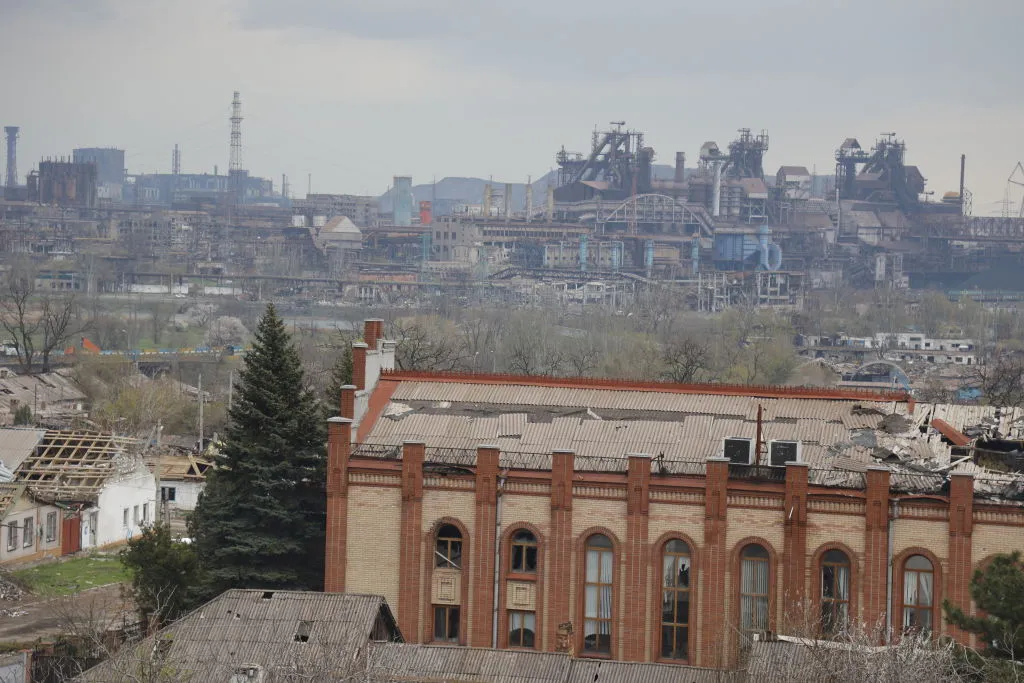
Russian troops launched an attack on Mariupol's Azovstal steel plant on Saturday, aiming to eliminate the last pocket of Ukrainian resistance in southern port city, NPR reports.
This renewed assault comes as a reversal of earlier Russian policy. On Thursday, Russian President Vladimir Putin declared victory in Mariupol and ordered his defense minister to seal off the steel plant "so that not even a fly comes through" instead of storming it.
Oleksiy Arestovych, an adviser to Ukrainian President Volodymyr Zelensky, said Russian forces were launching air strikes against the Azovstal plant and appeared to be preparing to storm it. Around 2,000 Ukrainian troops and 1,000 civilians reportedly remain holed up in the sprawling Azovstal facility.
The Week
Escape your echo chamber. Get the facts behind the news, plus analysis from multiple perspectives.
Sign up for The Week's Free Newsletters
From our morning news briefing to a weekly Good News Newsletter, get the best of The Week delivered directly to your inbox.
Ukrainian sources claim that at least 20,000 people have been killed in Russia's siege of Mariupol. On Thursday and Friday, Ukrainian officials said they located two mass graves in villages outside Mariupol. The first, located about 12 miles outside of Mariupol in Russian-occupied Manhush, could contain up to 9,000 corpses. The second was found seven miles east of Mariupol in the village of Vynohradne, CNBC reported.
A free daily email with the biggest news stories of the day – and the best features from TheWeek.com
Grayson Quay was the weekend editor at TheWeek.com. His writing has also been published in National Review, the Pittsburgh Post-Gazette, Modern Age, The American Conservative, The Spectator World, and other outlets. Grayson earned his M.A. from Georgetown University in 2019.
-
The week’s best photosIn Pictures A drive in the desert, prayers with pigeons, and more
-
The Week Unwrapped: Will drought fuel global violence?Podcast Plus why did Trump pardon a drug-trafficking president? And are romantic comedies in terminal decline?
-
Sudoku hard: December 5, 2025The daily hard sudoku puzzle from The Week
-
Is conscription the answer to Europe’s security woes?Today's Big Question How best to boost troop numbers to deal with Russian threat is ‘prompting fierce and soul-searching debates’
-
Trump peace deal: an offer Zelenskyy can’t refuse?Today’s Big Question ‘Unpalatable’ US plan may strengthen embattled Ukrainian president at home
-
Vladimir Putin’s ‘nuclear tsunami’ missileThe Explainer Russian president has boasted that there is no way to intercept the new weapon
-
The Baltic ‘bog belt’ plan to protect Europe from RussiaUnder the Radar Reviving lost wetland on Nato’s eastern flank would fuse ‘two European priorities that increasingly compete for attention and funding: defence and climate’
-
How should Nato respond to Putin’s incursions?Today’s big question Russia has breached Nato airspace regularly this month, and nations are primed to respond
-
Russia’s war games and the threat to NatoIn depth Incursion into Poland and Zapad 2025 exercises seen as a test for Europe
-
What will bring Vladimir Putin to the negotiating table?Today’s Big Question With diplomatic efforts stalling, the US and EU turn again to sanctions as Russian drone strikes on Poland risk dramatically escalating conflict
-
The mission to demine UkraineThe Explainer An estimated quarter of the nation – an area the size of England – is contaminated with landmines and unexploded shells from the war