Sign up to get Today’s Best Articles in your inbox
Join 350,000+ subscribers and keep yourself informed with a selection of
The Week’s most interesting, enlightening and entertaining stories - plus daily puzzles.
You are now subscribed
Your newsletter sign-up was successful
Want to add more newsletters?
An account already exists for this email address, please log in.
France's Macron calls Russian strike on Ukrainian mall a 'new war crime'
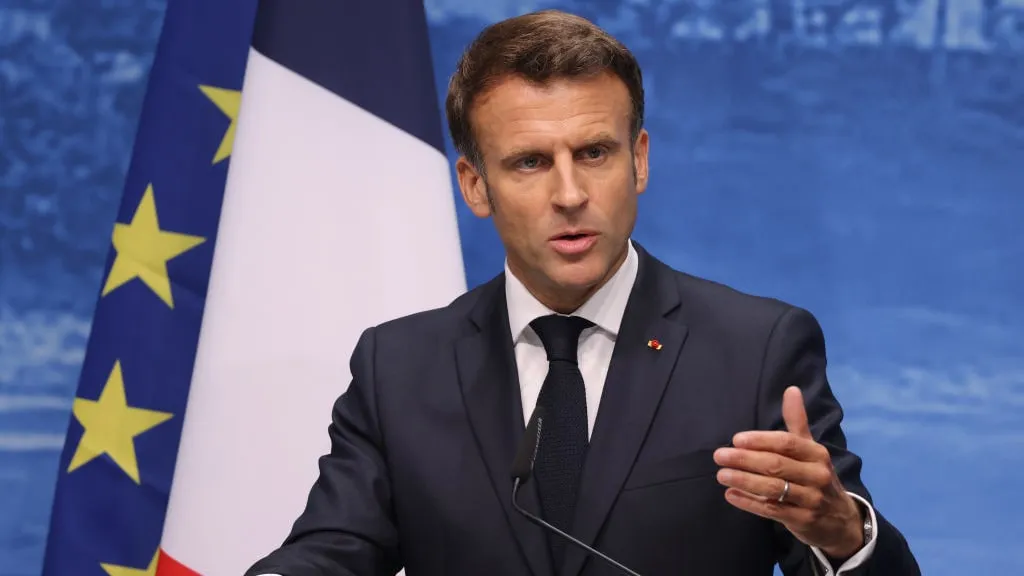
French President Emmanuel Macron on Tuesday called Russia's strike against a shopping center in Kremenchuk, Ukraine, a "new war crime," adding that Moscow "cannot and should not win" the war.
At least 18 people were killed in the Monday airstrike, which hit a crowded mall that Ukrainian officials said was filled with at least 1,000 people. Dozens were injured in the attack, and 21 people remain missing.
Russia has ramped up its missile strikes in the last several days, coinciding with the meeting of G7 leaders in the Bavarian Alps. Macron told reporters that the G7 countries — Canada, Germany, France, Italy, Japan, the United Kingdom, and the United States — will continue to back Ukraine and sanction Russia "as long as necessary, and with the necessary intensity."
The Week
Escape your echo chamber. Get the facts behind the news, plus analysis from multiple perspectives.
Join more than 350,000 subscribers and keep yourself informed with a selection of The Week’s most interesting, enlightening and entertaining stories - plus daily puzzles.
Join more than 350,000 subscribers and keep yourself informed with a selection of The Week’s most interesting, enlightening and entertaining stories - plus daily puzzles.
Ukrainian President Volodymyr Zelensky spoke virtually to the United Nations on Tuesday, and called Russian President Vladimir Putin "a terrorist." Russia should be kicked out of the U.N., Zelensky said, and he called for the establishment of an international tribunal to investigate the Russian invasion of Ukraine. "Tens of thousands" of Ukrainian children and adults have been killed since the start of the invasion on Feb. 24, Zelensky said, and he asked that those in the chamber stand in their honor. Every member of the council rose, including Dmitry Polyansky, Russia's deputy U.N. ambassador, The Associated Press reports.
Sign up to get Today’s Best Articles in your inbox
A free daily email with the day’s biggest news and analysis – and the best features from TheWeek.com
Catherine Garcia has worked as a senior writer at The Week since 2014. Her writing and reporting have appeared in Entertainment Weekly, The New York Times, Wirecutter, NBC News and "The Book of Jezebel," among others. She's a graduate of the University of Redlands and the Columbia University Graduate School of Journalism.