Sign up to get Today’s Best Articles in your inbox
Join 350,000+ subscribers and keep yourself informed with a selection of
The Week’s most interesting, enlightening and entertaining stories - plus daily puzzles.
You are now subscribed
Your newsletter sign-up was successful
Want to add more newsletters?
An account already exists for this email address, please log in.
Church services dull pain, and a new diabetes drug: science stories of the week
From new types of spider hunting techniques to the earliest-known plague victims, here are the most interesting recent scientific developments
Karl Marx famously described religion as the opium of the people. Now, a study has shown that going to church has a similar effect on the body to morphine. Researchers from Oxford Brookes University asked 265 people in the UK and Brazil how close they felt to other worshippers before and after 24 religious events – ranging from Catholic and Baptist services to Afro-Brazilian rituals. The participants were also given a standard pain-threshold test to help assess the activation of the brain’s “mu-opioid” system, the neural pathway responsible for the body’s response to pain, reward and addiction. Its receptors can be activated by external opioids such as morphine, but also natural ones – the endorphins produced by the brain to relieve pain and stress. The results showed that, after the ritual, the participants felt more connected to one another, and more able to tolerate pain. This doesn’t mean that sermons are sedating people, said the team. Instead, these events may have developed to nurture feelings of closeness in large groups in much the same way as social grooming does between pairs of apes.
The earliest-known plague victims
When four Stone Age cemeteries were excavated in Siberia in the 1980s and 1990s, archaeologists were puzzled by the number of children among the dead; at some of the sites, two-thirds of the bodies were under 15 years old. Now, thanks to new DNA sequencing techniques, the mystery has been solved: the children were victims of the world’s earliest-known plague outbreak. An international team of scientists analysed pulp from the teeth of the hunter-gatherers buried near Lake Baikal, the oldest and deepest lake in the world, and found DNA from a previously unknown strain of the plague bacterium, Yersinia pestis, in nearly 40% of the individuals – a higher proportion than found in some medieval plague pits. Radiocarbon dating shows that many of them died within a very short time span; in several cases parents and children were buried together. The evidence suggests the plague struck twice, the first time 5,500 years ago. This “flies in the face” of the long-standing assumption that the plague only took hold after the advent of agriculture and the formation of densely populated settlements, said lead author Dr Ruairidh Macleod, of the University of Oxford. The theory is that individuals became infected by a strain that was particularly lethal to the young through close contact with marmots (rodents that are known reservoirs of the plague), perhaps while butchering them. It would then have spread through the community.
The impact of the HPV jab
Girls vaccinated against HPV when they are 12 or 13 have a close to zero chance of dying from cervical cancer before the age of 30, a study has found. The researchers, from Queen Mary University of London, used official data to assess the impact of the HPV vaccine on cervical cancer survival. They found that deaths have fallen sharply since the jab became routine in 2008. No women aged 20-24 died from cervical cancer between 2020 and 2024; without the jabs, 23 deaths would have been expected, says the report in The Lancet. “It’s incredible to think that a single jab can almost eliminate a particular type of cancer,” said lead researcher Professor Peter Sasieni. He warned, however, that vaccination rates are falling and, without “concerted efforts” to increase uptake, deaths could start to rise.
The Week
Escape your echo chamber. Get the facts behind the news, plus analysis from multiple perspectives.
Join more than 350,000 subscribers and keep yourself informed with a selection of The Week’s most interesting, enlightening and entertaining stories - plus daily puzzles.
Join more than 350,000 subscribers and keep yourself informed with a selection of The Week’s most interesting, enlightening and entertaining stories - plus daily puzzles.
People may not think of anosmia – the loss of the sense of smell – as a serious condition, but it can have a similar effect on a person’s sense of well-being as having a stroke. A team from the University of East Anglia looked at studies on the emotional and psychological impacts of stroke, diabetes, Parkinson’s, kidney failure and heart disease, and compared them with findings on people with anosmia and ageusia (the loss of the sense of taste). It turned out that those with taste and smell conditions had experienced a sharp reduction in well-being that often rivalled that of the patients in the other groups. Typically, they no longer found pleasure in food, had difficulty socialising, and were more anxious about their safety (as, for instance, they could no longer smell gas). They had high rates of social withdrawal and 20% were depressed.
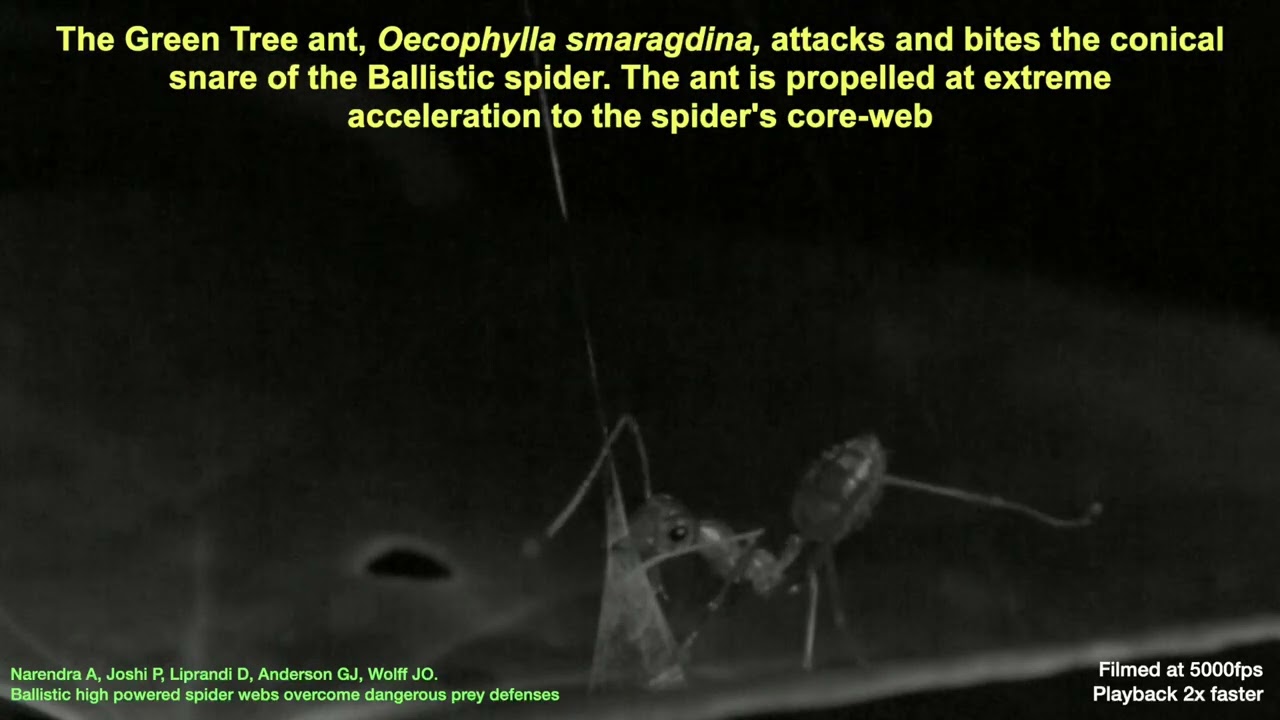
A newly discovered species of spider has been observed weaving a spring-loaded snare, which it uses to catch an ant that is usually too aggressive for arachnids to prey on. The ballista spider spends its days lurking in webs on the undersides of leaves in the rainforests of north Queensland, Australia. When night falls, it lowers itself from its web and fixes a tight line of silk to a leaf below, to act as an anchor. Then it returns to its web, leaving a tension line behind it, repeating the process until it has built a cone-shaped scaffold. Finally, it wraps the cone in a thinner silk and returns to its web. Soon the ants arrive, in attack mode. One bites into the cone, which is sticky. Its jaws become glued to it, and as it wriggles, the cone detaches, catapulting the whole thing – ant and all – into the spider’s web at force, and the spider can then safely eat it.
As the trap only targets these ants, the researchers, from Macquarie University, suspect that the spiders lace the silk with a particular pheromone that both attracts and angers exclusively this species. They also suspect that the spiders pick off the green tree ants quietly, one by one, to avoid triggering an alarm that might cause thousands of aggressive ants to descend on the scene.
New drug for diabetes
The first drug that has been found to delay the onset of type 1 diabetes is to become available on the NHS in England and Wales. In patients with type 1 diabetes, the immune system starts attacking the insulin-producing cells in the pancreas. As a result, the patient has to take insulin, via injections or a pump. Teplizumab – a form of immunotherapy – binds to immune cells to slow their attack and so delays the need to take insulin by two to three years. However, to work it must be given to people when they are in stage 2 of the condition – when their immune cells are attacking, but they have no symptoms yet. That being the case, people will only know they need it if they are offered a blood test because they have a family history of diabetes, take part in a screening study, or have a blood test for some other reason that raises a red flag with their GP.
Sign up to get Today’s Best Articles in your inbox
A free daily email with the day’s biggest news and analysis – and the best features from TheWeek.com


 talking pointsLivestreaming an execution: cruelty or added deterrent?
 QUOTE OF THE DAY‘You don’t get to take a man from his family. You don’t get to take his very life, his whole future from him, and just walk away from it. Especially when that man is Tupac Shakur.’
 today’s big questionCan a Democrat win the Texas governor’s race?