Sign up to get Today’s Best Articles in your inbox
Join 350,000+ subscribers and keep yourself informed with a selection of
The Week’s most interesting, enlightening and entertaining stories - plus daily puzzles.
You are now subscribed
Your newsletter sign-up was successful
Want to add more newsletters?
An account already exists for this email address, please log in.
Another Arctic island is caught in geopolitical crosshairs
President Donald Trump may continue his rhetoric against Greenland, but a different Arctic land 1,200 miles away, Svalbard, faces similar pressure from other countries. With increasing influence from China and Russia, the Norwegian territory could end up playing an outsize role in global affairs.
What’s happening in Svalbard?
The island is subject to a 1920 treaty that allows people from 49 nations to live and work there without a visa, largely for scientific research. Svalbard has since become the “planet’s leading hub of Arctic science and a rare site of international cooperation,” but this also collides with “increasingly fractured international relations and countries’ quest for influence in the fast-warming Arctic,” said CNN.
China and Russia have been working in Svalbard and established research stations that “provide a gateway to Arctic influence,” said CNN. Due to its abundant natural resources, Svalbard has become a “pawn on Russia’s chessboard,” said France24. And Russia hopes that controlling more of Svalbard will allow it to dominate the nearby Bear Gap, one of the “key maritime routes through which Russian naval vessels and submarines can move from their Arctic bases into the North Atlantic,” said Al Jazeera.
The Week
Escape your echo chamber. Get the facts behind the news, plus analysis from multiple perspectives.
Join more than 350,000 subscribers and keep yourself informed with a selection of The Week’s most interesting, enlightening and entertaining stories - plus daily puzzles.
Join more than 350,000 subscribers and keep yourself informed with a selection of The Week’s most interesting, enlightening and entertaining stories - plus daily puzzles.
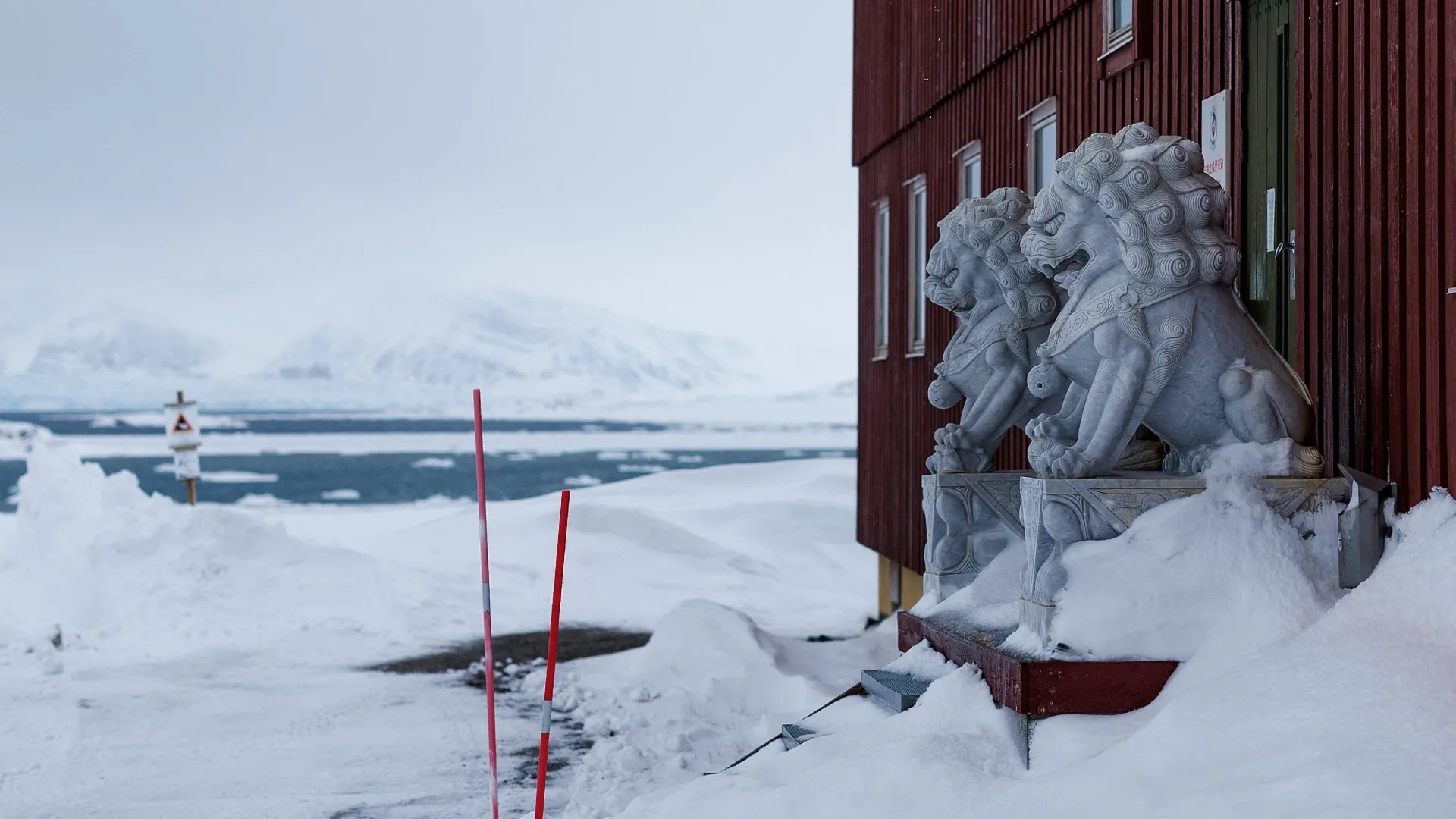
China’s hold on Svalbard is not as strong as Russia’s, but it still maintains a presence. In the nation’s 2018 strategy outline for the Arctic, China “called itself a ‘near-Arctic state’ and repeatedly referred to Svalbard,” said CNN. The country also has “plans for a ‘polar silk road,’ an infrastructure and shipping corridor across the top of the world.” China also has several research stations in Svalbard, including a major testing station on Spitsbergen, Svalbard’s only permanently populated area.
What’s next for Svalbard?
Some are worried that Svalbard’s use by other countries will embolden authoritarianism, as Russia and China will “likely work toward common ends in the development of future Arctic governance,” said The Arctic Institute. Norway’s response “may determine if Svalbard maintains its status as an international research hub or becomes defined by its importance in global trade and military security.” Norway also has its own plan to “mine a huge stretch of Arctic seabed around Svalbard and beyond for critical minerals.”
When it comes to war, the 1920 treaty “prohibits the construction of military bases and fortifications” on Svalbard. However, the article in the treaty that prohibits this is only one sentence and states Svalbard cannot be “used for ‘warlike purposes,’ leaving much room for interpretation,” said The Arctic Institute. Russia has recently been using Svalbard as a “gray zone” for military testing, and the “utilization of these methods is becoming more concentrated on Svalbard as the Arctic Circle captures evermore geopolitical attention.”
Norway seems to be pushing back against Chinese and Russian provocation. In 2022, the government “changed voting rules to prevent non-Norwegians from voting” in Longyearbyen, the capital of Svalbard, said CNN.
Sign up to get Today’s Best Articles in your inbox
A free daily email with the day’s biggest news and analysis – and the best features from TheWeek.com
And some of the pushback has also been symbolic. This year, two granite Chinese lions were removed from the research station on Spitsbergen. There’s “no Chinese research station on Svalbard,” said Eivind Vad Petersson, the state secretary in the Norwegian Ministry of Foreign Affairs, to CNN. There’s a “Norwegian research station with Chinese tenants. That’s a distinction with a difference.”
Justin Klawans has worked as a staff writer at The Week since 2022. He began his career covering local news before joining Newsweek as a breaking news reporter, where he wrote about politics, national and global affairs, business, crime, sports, film, television and other news. Justin has also freelanced for outlets including Collider and United Press International.