Sign up to get Today’s Best Articles in your inbox
Join 350,000+ subscribers and keep yourself informed with a selection of
The Week’s most interesting, enlightening and entertaining stories - plus daily puzzles.
You are now subscribed
Your newsletter sign-up was successful
Want to add more newsletters?
An account already exists for this email address, please log in.
Exploring Vilnius, the green-minded Lithuanian capital with endless festivals, vibrant history and a whole lot of pink soup
Vilnius has exactly what you want in a major European city. It's home to preserved historic quarters, a vibrant food scene and a spirited arts community, with the bonus of manageable crowds and a focus on sustainability.
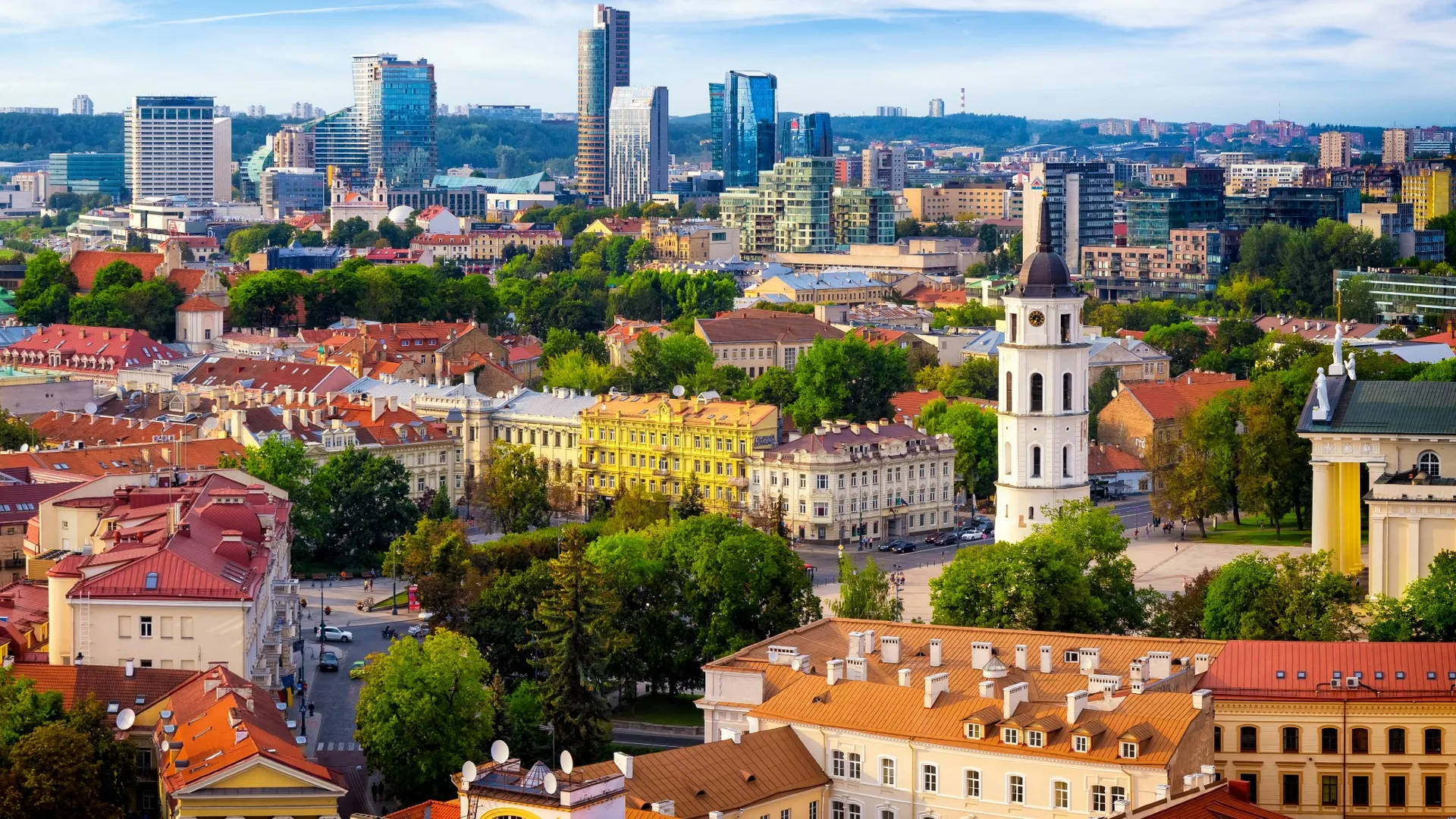
To get a sense of Vilnius, first head to its Old Town, a Unesco World Heritage Site. You will move through “cobbled alleyways” and pass a “harmonious succession of buildings” in different styles, “ranging from Baltic Gothic to neoclassical,” said Lonely Planet. This is one of Europe’s “largest and best-preserved medieval Old Towns,” dating back to 1323. The best way to explore is on foot with a “beverage from one of the quaint coffee shops,” said Vogue Scandinavia.
At Cathedral Square, check out the Basilica of St. Stanislaus and St. Ladislaus, a “former Pagan temple and burial site of Lithuania’s patron saint, Casimir,” and if you “feel lucky,” look for the nearby Stebuklas (“miracle’) tile, said The Independent. The tile was the ending point of a 1989 human chain, two-million-people strong, that stretched across Estonia, Latvia and Lithuania as an “act of protest at Soviet occupation.” Now it’s believed that if you stand there, spin three times clockwise, jump and clap once, your “wishes will come true.”
The Week
Escape your echo chamber. Get the facts behind the news, plus analysis from multiple perspectives.
Join more than 350,000 subscribers and keep yourself informed with a selection of The Week’s most interesting, enlightening and entertaining stories - plus daily puzzles.
Join more than 350,000 subscribers and keep yourself informed with a selection of The Week’s most interesting, enlightening and entertaining stories - plus daily puzzles.
To gain more insight into life here during Soviet times, head to the Museum of Occupations and Freedom Fights, the former headquarters of the Soviet secret police. It offers a “harrowing but essential” look at the “bleaker part” of Vilnius’ history, with exhibitions on resistance efforts and cells that once held those who “rebelled against Soviet rule.”
Jump further back in history by visiting Gediminas’ Castle, which defended the Upper Vilnius Castle during the 15th century, and the Palace of the Grand Dukes of Lithuania, where you can walk through the “many carefully restored halls of the Palace,” each one “lavishly decorated with huge paintings, tapestries and frescoes,” said Lonely Planet.
The cultural center
Christmas is a special time in Vilnius
(Image credit: Go Vilnius)
In the “bustling” Uzupis district, be sure to gawk. This sliver of the city is “brimming with street art, local designer boutiques and hip eateries,” said Vogue Scandinavia. Art is part of Vilnius’ culture, and so are annual celebrations like the Vilnius Light Festival in January, Vilnius Book Fair in February and March, Kaziukas Fair in March, Night of Museums and Street Music Day in May, Midsummer Vilnius in July, Vilnius Jazz in October and Gastronomy Week in November.
The year ends on a bright note with Christmas. The city is known for its “sprawling Christmas market” that takes over Cathedral Square in December, said National Geographic. Visitors stop by “dozens of small huts full of confections and delicious chocolate and hot wine” and scope out the handmade gift items and Vilnius’ massive official Christmas tree. Even the Lukiskes Prison, a Baroque complex near Old Town that is now an artists’ space, transforms into a Christmas market.
Sign up to get Today’s Best Articles in your inbox
A free daily email with the day’s biggest news and analysis – and the best features from TheWeek.com
The local staple
Saltibarsciai is served during the Vilnius Pink Soup Fest
(Image credit: Petras Malukas / AFP / Getty Images)
Lithuania is “quietly becoming one of Europe’s most exciting food regions,” with up-and-coming chefs holding a deep respect for “nature, seasonality and the kind of quiet innovation that doesn’t need to shout to be heard,” said The Michelin Guide. In Vilnius, restaurateurs are putting their spin on classic dishes like saltibarsciai (cold beet soup) and cepelinai (potato and meat dumplings), and it’s fun to compare how they each make such staples as rugine duona (dark rye bread).
Saltibarsciai is so beloved that there is an annual celebration of it in May: the Vilnius Pink Soup Fest. Wearing their finest pink attire, attendees enjoy a parade, costume competitions and races to see who can run through the city while “balancing bowls of pink soup without spilling a drop,” said Travel and Leisure.
The green spaces
Vilnius’ green spaces are easy to see from the top of Three Crosses Hill
(Image credit: dabldy / Getty Images)
Sustainability is not just a buzzword here. Vilnius was named a European Green Capital of the Year in 2025, and almost every resident “lives within 300 meters [1,000 feet] of parks or other green spaces,” said Fortune.
The city uses renewable energy for transportation and heating and opens its streets to pedestrians and bikers, with more than 1,000 cycling routes and 926 miles of walking trails. Old gas-powered buses have been replaced by electric buses and trolleys, safe drinking water is pulled from deep underground aquifers, reducing plastic waste, and residents are regularly invited to participate in trash pick-up days and tree plantings.
Catherine Garcia has worked as a senior writer at The Week since 2014. Her writing and reporting have appeared in Entertainment Weekly, The New York Times, Wirecutter, NBC News and "The Book of Jezebel," among others. She's a graduate of the University of Redlands and the Columbia University Graduate School of Journalism.