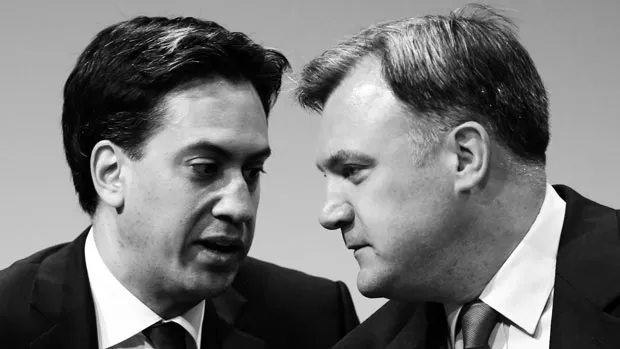
Ed Miliband is coming under renewed pressure to sack shadow chancellor Ed Balls – and, for once, it's because the Labour bruiser is accused of being too moderate rather than too aggressive.
Balls is under fire for having ruled out tax increases – should Labour come to power in May 2015 – to pay for the NHS and social care for the elderly.
Disgruntled Labour MPs want to see Miliband ditch Balls and bring back former cabinet ministers Alan Johnson and Alistair Darling - the latter currently leading the campaign against Scottish independence – to restore some credibility to Labour's economic team.
The Week
Escape your echo chamber. Get the facts behind the news, plus analysis from multiple perspectives.
SUBSCRIBE & SAVE
Sign up for The Week's Free Newsletters
Join more than 350,000 subscribers and keep yourself informed with a selection of The Week’s most interesting, enlightening and entertaining stories - plus daily puzzles.
Join more than 350,000 subscribers and keep yourself informed with a selection of The Week’s most interesting, enlightening and entertaining stories - plus daily puzzles.
Latest Videos FromThe Week US
The latest anti-Balls whispers started after he used a Daily Telegraph interview to rule out tax increases proposed by shadow health secretary Andy Burnham, including a 15 per cent duty on estates dubbed a "death tax" by the Tories.
Balls, desperate to bury Labour's reputation as the tax-and-spend party, said: "People feel they are paying too much tax already. We have to get the balance right between balancing the budget and making sure the NHS continues to deliver."
Balls is therefore in the unlikely position of appearing too "wet" for some Labour MPs, who have become alarmed at the party's failure to open up a commanding lead over the Tories in the opinion polls.
Balls won't be too worried about upsetting Labour backbenchers - but he might be more concerned to hear the unions are grumbling about him too.
Trade union leaders insist that Labour must increase taxes to restore pay among their members who have suffered several years of below-inflation one per cent rises, and to improve NHS standards which they say have suffered under the coalition government.
The truth is that Balls's rejection of tax increases was a naked attempt to reassure wavering Tory-Ukip voters that a Labour government will not squeeze the middle classes.
Right on cue, the Independent on Sunday came out with analyis by Dr Matthew Goodwin, professor of politics at Nottingham University and "a leading expert in Ukip's rise", suggesting that Labour could actually lose seats to Nigel Farage's party if it continues to be complacent about Ukip's chances.
In the process, Labour could lose one of its rising shadow cabinet stars, Gloria de Piero, whose Nottinghamshire seat is one of five identified by Goodwin as being particularly vulnerable to Ukip, mainly because of voters' concerns over immigration.
As the Independent reports, "Dr Goodwin’s study contradicts the assumption among some shadow cabinet figures that a leap in backing for Ukip at the election will help Labour by hitting the Conservatives disproportionately hard".
Calls for Balls to go are nothing new, of course. In December last year, the Mole reported how Labour MPs were sharpening their knives for Balls over the sacking of Sharon Shoesmith, head of children's services in Haringey, following the 2007 Baby P scandal.
However, Miliband appeared then just as reluctant to sack Balls as Tony Blair was to rid himself of Gordon Brown. And there's nothing to suggest that Miliband has since found the strength to deal with Balls.
Normally, one would say that ditching Balls could transform Labour's chances at the May 2015 general election: voters generally don't like Balls, both for his abrasive manner and for his close links to his old boss, Brown.
But to fire him now, just when he's trying to prove that Labour can be trusted on the economy, would surely backfire on Miliband. Don't put money on Balls being moved in the upcoming pre-election shadow cabinet reshuffle.