Ukraine has spent years using its drone arsenal to great effect, both in its wartime front with Russian forces and in penetrating deep into Russian territory for daring aerial attacks on fuel and commercial infrastructure. Now, Ukraine has a new target: Russian airports and Moscow’s commercial air travel industry.
“Every airline that uses Russian airspace, every insurer and everyone who still uses Russia’s key airports” should know “Russian airspace is becoming completely unsafe,” said Ukrainian President Volodymyr Zelenskyy in a statement last week. Although Ukrainian drones have filled Russia’s skies before, Zelenskyy’s implied threat to commercial air routes suggests the war for aerial supremacy in the region has taken a new and potentially even more dangerous turn.
Why focus on commercial air travel?
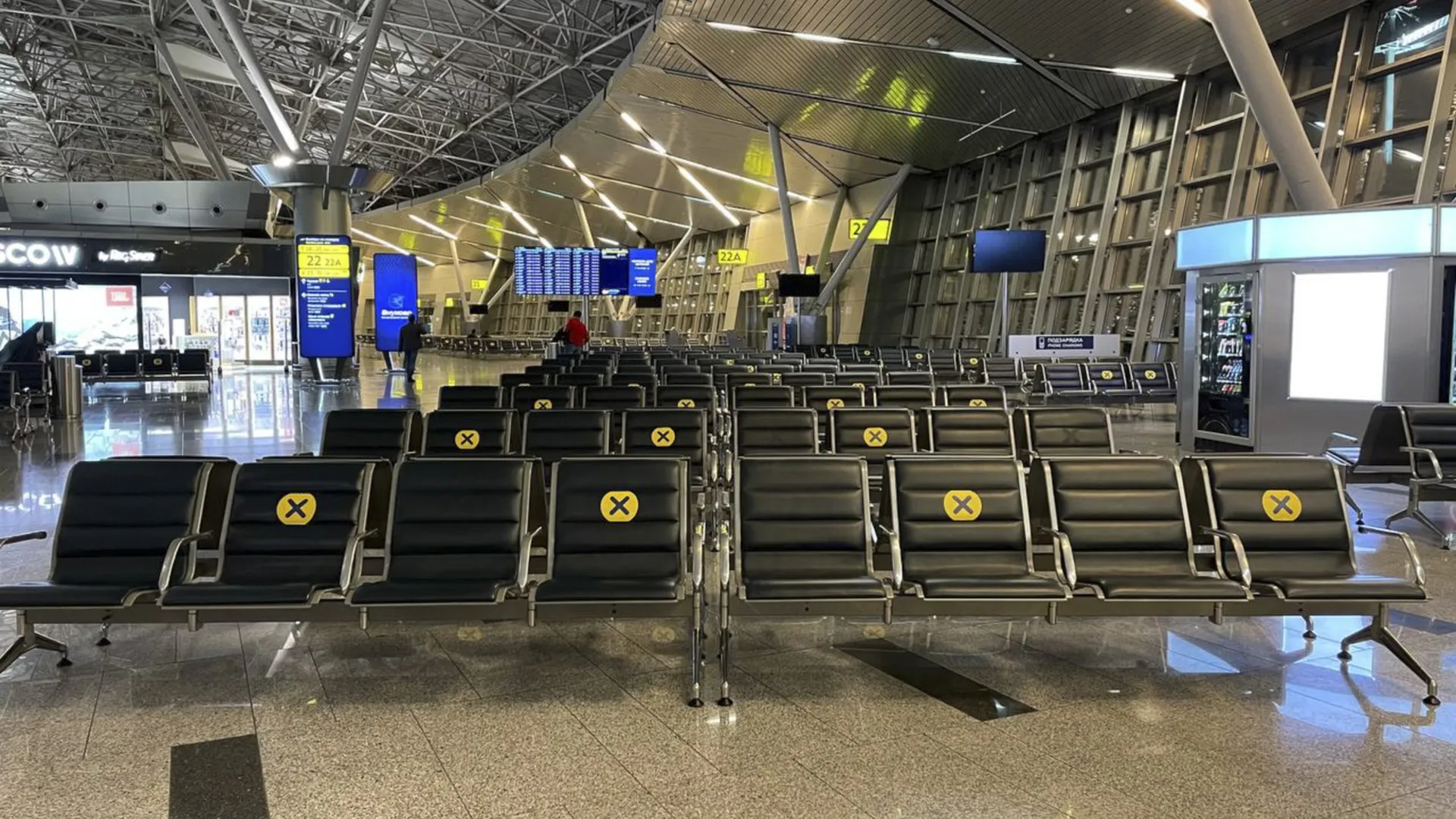
Zelenskyy’s warning comes as part of Ukraine’s “effort to disrupt Russia’s economy” and “pressure Moscow to end the war,” said The Wall Street Journal. Ukraine has “vowed to avoid targeting airliners and civilian deaths.” Instead, it intends to “scale up so-called Operation Carpet,” which circulates drones “near Russian airports, forcing air-traffic control to pause takeoffs and landings.”
The Week
Escape your echo chamber. Get the facts behind the news, plus analysis from multiple perspectives.
SUBSCRIBE & SAVE
Sign up for The Week's Free Newsletters
Join more than 350,000 subscribers and keep yourself informed with a selection of The Week’s most interesting, enlightening and entertaining stories - plus daily puzzles.
Join more than 350,000 subscribers and keep yourself informed with a selection of The Week’s most interesting, enlightening and entertaining stories - plus daily puzzles.
Latest Videos FromThe Week US
The strategy is “no longer simply a repetition of isolated, sporadic emergency alerts” that have shuttered Russian airways in the past, said Serhiy Bratchuk, a spokesman for the Ukrainian Armed Forces’ Southern Command, to the Journal. Ukraine intends to “transition to constant pressure aimed at paralyzing civilian air traffic” for eastern Russia.
The problem for Russia is “not that Ukraine has to shoot down an airliner,” said industry news site Live and Let’s Fly. “Quite the opposite.” Ukrainian drones merely need to “create enough uncertainty” for authorities to close airports or until “airlines or insurers decide the risk is no longer worthwhile.” The tactic is a “useful tool of war.”
Trying to shutter an airport permanently “would be difficult,” as a “sustained attack would become predictable and easier for air-defense systems to halt,” said The Guardian. But “periodic closures of Russian airports on a semi-regular basis” are achievable by “relying on an element of surprise,” said Royal United Services Institute aviation analyst Justin Bronk to the outlet.
Ukraine has also “urged the U.N.’s aviation agency” to “ask its members to fully ban operations in Russian airspace,” said Reuters. The International Civil Aviation Organization itself has observed “heightened risks of civil aircraft being targeted or caught in crossfire,” said the group in a statement this week. Though the airline industry can “reroute flights and maintain operations during conflicts,” that type of “operational flexibility does not address the fundamental security threat.”
What are Russia’s options?
Russian President Vladimir Putin “vowed that Russia would keep pummeling Ukraine” at a press conference last week where he “dismissed” Zelenskyy’s threat to Russian airspace, said The Washington Post. “If this has been voiced, it amounts to nothing less than a call for state terrorism,” said Putin. “And I would point out that they are asking us to resume negotiations and requesting face-to-face meetings. One does not negotiate with terrorists.”
Although Ukraine’s airspace has been closed to commercial travel for several years, Russia has “refused to close the country’s airspace for civil aviation, despite the escalating war,” said the Journal. While American and European operators have pulled back from Russian sorties, their absence “has proven a boon” to operators from Asia and the Middle East, thereby “offsetting the risk of operating in skies regularly penetrated by Ukrainian drones.”
Russia’s military is “focusing on striking manufacturing and storage sites around Kyiv and energy and port operations in Odessa,” said former Deputy Under Secretary of Defense Stephen Bryen on Substack. While it is “uncertain whether Zelenskyy’s warning will change the current pattern of attacks and retaliations,” it is also “hard to see” how Ukraine can “keep launching hundreds of drones (sometimes as many as a thousand)” nightly into Russia. It could simply be, said Bryen, that Zelenskyy is “saying more than he can do.”