Sign up to get Today’s Best Articles in your inbox
Join 350,000+ subscribers and keep yourself informed with a selection of
The Week’s most interesting, enlightening and entertaining stories - plus daily puzzles.
You are now subscribed
Your newsletter sign-up was successful
Want to add more newsletters?
An account already exists for this email address, please log in.
When you make a purchase using links on our site, The Week may earn a commission. All reviews are written independently by our editorial team.
The Mediterranean is a place, a mood, a cooking ethos. Twenty-two countries border the cherished body of water, each with its own specialized manner of feeding their people. These books are no comprehensive consideration of every kitchen in the Mediterranean. But they sure are an exhilarating starting point.
‘The Food of Morocco’ by Paula Wolfert
Wolfert’s original book on Moroccan food was published in 1973, far ahead of its time in its insistence on the proper way to cook the food of the North African country. In 2011, she published an even more deeply considered version of that landmark book. “The Food of Morocco” is “hardly the quintessential Paula Wolfert cookbook,” said LA Weekly. “This book is Paula Wolfert.”
The Week
Escape your echo chamber. Get the facts behind the news, plus analysis from multiple perspectives.
Join more than 350,000 subscribers and keep yourself informed with a selection of The Week’s most interesting, enlightening and entertaining stories - plus daily puzzles.
Join more than 350,000 subscribers and keep yourself informed with a selection of The Week’s most interesting, enlightening and entertaining stories - plus daily puzzles.
Her influence in the intervening decades was immense. The popularity of clay pots for cooking and the ubiquity of preserved lemons in many an American kitchen are all Wolfert’s doing. With “The Food of Morocco,” tagines of all sorts, lively salads with touches of flower water, and the proper way to make couscous can become second nature in American kitchens far from the shores of Rabat and Tangier. ($60, HarperCollins, Amazon)
‘The Food of Sicily’ by Fabrizia Lanza
Italy points its finger well into the Mediterranean Sea, but you could argue that the region most influenced by that body of water is the island of Sicily. Lanza runs a cooking school in Palermo, and “The Food of Sicily” (2023) sings a song many Americans know well, being that so many Italian immigrants to the U.S. were Sicilian.
But no entire cuisine travels with its migrants, so “The Food of Sicily” is loaded with surprises, too — swordfish stuffed with garlic and mint, octopus salad, and watermelon pudding included. Sicily has “always been at the crossroads of the Mediterranean,” said Lanza to Monocle magazine. “It’s a place where people have brought their own unique customs to enrich our table.” ($40, Artisan, Amazon)
‘The Glorious Foods of Greece’ by Diane Kochilas
Love your Greek salad and gyros to your heart’s oregano-laced content. There is a world of Greek food most Americans have never experienced. A “landmark for Greek cooking in the U.S.,” Kochilas' seminal 2001 book, “The Glorious Foods of Greece,” is the result of eight years of research across the country’s varied regions, from the mountains of Macedonia and Thrace in the north to Greece’s six main island groups, and “displays a deep grasp of history,” said Publishers Weekly.
Sign up to get Today’s Best Articles in your inbox
A free daily email with the day’s biggest news and analysis – and the best features from TheWeek.com
The 400-odd recipes include savory pies of all stripes, a mind-boggling array of uses for many styles of cheese, and boundless vegetable dishes. Moussaka, you are adored, but Kochilas will have you seeing Greek cuisine in colors beyond blue and white. ($40, ThriftBooks, Amazon)
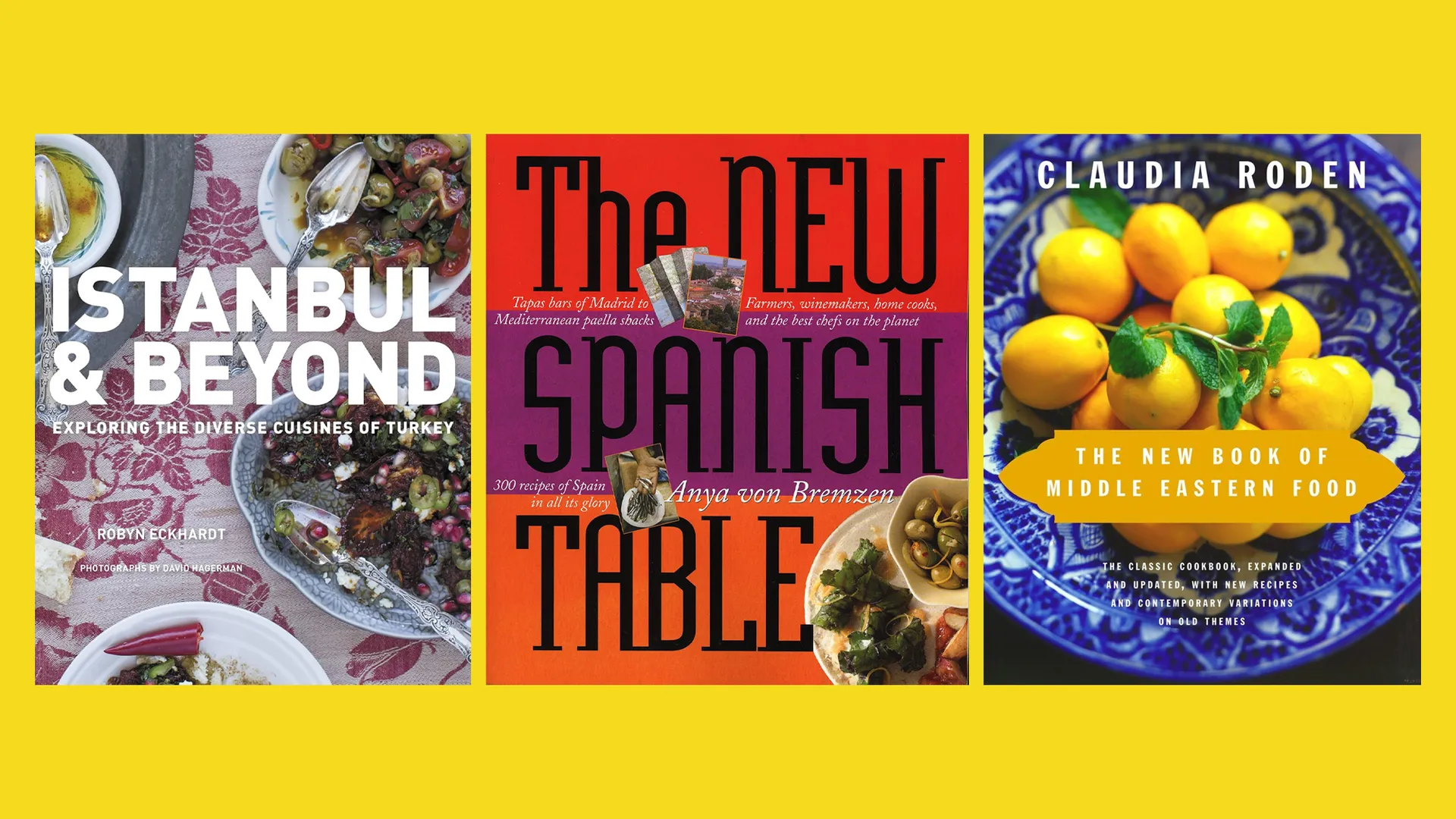
‘Istanbul and Beyond: Exploring the Diverse Cuisines of Turkey’ by Robyn Eckhardt
Turkey, a sprawling, varied country, in the hands of Eckhardt and the photographer David Hagerman, is a “picaresque portrait of a country that doesn’t really have a national cuisine at all; it has dozens,” said Max Falkowitz at Saveur. There are the famed Urfa chiles of the country’s southeast, the seafood, greens and corn in the north that edge the Black Sea, and the grand amalgam of influences in Istanbul.
“Istanbul and Beyond” (2017) is organized according to a number of Turkey’s regions, so you acquire a sense of place as you deepen your knowledge of Mediterranean cooking. Corn and creme fraiche biscuits, brown butter scrambled eggs, sun-dried tomato and pomegranate salad, and herbed fish cakes — this is Turkish food in its truest, most varied form with an aperture in every recipe. ($22, HarperCollins, Amazon)
‘Lebanon: Cooking the Foods of My Homeland’ by Anissa Helou
In “Lebanon” (2026), a book both personal and anthropological, the famed Beirut-born author Helou “returns to her girlhood roots, examining the country’s regional cooking as she makes her way from place to place,” said The Boston Globe. She learns aspects of her native cuisine she had never fathomed. Imagine, then, what we nonnatives glean.
Yogurt is everywhere, from dressing fava bean fatteh (bread salad) to wee meatballs. Vegetables, like chicory, plus artichokes and potatoes, are braised in extra-virgin olive oil. Zucchini and cabbages are stuffed; fish is cooked with tahini. This is Lebanese cuisine in all its familiar, surprising brilliance. ($50, Ecco, Amazon)
‘The New Book of Middle Eastern Food’ by Claudia Roden
Be not fooled by the title. The Middle East is a construct created by people in the West. Across 500-plus pages, the “great cook” and “captivating food historian” Roden captures the foods of countries like Greece, Lebanon, Morocco, Syria, Tunisia and Turkey, said the blog Cooks Without Borders. What do all these countries have in common? Yes, they abut the Mediterranean Sea, just not the well-trod Mediterranean of the average American tourist.
In the book’s 16 central chapters, Roden wanders from central categories such as yogurt, egg dishes, breads and pickles, showing how the countries of this region prepare stunning variations of common foodstuffs. Your kitchen repertoire will mature as handily as your new lens on geography will if you take an open-eyed tour of “The New Book of Middle Eastern Food” (1985). ($55, Knopf, Amazon)
‘The New Spanish Table’ by Anya von Bremzen
All the hits are here — Spanish tortilla, patatas bravas, various kinds of paella. But “The New Spanish Table” (2005) is also a snapshot of the revolution in cooking that happened across Spain during the early part of the 20th century, an era in which Spanish cuisine began “rapidly usurping the culinary dominance of Italy and France,” said Publishers Weekly.
Von Bremzen spent decades traveling across and writing about Spain. There is both modernity and history in this book. The text profiles the cooking of such influential figures as the Catalan chef Ferran Adrià and the Basque Country’s Juan Mari Arzak and provides recipes for centuries-old dishes from Madrid. ($25, ThriftBooks, Amazon)
Scott Hocker is an award-winning freelance writer and editor at The Week Digital. He has written food, travel, culture and lifestyle stories for local, national and international publications for more than 20 years. Scott also has more than 15 years of experience creating, implementing and managing content initiatives while working across departments to grow companies. His most recent editorial post was as editor-in-chief of Liquor.com. Previously, he was the editor-in-chief of Tasting Table and a senior editor at San Francisco magazine.